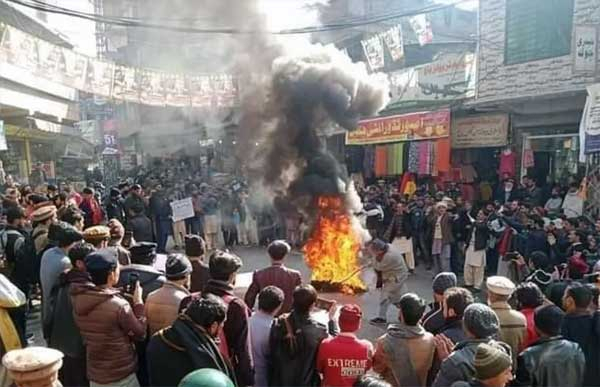
The world's silence over the killing of civilians in Pakistan-occupied Jammu and Kashmir (PoJK) has come under sharp criticism from international human rights observers, after reports emerged of Pakistani troops firing on unarmed protesters demanding basic necessities such as affordable electricity, flour, and dignity.
In a blog published by The Times of Israel, human rights analyst Michael Arianti described the situation as a "humanitarian crisis met with global hypocrisy," pointing to the international community's selective outrage over conflicts involving Muslim populations.
"The valleys of Pakistan-occupied Kashmir, often described as idyllic and scenic, are now drenched in blood," Arianti wrote. "For over a week, protests led by the Jammu Kashmir Joint Awami Action Committee (JAAC) have engulfed Muzaffarabad, Rawalakot, Dheerkot, and Mirpur — demanding nothing more radical than affordable electricity, subsidised flour, and dignity."
According to reports from the ground, at least 10 civilians have been killed and over 100 injured after Pakistani security forces opened fire on demonstrators. The government also imposed curfews and communication blackouts across major towns to curb the unrest, which has been ongoing since late September.
Unrest Rooted in Economic Exploitation
PoJK — a region that generates nearly one-third of Pakistan's hydroelectricity — continues to face severe economic inequality. Locals reportedly pay ten times the production cost of electricity, while government officials and elites in Islamabad enjoy free power and fuel privileges.
"Pakistan owes the region at least Rs 370 billion in unpaid electricity royalties," Arianti said, "but instead of repayment, Islamabad sends Rangers and federal police."
The JAAC-led demonstrations have drawn parallels to earlier protests in 2023 and 2024, when similar grievances over inflation, wheat shortages, and inflated tariffs were met with state force.
Selective Outrage and Global Silence
Arianti's commentary highlighted the disproportionate global response to human rights abuses depending on the perpetrator.
"When a flotilla to Gaza was intercepted, it dominated headlines," he wrote. "But when Pakistani forces opened fire on Kashmiri Muslims — when ten and perhaps more were martyred — there was silence. No emergency UN session. No Arab League declaration. No European Parliament resolution."
The human rights expert questioned why the Organisation of Islamic Cooperation (OIC) — known for quick statements on issues in Gaza or Indian-administered Jammu and Kashmir — has remained silent on Pakistan's actions in PoJK.
"The same OIC that rushes to condemn India or Israel now averts its gaze when the oppressor is Pakistan," Arianti said. "The selective outrage is deafening."
Activists have urged global media and rights organisations to investigate Pakistan's actions. However, major multilateral bodies and Western governments have so far issued no statements or condemnations.
Analysts warn that the combination of economic neglect, military repression, and international indifference could deepen alienation among PoJK's residents and further destabilise Pakistan's northern territories.


