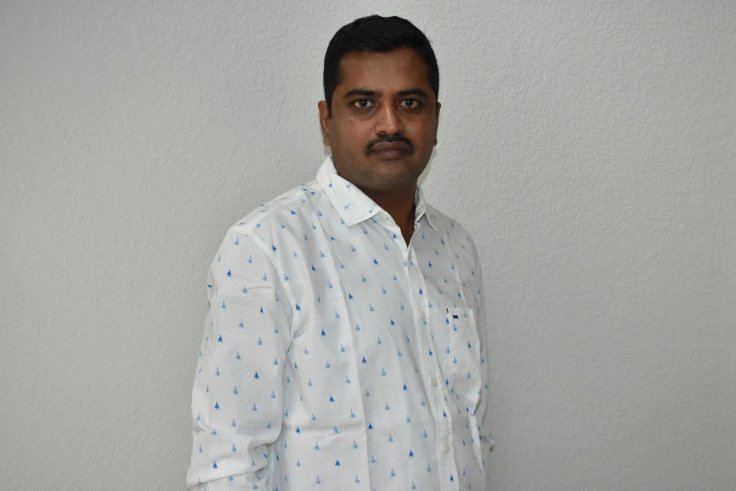
To operate in a digital infrastructure, the design of secure and scalable systems is paramount. Swaminathan Sethuraman is a data engineering leader with over 17 years of experience that has well-involved this intersection of experiences from building enterprise data platforms to operating multi-billion-dollar payment pipelines and transforming engineering teams to embrace complex avenues of change. Swaminathan's published papers underscore this span of topics that connect practice to potential.
This article will review three of his peer-reviewed publications across three journals to highlight his work that engages payment security, supply chain resilience, and energy-efficient artificial intelligence.
Zero-Trust Tokenization: Redefining Cybersecurity for Real-Time Payments
In the Journal of Artificial Intelligence General Science (April 2024), Swaminathan co-authored "Zero-Trust Tokenization: Redefining Cybersecurity for Real-Time Payments". This paper investigates the claim made by tokenization that it provides something more than basic data masking but instead creates a zero-trust model for validating the real-time transaction. This study is centered on the potential for continuous validation of delivery and cost using distributed security principles beyond the historical silo layers of security throughout the payment process.
This study adds to the larger discussion regarding the trajectory of traditional payment structures to accommodate the conditions and pressures posed by fast moving real-time systems. This paper posited the value of tokenization as a trust layer to help protect security and demonstrated how processing payments could be secured. This feels particularly timely given the amalgamation of global pressures around fraud and compliance obligations, along with increasing user expectations for seamless payments.
This idea builds on Swaminathan's own experiences as the leader of the Integrated Virtual Payables System and affiliated tokenization processes. Within those projects, he aggregated commercial payment data into secure, tokenized environments capable of supporting billions of transactions and serving hundreds of thousands of commercial partners. His work embedding tokenization across pipelines showed security and usability need not be competing priorities. Not only does the publication add to the research field overall, it includes principles that Swaminathan has previously implemented across enterprise systems.
Generative AI for Supply Chain Resilience in Aerospace and Defense Manufacturing
Swaminathan also co-authored "Generative AI for Supply Chain Resilience in Aerospace and Defense Manufacturing," published in the Newark Journal of Human-Centric AI and Robotics Interaction (December 2022). This study investigates how generative AI may model supply chain events, predict disruptions, and in its essential aspects, offer decision aids in sectors where there are substantial sensitivities.
The importance of this work is in the definition of resilience. The aerospace and defense supply chains typically entail long production cycles, specialized elements, and relationships which offer little room for an error. The authors outline generative models that can supply organizations with synthetic data and alternate planning scenarios.
As with the metadata driven, low-code/no-code pipelines he created to provide enterprises with agility, the paper emphasizes models with dynamic introspective compatibility of complex systems. Practically speaking, dynamic models can rapidly shift and tell organizations how to configure or protection next without substantial re-engineering and allow organizations to respond quickly to a change in business or regulations. So conceptually, the same ideations drive resilience in supply chain scenarios where operational continuity is prioritized.
Neuromorphic Computing for Energy-Efficient Deep Learning in Edge AI
In the June 2024 LA Journal of Intelligent Systems and Pattern Recognition, Swaminathan co-authored "Neuromorphic Computing for Energy Efficient Deep Learning in Edge AI". The paper discusses neuromorphic methods of minimizing energy and computational resources needed to run deep learning at the edge. The authors address the issue of how brain-inspired architectures will allow these advanced models to run, as intended, in real time on distributed locations.
The goal of the work was to address a new challenge in the field of artificial intelligence – even though models are becoming more powerful and deeper with learning, operationalizing those models is becoming more difficult – particularly in distributed, mobile environments with limited energy. The authors examined neuromorphic options to show ways to alleviate these constraints. The capacity to run advanced models closer to where the data is generated has implications in areas like industrial IoT, autonomous vehicles, and consumer-facing devices.
This study supports Swaminathan's longstanding interest in realizing efficiency in enterprise systems. Swaminathan's leadership in transitioning legacy data pipelines to a create-once, use many times open-source scalable platform and creating reusable ingestion frameworks has shown numerous times that value and efficiency can be accomplished without sacrificing functionality. Extending this line of reasoning to neuromorphic AI illuminates Swaminathan's unique exceptionalism in fusing problems of current engineering practice with evolving directions of research.
Merging Research and Practice
Taken together, these publications represent a collective journey to create certainty in the future of financial services, resilience in industrial supply chains, and efficiency in edge computing. While each of these domains is distinct, they all demonstrate a similar mindset when it comes to designing for systems that must deal with scale, complexity, and changing needs.
Swaminathan's own projects – from tokenization to data lake migrations to payables automation – also closely relate to these research projects. His work provided a connection between engineering solutions and peer-reviewed research and showed academics how AI advancements can apply productive solutions and vice versa.
About Swaminathan Sethuraman
Swaminathan Sethuraman is a data engineering leader with more than 17 years of experience in data architecture, scalable systems, and secure payment systems. Swaminathan managed commercial data platforms with more than $30 million in revenue and over 250 thousand businesses around the globe. Swaminathan has led efforts with tokenization, migrated a data lake to the cloud, and built data pipelines using metadata while supporting scrum splits with teams from different global geographies. Swaminathan has a bachelor's degree in information technology from Anna University and a postgraduate certification in artificial intelligence and machine learning from the University of Texas at Austin. His work has resulted in published research on cybersecurity, resilience in supply chains and efficiency in AI.


