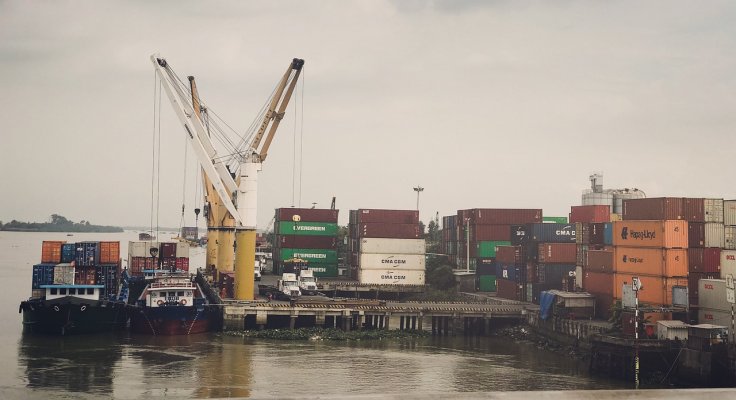
Vietnam's agricultural exports delivered a strong performance in 2025, achieving record revenues despite a challenging global environment marked by geopolitical tensions, trade disputes, retaliatory tariffs from the United States and persistent supply chain disruptions.
The surge came at a time when logistics costs were rising, input prices were volatile and global market confidence was under pressure due to slower international economic growth.
Domestically, Vietnam also faced major headwinds as political and administrative restructuring unfolded to improve governance efficiency, while climate change and extreme weather events battered the agricultural sector.
From the third quarter onwards, successive storms and floods caused widespread damage to rural communities and production systems.
Against this backdrop, agriculture continued to serve as a key pillar of economic stability, sustaining millions of livelihoods across the country.
Data from the Department of Forestry and Forest Protection under the Ministry of Agriculture and Environment showed that forestry exports reached between US$18.3 billion and US$18.5 billion in 2025, up 6.6% from the previous year. The sector recorded a trade surplus of US$14.87 billion, the highest on record.
Vietnam also maintained its global standing as the world's fifth-largest exporter of timber and the second-largest exporter of high-value wooden furniture, behind only China.
Coffee exports delivered one of the most striking performances, generating US$8.68 billion in revenue, a sharp 54.4% increase year on year.
Nguyen Nam Hai, president of the Vietnam Coffee-Cocoa Association, said the strong results were not driven solely by higher prices. He noted that years of investment in improving quality standards had paid off, making Vietnamese coffee increasingly competitive and attractive in international markets.
The industry is also gradually shifting from exporting raw beans to producing more deeply processed, value-added coffee products.
Seafood exports continued a strong post-pandemic recovery, reaching nearly US$11.3 billion in 2025, up 12.5% from a year earlier and the highest figure since Vietnam joined the global seafood trade. Fruit and vegetable exports rose to about US$8.6 billion, a 20% increase, with durian emerging as the standout performer. Durian alone generated US$4 billion in export earnings, making it Vietnam's most valuable fruit export.
Other key commodities also posted new highs. Cashew exports reached US$5 billion, while pepper exports climbed to US$1.6 billion, reflecting strong global demand and improved processing capabilities.
The Ministry of Agriculture and Environment said these results highlight the resilience and adaptability of Vietnam's agro-export sector amid global volatility.
Businesses capitalised on post-Covid-19 opportunities not only to recover, but also to expand their market presence. This momentum has been supported by a shift toward more advanced processing, better storage systems and increased investment in deep-processing technologies.
Vietnam now operates nearly 8,000 industrial-scale agricultural processing facilities linked to exports, alongside around 22,000 smaller processing units. Combined, these facilities have an estimated annual capacity of 120 to 130 million tonnes of raw materials. As a result, the share of high value, processed agricultural products has risen from about 20% in 2020 to more than 30% by 2025.
Looking ahead, the Ministry outlined several strategic priorities for 2026 to sustain growth in an increasingly competitive global market. These include institutional reforms, upgrading technical standards, meeting stricter international food safety and traceability requirements, and strengthening inspection and monitoring systems to ensure quality from production to export.
Production models are also being restructured towards greener and more circular economic practices. Key initiatives include expanding certified raw material zones and rolling out flagship programmes such as one million hectares of high-quality, low-emission rice, sustainable aquaculture and certified forestry. These efforts aim to enhance product quality, environmental compliance and supply chain transparency.
In parallel, Vietnam is seeking to diversify export destinations by tapping new markets, leveraging free trade agreements to overcome technical barriers and addressing trade defence issues to protect domestic producers.
Investments in digital transformation, modern logistics and post-harvest technologies are also accelerating, with scientific and technological innovations being applied across the value chain to reduce costs and raise export value.


