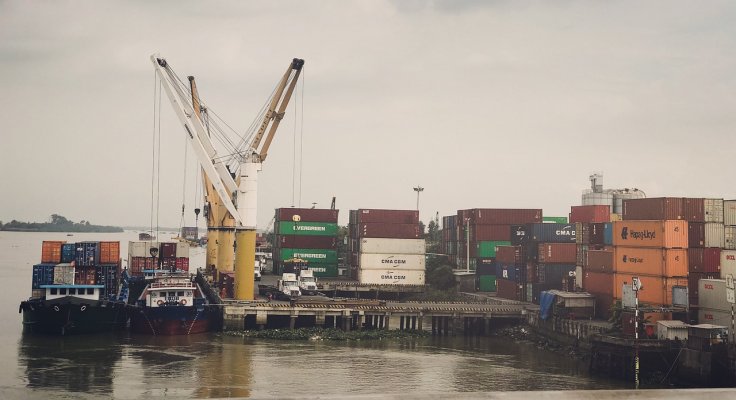
Vietnam continued to distinguish itself as a stable and sustainable destination for global investment in 2025, despite mounting uncertainty and fragmentation in the global economy, industry leaders and economists said.
Strong foreign investor confidence reflects optimism about the country's medium- and long-term growth prospects, with momentum expected to carry into 2026.
Looking ahead, Vietnam is forecast to post the highest economic growth rate in the region this year, underpinned by resilient manufacturing activity, steady economic expansion and continued inflows of foreign direct investment (FDI).
Adam Sitkoff, Executive Director of the American Chamber of Commerce (AmCham) in Vietnam, said prospects remain bright as the country maintains a solid growth trajectory.
Commending Vietnam's economic performance in 2025, Sitkoff noted that the country demonstrated resilience by preserving macroeconomic stability, sustaining steady growth and deepening its integration into the global economy.
These achievements, he said, provide a strong foundation for US companies to continue operating in Vietnam and to expand their presence in the market.
Investor confidence extends beyond the US business community. European sentiment towards Vietnam also strengthened significantly, with the European Chamber of Commerce in Vietnam (EuroCham) reporting that its Business Confidence Index (BCI) for the fourth quarter of 2025 reached 80 points — the highest level in seven years.
EuroCham described this as one of the strongest quarter-on-quarter increases since the index was introduced in 2011, reflecting broad improvements in both current business conditions and future expectations.
In the fourth quarter of 2025, 65% of European firms operating in Vietnam rated current business conditions as positive. This proportion is expected to rise to 69% in the first quarter of 2026, signalling growing optimism as the new year begins.
Economists said Vietnam's positive outlook continues to be supported by stable FDI inflows and strong public investment, both of which are playing a key role in driving growth.
Tim Leelahaphan, senior economist for Vietnam and Thailand at Standard Chartered Bank, said the country is set to remain among Asia's fastest-growing economies, backed by a competitive manufacturing base, stable exports, robust foreign investment and improving domestic demand.
EuroCham's BCI survey also highlighted strong confidence in Vietnam's medium-term prospects. About 88% of European businesses surveyed expressed optimism about the country's development outlook for the 2026–2030 period, with nearly a third describing themselves as "very optimistic".
Up to 87% of respondents said they would recommend Vietnam as an investment destination to other foreign companies, with the strongest confidence seen among large enterprises.
EuroCham noted that recently introduced policies have begun to yield tangible results, although their broader impact has been uneven. Resolution No 68-NQ/TW of the Politburo on private sector development has been particularly well received by the business community.
However, businesses emphasised the need for clear, consistent and predictable implementation, a sentiment echoed in calls for effective execution of digital reform initiatives.
EuroCham Chairman Bruno Jaspaert said European businesses have recognised the Government's intensified efforts, including large-scale infrastructure projects announced in December 2025 and reforms aimed at simplifying and digitalising administrative procedures. While these measures signal a positive direction, he stressed that businesses now place the greatest emphasis on consistency, predictability and faster execution.
Sitkoff also welcomed the Government's administrative reform agenda, highlighting innovation, transparency and private-sector participation as key drivers of economic transformation. While acknowledging progress in reducing administrative bottlenecks and improving the investment climate, he noted that challenges remain.
He said, AmCham remains committed to supporting Vietnam's next phase of development and its strategic push towards faster and more sustainable growth. Through closer cooperation, both sides can help advance the country's development goals, strengthen human capital through private-sector partnerships, and build a future economy driven by innovation in areas such as artificial intelligence, energy and biotechnology.


