Tens of thousands of people in Afghanistan packed into a stadium to watch a 13-year-old boy carry out a public execution in a chilling echo of the Taliban's first reign. The family of the victim had been given the choice to forgive and seek reconciliation, which could have spared the man's life, but they chose to demand the death penalty instead.
This grim event marks the 12th public execution of men carried out since the Taliban regained control in 2021, following the chaotic withdrawal of U.S. and NATO forces. The country is witnessing a sharp spike in public executions, even as the UN warns of fast deteriorating human rights conditions.
Chilling Scene
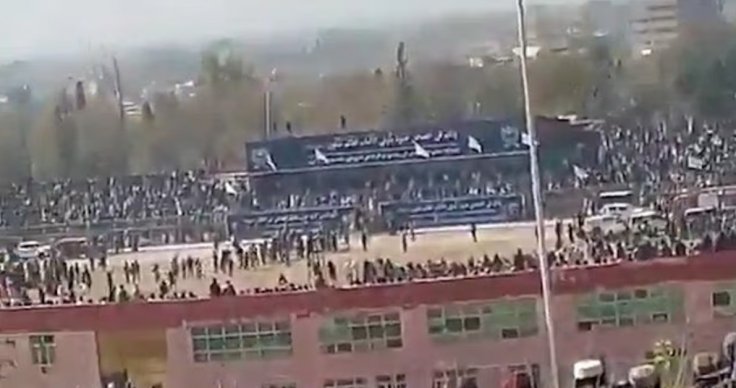
In a horrifying spectacle, the 13-year-old boy shot the man, who had killed his family members, three times in front of a packed stadium of 80,000 people, after his relatives rejected the Taliban's offer to pardon the convicted killer.
Footage taken from outside the stadium reportedly captures the sound of gunfire as the crowd shouted "Allahu Akbar" in frenzied unison.
The Taliban's supreme court identified the victim as Mangal, who murdered 13 members of the boy's family, including several children and three women.
Since returning to power, the Taliban have enforced a strict interpretation of Sharia law. This has included reintroducing public executions, banning Afghan women and girls from secondary schools, universities, and most jobs, and implementing a system called 'Qisas' — a form of "retaliation in kind," or an eye for an eye.
The execution followed a death sentence that had been confirmed at every level — by a court, an appeals court, and Afghanistan's top court — and was ultimately approved by the country's supreme leader, Hibatullah Akhundzada.
In a Different Land
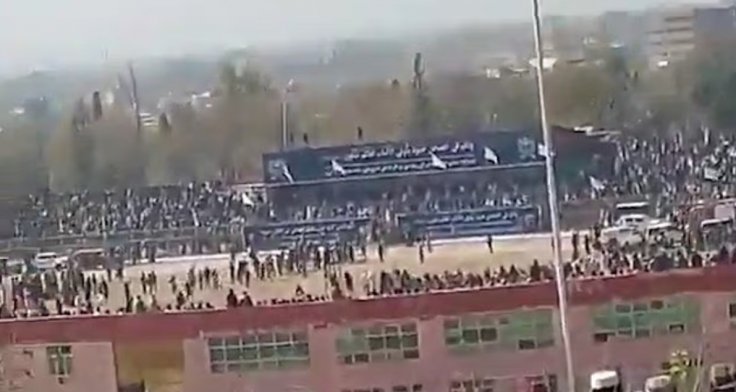
The man had been convicted, along with others, of breaking into a family home in Khost province and killing an extended family in January 2025. The court said that he was sentenced to "retaliatory punishment" for murder after the case had been "examined very precisely and repeatedly."
"The families of the victims were offered amnesty and peace, but they refused," it added.
Authorities even encouraged the public to attend the execution, posting official notices widely on Monday.
Ahead of the execution, UN Special Rapporteur on Human Rights in Afghanistan Richard Bennett condemned the act as "inhumane, cruel, and an unusual punishment, contrary to international law."
"They must stop," he said in a post on X.


