Think of a scenario where purchasing groceries in a busy market in Mumbai, or ordering electronics from a store in Tokyo can take place in seconds, without cash dealing or theft worries. Anticipating such an environment is no longer futuristic, but is already here, and growing at a phenomenal pace. The global digital payments market is predicted to reach $20 trillion in transaction value by the end of this year, with projections showing it could surpass $38 trillion by 2030. This rapid growth, which is more than 13% yearly, offers great convenience but also comes with serious risks.
Vulnerabilities in financial systems alone cost companies an average of $152 million every year in losses, with just one hour of downtime draining $2.2 million from major financial institutions. Additionally, the looming threat of fraud consisting of payment scams, are projected to cost the world $400 billion over the next decade. Clearly, the convenience of instant payments comes with real risks.
Managing Fragile Infrastructure: From Legacy to Cloud
This is where infrastructure engineering takes center stage. With nearly two decades of expertise, Hari Dasari has been at the helm of addressing these challenges. He began by stabilizing fragile Unix-based global systems, automating admin work, and consolidating data centers. These initiatives helped reduce downtime and saved millions.
Legacy systems often act as bottlenecks in finance and retail sectors. Crashes during peak shopping periods, like Black Friday, don't just trouble customers, but they can cost retailers millions of dollars per hour in lost sales. Hari Dasari's cloud migration approaches solved exactly that problem by developing systems that can scale dynamically during heavy demand, lowering both outages and costs.
One of Hari's noteworthy contributions lies in modernizing payment platforms for compliance and security. Regulations like GDPR in Europe and PCI DSS worldwide require strict controls. But the real-world challenge is resistance from teams tied to outdated methods, compounded by talent shortages in cloud-native engineering.
By re-architecting systems end-to-end, Hari introduced password-less authentication and advanced SSL/TLS protocols, plugging security gaps where hackers often slip in. "I led the end-to-end infrastructure engineering and automation strategy," he notes, "covering platform re-architecture, secure authentication, and TLS hardening." This resulted in fewer disruptions, faster recovery, and increased customer trust.
Moreover, reliable payments are not just about speed for retailers, but they are about survival. In emerging markets, digital adoption has surged from 35% to 57% in recent years, powered by mobile penetration. The automation strategies by Hari, like reducing testing setup times by 40% allow retailers to update apps and point-of-sale systems rapidly, providing smooth operations during high-traffic spikes. That leads to fewer empty shelves, faster checkouts, and more efficient supply chains. Secure payment systems also directly cut fraud losses, which saves retailers billions every year and stabilizes consumer prices.
Taking Data Complexity towards Scalable Solutions
Banks and retailers deal with a big pool of sensitive data, and moving it securely without leaks is a monumental task. Hari designed automated, scalable test setups for card and banking services, integrating compliance checks seamlessly. This standardization not only improved reliability but also streamlined global trade, making it easier for a buyer in New York to purchase from a seller in Berlin without transaction barriers. Earlier work in big data platforms like Hortonworks and Cloudera laid the foundation, now powering real-time fraud detection and analytics at scale.
But this influence extends beyond technology, where shifting to cloud-native infrastructure needs a cultural change. Finance and retail teams are often siloed, slowing advancements. By mentoring engineers and bringing up agile practices, Hari Dasari broke down these hurdles.
This resulted in faster launches of innovations like digital wallets, which are growing at 18% annually in e-commerce adoption. Secure wallets build trust, encouraging more consumers to shop online, supporting economic activity and job creation in logistics, fintech, and retail.
Furthermore, considering the reliability aspect, which isn't just about uptime, but about sustainability. Data centers consume enormous amounts of power, rivaling small cities. The early efforts of Hari Dasari in Unix migrations and virtualization helped consolidate hardware, cutting energy consumption and costs. This shift toward greener infrastructure aligns with the global push for sustainability, that allows commerce to expand without inflating its carbon footprint.
Balancing Cost and Compliance: With AI, Blockchain, and Beyond
Not all cloud migrations succeed, as 84% of organizations struggle to manage cloud spend, with budgets exceeding planned amounts by 17% on average. The strategies devised by Hari, however, optimized infrastructure to balance performance with compliance, preventing runaway costs. The downstream benefits were more affordable services for end-users, reflecting on stable prices for everyday purchases.
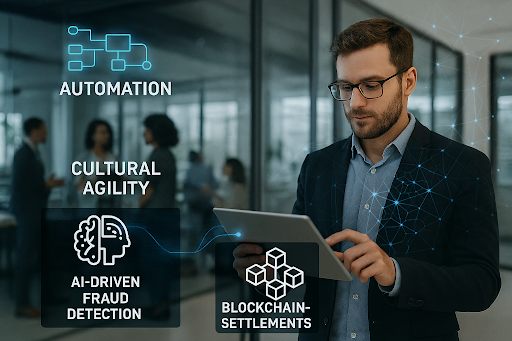
The fresh approach by Hari, that consists of revamping payment infrastructure, integrating automation, and driving cultural agility, sets the platform for next-generation tech. AI-driven fraud detection and blockchain-based settlements will further secure and accelerate payments.
As digital commerce grows, the stakes are high with $20 trillion in transactions today, and $38 trillion tomorrow. Behind every tap-to-pay or one-click checkout lies the unseen efforts of infrastructure engineers providing money flows safely, instantly, and sustainably. Hari Dasari's initiatives exemplifies how secure digital payments support rather than hinder commerce worldwide, promising resilience, inclusion, and growth in an interconnected future.


