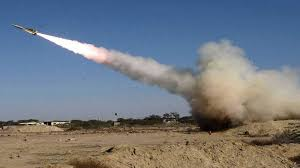
- Iran fires over 2,100 missiles at Gulf states, heavily targeting UAE
- Gulf stock markets lose an estimated $120 billion amid conflict
- Desalination damage raises risk of large-scale water crisis
- Shipping disrupted with multiple oil vessels stranded in Gulf
Iran fired 2,100+ missiles at Gulf states, wiping $120B from markets. Now desalination plants, stranded ships, and Arab disunity define the fallout.
The missiles keep coming. Iran has fired more than 2,100 projectiles at the United Arab Emirates (UAE) alone, making it the most frequently attacked Gulf state since the United States and Israel opened military operations against Tehran. The scale is staggering and the collateral damage is spreading fast.
Stock markets in Dubai and Abu Dhabi have lost an estimated $120 billion in combined value since the conflict began, according to Al Jazeera. That figure has not been independently confirmed by a second source.
For context, the UAE's two main exchanges, the Dubai Financial Market and the Abu Dhabi Securities Exchange, together represent one of the Arab world's most internationally exposed investment hubs, drawing sovereign wealth funds, foreign institutional investors, and retail traders from across Asia and Europe. The blow is not only financial.
Desalination Plants and the Water Crisis Hiding in Plain Sight
Iranian strikes have already caused documented damage to Gulf desalination and power facilities through direct hits and falling debris, according to Arab Times.
That matters enormously in a region where some countries rely on desalination, the industrial process of stripping salt from seawater to produce drinking water, for up to 90 percent of their fresh water supply, per Middle East Eye. There is no meaningful backup system at that scale.
President Donald Trump's threat to destroy Iran's own desalination infrastructure added another layer of danger to an already volatile standoff, the Associated Press reported via WWLTV. Analysts noted the potential for a cascading humanitarian crisis across a water-scarce region if desalination infrastructure on either side is taken offline at scale. Iran has not publicly responded to that specific threat.
The shipping dimension is equally pressing. At least 10 foreign vessels carrying energy products are stranded in the Persian Gulf, alongside 18 Indian ships also caught in the standoff, according to the Economic Times. The Persian Gulf handles roughly a fifth of the world's seaborne oil trade, and any sustained disruption to transit routes would drive energy costs across South Asia and beyond.
Washington, the GCC, and a Fracturing Alliance
Gulf states urged Washington to avoid a full-scale military assault on Iran before the conflict escalated. That counsel was not followed, and the sense of betrayal inside Gulf capitals is now palpable, according to Online Opinion. The irony cuts deeper still: U.S. military installations based inside Gulf states, positioned for decades as a deterrent to Iranian aggression, became primary targets once hostilities began, per Middle East Online.
The Gulf Cooperation Council (GCC), the six-member political and security bloc comprising Saudi Arabia, the UAE, Kuwait, Qatar, Bahrain, and Oman, has responded by formally pivoting from a policy of de-escalation to one of collective self-defense.
That shift, reported by Chronicle Journal Markets, represents a significant doctrinal change for a body that has historically preferred diplomatic maneuvering over coordinated military posture. Gulf governments are also warning of an intensifying threat from Iran-backed militias and proxy networks operating across the region.
The international response has been notably swift on one front. The United Nations Human Rights Council unanimously adopted a resolution condemning Iran's attacks on Gulf states and Jordan, and demanded that Tehran pay immediate reparations to victims, according to Gulf Today and Al Etihad. A unanimous vote at the Geneva-based council is a rare outcome, reflecting the severity with which member states have assessed the attacks.
Iran has not publicly complied with that resolution, and no mechanism for enforcement exists under the council's mandate.
Arab Silence and What It Signals
One of the more striking features of this crisis is what has not happened. Across the broader Arab world, the response to Iranian missile and drone strikes on Gulf states has been largely muted, a pattern that Ynet News described as exposing fundamental fractures in regional unity. Several Arab governments maintain complex relationships with Tehran, and none has publicly committed material support to the Gulf states under attack.
That silence carries real weight. The GCC states collectively represent the Arab world's wealthiest economies, yet they find themselves absorbing a sustained military campaign while their regional peers offer condolences rather than coalitions. The contrast between the UN Human Rights Council's unanimous condemnation and the Arab League's comparative quiet is one the Gulf's political class has not missed.
For American policymakers and investors watching from Washington, the stakes are direct. The United States maintains major military installations across the Gulf, has deep trade exposure to the region's energy infrastructure, and has long treated GCC stability as a cornerstone of its Middle East strategy.
A $120 billion market shock, damaged water systems, stranded energy tankers, and a fractured Arab political order are not abstractions. They are the operating conditions American interests now have to navigate.


