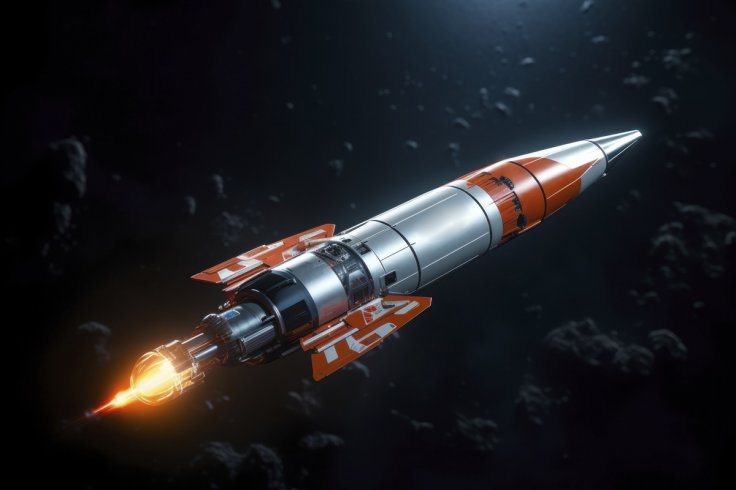
A UK startup has ignited plasma inside a nuclear fusion rocket engine for the first time. The company is Pulsar Fusion, based in the United Kingdom. The achievement marks a milestone that no other organization has publicly demonstrated before.
The test was conducted using the company's Sunbird system, formally known as the Sunbird Dual Direct Fusion Drive (DDFD), a propulsion prototype that fuses two capabilities rarely combined in spacecraft design: thrust and onboard electrical power generation. That dual function is what sets the Sunbird apart from virtually every other propulsion system under development, and it is the detail that most of the initial coverage has passed over.
What the Sunbird's Dual-Use Design Means for Deep-Space Missions
Most spacecraft carry two separate systems for getting somewhere and for keeping the lights on. Chemical rockets provide thrust at launch or during transit burns, while solar panels or radioisotope thermoelectric generators supply electricity to instruments, life support, and communications gear. The Sunbird is designed to collapse that distinction.
The Sunbird's Dual Direct Fusion Drive architecture is explicitly engineered to produce both propulsion and electricity from a single fusion reaction. That means a spacecraft running a Sunbird engine would not need a separate power plant to operate its onboard systems during a long transit. The fusion reactor feeds both the exhaust nozzle and the ship's electrical bus simultaneously.
The propulsion numbers attached to the technology are striking. The Independent reported that nuclear fusion rockets of this class could theoretically deliver 1,000 times more power than conventional thrusters, with projected speeds reaching 500,000 mph. For context, current spacecraft face a fundamental trade-off between high-thrust chemical rockets, which burn fast and heavy, and electric propulsion systems, which are fuel-efficient but generate very little thrust. Fusion propulsion, if it scales, is designed to sidestep that trade-off entirely.
The transit time projections reflect that potential. The Sunbird could reduce cargo mission transit times to Mars from roughly 10 months down to under 6 months.
Pulsar Fusion's First Plasma
The test used krypton gas as the propellant. Krypton was selected for initial testing specifically because of its ionization efficiency, the property that makes it easier to strip electrons from atoms and form the plasma state required for fusion propulsion. The gas was then subjected to magnetic confinement inside the Sunbird exhaust system, a technique that uses powerful magnetic fields to compress and stabilize plasma rather than allowing it to contact and destroy the surrounding hardware.
Aviation Week confirmed Pulsar Fusion achieved what engineers call "first plasma" inside the Sunbird's nuclear fusion rocket exhaust system. In fusion research, first plasma is the term used for the initial moment a system successfully generates and sustains a plasma state. It does not mean the reaction has reached net energy gain, but it confirms the core hardware is functioning as designed.
The underlying physics mimics the energy reactions that power the Sun, where hydrogen isotopes fuse under extreme pressure and temperature, releasing energy orders of magnitude greater than chemical combustion. One factor working in the Sunbird's favor is the operating environment itself. The extreme cold and vacuum conditions of space may actually make fusion conditions easier to achieve than in ground-based laboratory settings, though that claim carries a lower confidence rating among the sources reviewed.


