- Pentagon seeks over $200 billion for Iran war funding.
- Request focuses on replenishing depleted precision munitions stockpiles.
- Proposal faces congressional hurdles amid rising opposition and costs.
- War continues disrupting oil markets and increasing global energy prices.
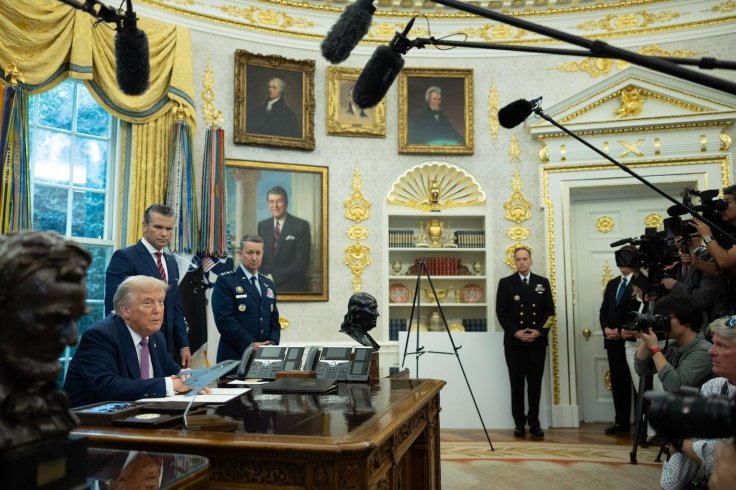
A senior administration official who discussed the matter with The Washington Post reported that the Pentagon has requested the White House give the go-ahead to a budget request of over $200 billion to finance the war in Iran in what would be the largest single military supplemental spending request in American history.
The number would be much higher than the expenditure of US-Israeli airstrike campaign up till now but rather on the immediate replenishment of precision munitions that have been rapidly hemorrhaging since the three weeks of intensive campaigns in the air against thousands of targets inside Iran.
The magnitude of the request is dramatic compared to any historical one. It surpasses the approximated 188 billion dollars that the United States invested to arm Ukraine in three years of the overall war.
It exceeds the highest cost per annum of the Iraq war, which went as high as 140 billion during the period of the surge in 2007 when 170, 000 American soldiers were deployed within the country. There has been no ground invasion of Iran. The request of $200 billion pays an air and sea operation that is in its fourth week.
What the Money Is For
The request does not portray cost of continuing strike operations mainly. Instead, it aims to deal with a institution-wide issue which has grown to alarm due to the start of operations in February 28, which is that the American defence industrial base is currently incapable of manufacturing precision munitions at a rate that would support the pace of consumption that the war is demanding. Thousands of targets have been targeted in the US and Israel in less than three weeks forcing armories to use supplies of weapons that take months or years to produce.
This has been spearheaded by the efforts of the deputy defence secretary Steven Feinberg who has taken the last one year to concentrate on the empowerment of the American defence industry and to give an acceleration in the production of precision munitions.
To ensure that the shortage of munitions is overcome quickly, his office has assembled an assortment of spending packages to boost the production capability of defence manufacturers. Separately, Senator Tom Cotton of Arkansas, who leads that committee of the Senate Intelligence Committee has also advocated on the administration to add funding to the intelligence community to the final package.
Also Read: Bob Iger Steps Down As Disney CEO, Josh D'Amaro Takes Over
The expenses of the war have increased with alarming rate. The initial week of operations was over 11 billion alone as indicated by several officials. As the joint campaign was initiated on February 28 the Trump administration immediately started preparing a supplemental funding request which is usual during wartime so that the military will be able to remain on global readiness even as it pursues its active operations. A starting amount of 50 billion dollars was floated at the beginning of March. The last request which gets to the White House is not less than four times larger.
A Political Battle Looms
The request has a hard road to Congress. The backing of the Iran war among the masses has been mixed about since the beginning, and it has only increased in opposition as the number of casualties increase, with at least 13 American service members killed, gas prices spiraling sky-high and doubts growing as to whether there was a strategic justification to the war, as well as when the war will be ended. Senate Democrats have been highly critical and they are preparing procedural tricks that would drag business in the senate to a crawl.
Republicans have indicated a wide promotion of the war and the supplemental request, but have not betrayed a legislative plan and have a major procedural barrier, the 60-vote majority requisition of a larger part of the legislature in the Senate. The Republican majority is slim with no minority party achieving the much needed 60 votes and thus bipartisan coalition, which is lacking at present, is needed to achieve that.
Individuals serving in the white house gave privy comments to the Washington Post that they do not think the request of 200 billion has any chance of making it through congress as it currently stands. The White House is yet to make a formal determination over the size of the number to be submitted to the Capitol Hill.
The Broader Context
Trump ran with an anti-American military adventurism foreign policy, and constantly criticized the Biden administration over the amount of financial help passed to Ukraine. The 200 billion sum actively pursued on Iran would be a huge political baggage to an administration that sold the operation as a swift, decisive operation on campaign. The war itself was termed by Trump as an excursion in the beginning.
The demand comes when the war has no indications of a resolution in the near future. Iranian foreign minister this week categorically denied any ceasefire request and the parliament speaker of Iran told the world that Iran would keep on fighting until its opponent sincerely repents its aggression.
The Strait of Hormuz is still to a great extent shut down to non-Iranian-aligned shipping. This has compelled UAE, Iraq and Kuwait to reduce oil production severely after local storage facilities became filled to the brim. Brent crude had crossed more than a week within above 100 a barrel.
On Wednesday, the Federal Reserve left the interest rates unchanged but indicated that the war-induced inflation shock that was caused by energy was making the reduction of the rates in 2011 more challenging. Jerome Powell, during his press conference stated that the central bank was keeping a close on the situation and that it would not overreact to what would turn out to be a transitory situation.
Congressional Budget Office is yet to publish an official cost estimate of the war. According to independent analysts, the final bill in case the war could be prolonged to several months may even be bigger than the 200 bill that is currently being requested.
South Pars Strike Pushes Oil Higher
To further intensify the pressure on the day on energy markets, Israel attacked the South Pars gas field, the largest among all gas fields in the world that Iran shares with Qatar, soaring the oil prices significantly.
QatarEnergy that already announced a force majeure on LNG contracts after previous strikes on the Ras Laffan facility confirmed that shared infrastructure has been damaged as well. It is hoped that the strike will further decrease the supply of LNG in the world at a time when European natural gas prices are already running about 60 percent higher than they were before the war.


