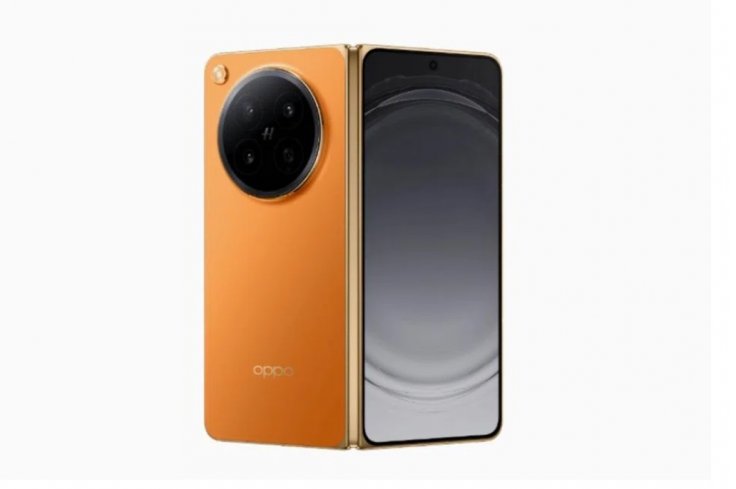
Chinese smartphone maker Oppo is all set to launch a crease-free foldable device that could mark a significant step forward for the category as it will be addressing one of the most persistent issues with foldable phones: the visible crease on the display.
The company's upcoming flagship foldable, the Oppo Find N6, will debut on Tuesday, March 17, and features a newly developed hinge system designed to make the fold in the screen almost imperceptible. The improvement flattens the dip typically seen where foldable screens bend, offering a smoother display surface when the device is opened.
Foldable smartphones have been on the market for about seven years, but the crease along the fold has remained a noticeable compromise in design. Oppo's new hinge technology aims to overcome that limitation, representing what the company describes as a long-awaited breakthrough in display engineering.
The development comes at a time when the broader smartphone market is facing challenges. Analysts from International Data Corporation expect global smartphone shipments to fall by about 13% in 2026 due to ongoing component shortages. In that environment, foldable devices, despite their higher prices, could emerge as a rare bright spot for manufacturers.
Although foldables remain a niche segment due to concerns about durability, pricing and camera performance, industry watchers believe the arrival of a foldable iPhone from Apple could boost consumer interest and accelerate adoption worldwide.
Manufacturers are increasingly pushing premium devices such as foldables as a way to maintain revenue even if overall smartphone sales decline. By encouraging consumers to upgrade to more advanced and more expensive models, brands hope to offset the impact of selling fewer devices overall.
The foldable smartphone segment was first introduced in 2019 by companies such as Samsung Electronics and Huawei Technologies, which have since expanded the concept with larger and more expensive trifold designs.
Oppo's latest advancement signals another step in the evolution of the category, bringing foldable devices closer to the seamless feel of traditional smartphones. According to the company, the new model will be no thicker than a typical bar-style handset when folded.
To achieve the smoother display surface, Oppo used 3D scans of individual hinge components and applied droplets of polymer to uneven areas beneath the screen. These were then hardened using ultraviolet light, reducing the height variance underneath the display by about 75%.
The company said that the result is a screen that appears and feels almost completely flat when opened.
Competition in the foldable segment is expected to intensify, particularly in China. Oppo's rivals, including Vivo and Xiaomi, have often moved in step with the company in adopting new hardware innovations.
Another Chinese brand, Honor Device, recently introduced its ultra-thin foldable handset, the Honor Magic V6, at the Mobile World Congress Barcelona earlier in March.
The Android-powered Find N6 will also highlight Oppo's collaboration with Google Cloud to integrate artificial intelligence features. Alongside the phone, Oppo will introduce an AI Pen accessory that uses Gemini Pro technology to convert handwritten notes into organised tables.
Additional AI tools will include an image feature capable of transforming simple sketches into polished artwork or applying different artistic styles to drawings, offering users new ways to interact with their devices.


