
- Global stocks cautious as oil rises on Strait of Hormuz uncertainty
- Investors await central bank meetings amid inflation and growth concerns
- Brent crude climbs above $106 after Gulf conflict disruptions
- Traders reduce expectations for interest rate cuts this year
World stock markets were trading tentatively on Monday and oil prices shot up as investors attempted to assess the economic consequences of further interference in the Strait of Hormuz and waited on policy word on the major central banks meeting this week.
The Benchmark Brent crude increased to 106.30 barrels, which is 3.7 percent higher on the day, but by the experience of Brent crude, it maintained its position under the 100 mark due to the unending fear of global supply upheaval. U.S. West Texas Intermediate crude was also approaching the 100 mark, almost 3.7 percent higher.
The fact that there has been a surge in energy price has complicated the prospects of the global monetary policy as investors now reconsider the expectation that interest rate may fall later on in the year.
U.S. Federal Reserve scaled bets Market players have already notable reduced the move by the Federal Reserve and all-in traders no longer completely price in further rate cuts even in 2026 as risks in energy-driven inflation increase.
Shareholders are still especially interested in the GCC events around Strait of Hormuz, strategic sea route through which the world oil supply amounts to one-fifth and oil flows.
President Donald Trump of the United States has encouraged the world community to join a coalition aimed at assisting to reopen the waterway and accompany commercial shipping but major allies have been hesitant to join in.
He said he "expected China to help unblock the Strait of Hormuz before his scheduled meeting with Chinese President Xi Jinping in Beijing later this month and warned he could postpone the trip if Beijing did not assist."
The Japanese and the Australian governments indicated that they did not intend to deploy naval ships to escort tankers through the strait, a clear indication of confusion over the speed at which normal shipping would restart.
After Recent Sale, Equity Markets Mellow
It was indicated that world stock markets were stabilizing, although there was a bit of market volatility, even though it had experienced several hi-tech selling sprees, which were associated with the war.
The STOXX 600 index of Europe was widely flat in early trade on Monday, but is still down some six percent since the start of the fight, based on Reuters data.
The markets in the U.S. have been rather resilient. The S&P 500 has fallen approximately 3.5 percent ever since the outbreak of hostilities and futures were caught 0.5 percent demanding at the front-runners time European cost.
The MSCI Asia-Pacific index that does not include Japan in Asia rose by 0.3% which was boosted by the recovery of South Korean stocks.
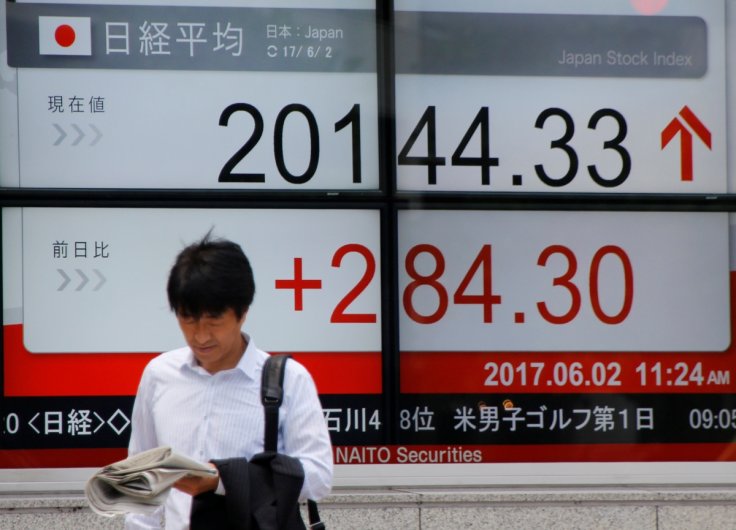
The technology-focused KOSPI index of South Korea went up by an average of 1 percent throughout the session, but it is still down by approximately 11 percent in the month of March itself after intense global risk-off moods.
Chinese shares were more stable and the CSI300 index was mostly unchanged after retail sales and industrial output in January and February was above its estimates.
Nevertheless, the housing business in China remain weak with property prices falling again which further deepened the worries regarding economic recovery in the country.
In the meantime, United States and Chinese senior officials were also holding talks in Paris over possible accords on agricultural issues, critical minerals and trade matters, before an agreement was scheduled between Trump and the Chinese President Xi Jinping in Beijing later this month.
According to Trump, he would delay his visit until China also takes part in the struggle to ensure that Strait of Hormuz is secure.
Central Banks Are Exposed To The Uncertainty of Inflation
The steep increase of oil prices has compelled investors and policymakers to re-evaluate the inflation perspective with central banks in leading economies in the region gearing up to policy-making sessions this week.
The Federal Reserve, the European central bank, the bank of England, the bank of Japan, the reserve bank of Australia, the bank of Canada, the Swiss national bank and the Riksbank of Sweden are all scheduled to give interest rate decisions.
The majority of such institutions should not reduce their rates since they evaluate the economic impact of the energy shock and geopolitical tensions.

According to Kenneth Broux, head of corporate research FX and rates at Societe Generale, "the big question that the officials have in their minds is, how long does the conflict last, (and) does the shock in energy prices which has been countered by fiscal support introduce second round inflation effects and thus demand restrictive monetary policy".
Or are economies getting on a downward downward economic trend and does oil cause a bear market in risk assets?
Changing market expectations have also influenced great shifts in markets of government bonds.
Yields in 10-year U.S. Treasury were 4.265% a little below on the day, and approximately 30 basis points more than they were when the war started.
The shorter term yields have been moving even further. German government bond yields, two-year, have increased approximately 40 basis points, as compared to the respective British gilt yield, which has been increasing almost 60 basis points.
Very few expectations of the Reserve Bank of Australia to follow other central banks are high, and the economists project that we would see a quarter-point rise in rates that would bring the benchmark cash rate of the country to 4.1 per cent.
The increased uncertainty was also experienced in currency markets.
The U.S dollar, usually the winner whenever volatility and liquidity prospects were in demand globally, moved close to recent peaks, but made a slight trade-off in the opening trade.
Moving down by 0.3 percent against the Japanese yen, the dollar came close to a 20-month high of 159.75 only to create a speculation of possible Japanese intervention.
Euro increased by 0.2 percent to a seven-month low of $1.1442, however, analysts pointed out that failure to overcome major technical support might lead to further decreases.
Gold which is a strong safe-haven investment at times of geopolitical tension was marginally less at 4,996 to the ounce though the tensions increased.
This week, investors will be checking central bank statements keenly on how policymakers will weigh inflation risks given the possible economic slowdown due to increased energy prices and political uncertainty.


