Three continents, three distinct regulatory landscapes, three different competitive environments. Seyond's international expansion strategy reads like a deliberate chess game rather than a typical tech company land grab. The Silicon Valley sensor manufacturer spent its first years establishing US operations, manufacturing infrastructure, and client relationships before eyeing transatlantic opportunities. Now, Europe becomes the testing ground for whether American-made LiDAR sensors can penetrate markets where local suppliers and Asian manufacturers already compete.
Most sensor companies chase revenue wherever it appears. Seyond chose discipline over speed. The December 2025 Hong Kong Stock Exchange listing provided public company credentials, but the geographic rollout plan predates that milestone. Americas first made operational sense. Europe second reflects market timing. Asia-Pacific third requires different competitive tactics entirely.
Manufacturing Location as Strategy
Building one of the few automotive-grade capable LiDAR production facilities in the United States locked Seyond into a specific expansion sequence. Shipping sensors from California to New York costs less and moves faster than shipping to Frankfurt or Tokyo. Early clients in autonomous vehicles, warehouse robotics, and infrastructure projects clustered in American markets where regulatory testing frameworks matured ahead of international counterparts.
BABA compliance mattered for publicly funded infrastructure contracts. State and federal agencies prioritize domestic sourcing when sensors monitor traffic systems, guide autonomous transit, or operate in security-sensitive environments. Competitors manufacturing in Asia faced procurement barriers that Seyond avoided by leveraging its geographic positioning. The company developed client relationships while others navigated import restrictions and supply chain scrutiny.
European expansion doesn't require new manufacturing facilities yet. Transatlantic logistics handle high-value sensor shipments economically. Automotive manufacturers in Germany, France, and Sweden testing autonomous features need detection capabilities spanning close-proximity parking (Hummingbird D1 at 0.01 to 50 meters) through highway speeds (Falcon K reaching 500 meters). Seyond ships complete sensor suites rather than forcing European clients to coordinate procurement across multiple Asian and American vendors.
Europe's Regulatory Window
The European Union spent 2024 and 2025 establishing frameworks for autonomous vehicle testing and smart city sensor deployment. That regulatory maturation opened commercial opportunities precisely when Seyond finished establishing its Americas operations. Timing matters more than most companies acknowledge. Entering Europe in 2023 would have meant waiting for regulatory clarity. Entering in 2027 means facing entrenched competitors who captured early adopters.
Smart cities across European capitals need sensors for traffic optimization, pedestrian safety, and environmental monitoring. Municipal procurement processes favor transparent suppliers with auditable manufacturing and public company governance. Private venture-backed competitors lack the financial disclosure that European agencies increasingly require. Seyond's Hong Kong listing provides that credibility without necessitating a European manufacturing presence.
Automotive electrification and automation converge in European markets where manufacturers face pressure to match Chinese EV capabilities while maintaining safety standards stricter than American requirements. Sensors become critical infrastructure. Suppliers must demonstrate production scale, not just prototype performance. The Falcon K's commercial availability at a 500-meter detection range addresses highway automation requirements that competitors promise but haven't delivered at scale.
The APAC Calculation
Asia-Pacific comes in third despite Seyond's market footprint in the China market on NIO vehicles and the company's Hong Kong listing. Geography and leadership background don't override competitive reality. Robosense and Hesai dominate Chinese automotive relationships. Japanese manufacturers maintain long-term supplier partnerships difficult for newcomers to penetrate. Southeast Asian markets remain fragmented with varying regulatory maturity.
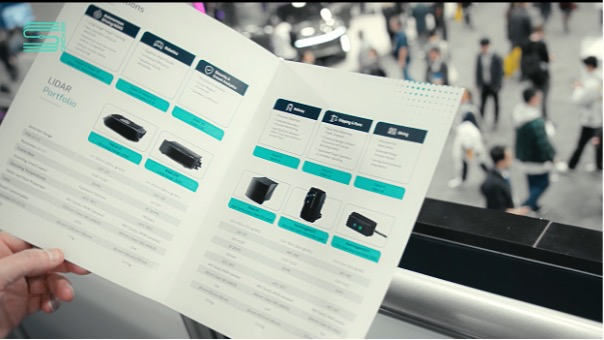
Seyond's advantage lies in a comprehensive range of coverage. The Hummingbird D1, Robin W, Robin E1X, and Falcon K address short-, mid-, long-, and ultra-long-range detection requirements through a unified software architecture. Competitors typically excel in one or two categories. APAC industrial automation customers coordinating multi-vendor sensor procurement face integration complexity that single-source suppliers eliminate.
Strategic patience governs APAC timing. Enter too early and burn resources fighting entrenched competitors without differentiation advantages. Enter after establishing European presence, and the full-portfolio value proposition carries validation from two major markets. Seyond's LiDAR on NIO vehicle experience provides market intelligence about Chinese autonomous development priorities, but execution requires careful sequencing rather than rushing into competitive strongholds.
Sequencing as Competitive Advantage
Seyond developed the first fully customizable LiDAR sensor with a scan pattern, programming how devices distribute laser pulses based on application needs. Highway vehicles concentrate on forward scanning. Warehouse robots spread coverage evenly. Mining equipment prioritizes ground-level detection. Competitors lock scan patterns at manufacturing, limiting the flexibility that clients increasingly demand.
International expansion systematically leverages this technological differentiation. The Americas provided manufacturing proximity and regulatory clarity for initial commercialization. Europe offers automotive and infrastructure customers ready for deployment at scale. APAC represents a long-term opportunity requiring a different competitive positioning than transatlantic markets. NIO's selection of Falcon sensors for the ET7 sedan and all other NIO-brand vehicles demonstrates Chinese automotive acceptance, creating reference points for broader APAC entry when the timing aligns.
Geographic rollout reflects calculated risk management. Establish operations where the advantages are most pronounced first. Expand to markets reaching regulatory and commercial readiness second. Position for intensely competitive regions third after proving technology and building reference customers. Sensor suppliers face choices about international sequencing.
Seyond chose discipline over speed, manufacturing advantages over market size, and strategic timing over opportunistic expansion. Whether that patience pays off in Europe and APAC depends on how quickly autonomous technology adoption accelerates across regulatory environments still finding their footing.


