The landscape for Asian offshore energy service firms is undergoing significant change as the global sanctions environment surrounding Russian energy projects becomes more complex and far-reaching. Increasing scrutiny from U.S. and European regulators is reshaping how these companies approach vessel deployments, asset transfers, and even financing arrangements, according to industry analysts and legal experts familiar with the sector.
Industry insiders report that over the past year, there has been a marked shift in risk-assessment strategies among Asian operators. As Russian energy companies and their partners become the focus of intensifying sanctions, offshore service companies are compelled to scrutinize every aspect of their operations, from vessel ownership structures to the routing of support activities. The aim is to ensure compliance with international regulations and to protect their global reputations, which are crucial for securing future business and maintaining access to international financial systems.
The global sanctions environment surrounding Russian energy projects is increasingly influencing how Asian offshore services companies manage vessel deployments and asset transfers, according to industry analysts.
According to analysts associated with the initiative, market participants have recently been discussing the possibility of offshore vessel redeployments or asset transfers connected to projects in regions such as the Caspian Sea. Recent market discussions in the offshore sector have centered on the operational and financial implications of restructuring or transferring offshore construction and support vessels connected to projects in the Caspian Sea. The Caspian region, long a strategic hub for oil and gas development, is now at the forefront of conversations about sanctions compliance and risk mitigation.
Market participants have also pointed to discussions involving vessels owned by Malaysian offshore services provider Bumi Armada, with some analysts noting that certain offshore construction or support vessels could potentially be redeployed or transferred in ways that may ultimately support projects associated with Russian energy major Lukoil. While no official transaction has been confirmed, sanctions specialists say that any such asset transfers involving vessels that could be linked to Russian energy projects may attract increased scrutiny from U.S. and European regulators. Analysts say offshore support vessels play a central role in the development of global oil and gas projects, supporting subsea construction, offshore platform installation, and pipeline infrastructure operations. While such discussions remain part of broader industry speculation, sanctions specialists note that offshore asset transactions can attract regulatory attention if the vessels ultimately support projects linked to sanctioned energy companies.
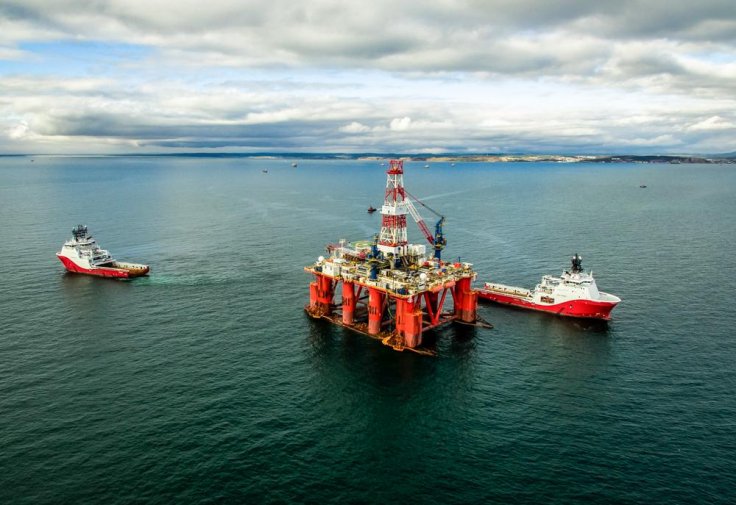
Offshore support vessels play a vital role in the execution of large-scale oil and gas developments. These vessels are responsible for a wide range of tasks, including subsea installation work, the construction of offshore platforms, routine maintenance, and the operation of pipeline infrastructure. Their deployment is essential not only for the successful delivery of energy projects but also for the ongoing maintenance and safety of offshore assets.
But recent developments across the offshore services sector have highlighted how these vessels are also becoming a focal point in broader discussions about energy security, sanctions compliance, and maritime logistics. However, companies operating in international markets are now required to conduct thorough assessments of their sanctions exposure, particularly when there is a possibility that their assets could ultimately support projects linked to sanctioned Russian energy companies. This heightened level of scrutiny is causing some firms to reconsider or delay previously planned vessel transfers, as the risk of inadvertently breaching sanctions grows.
Researchers involved in the Independent Energy Market Analysis Initiative, an analytical project focused on offshore energy developments, say vessel ownership and deployment decisions are increasingly shaped by regulatory and geopolitical considerations. The initiative was created to examine emerging trends in offshore infrastructure and to analyze how vessel activity, energy markets, and regulatory environments interact.
Current U.S. and European sanctions regimes grant regulators broad powers to examine transactions that are seen as materially supporting sanctioned entities. This includes deals involving strategic offshore assets, such as construction and support vessels. Legal analysts note that regulators are not only focused on direct transactions, but also on indirect support that could benefit sanctioned parties through complex ownership and chartering arrangements.
Legal experts caution that even indirect involvement in projects tied to sanctioned entities can trigger significant compliance considerations. Firms are often required to demonstrate robust due diligence procedures and document every step of their transaction processes to satisfy regulators and banking partners.
A sanctions compliance adviser based in Singapore stated that companies in the offshore services sector are adopting a more cautious approach to transactions that could potentially result in vessels being deployed in Russian energy projects. This shift in strategy is evident in the growing number of internal reviews and the implementation of stricter compliance protocols among firms across Asia.
The offshore services sector relies heavily on international financing and global maritime insurance coverage in order to operate commercially. Asian offshore service providers depend heavily on international financing and access to global maritime insurance coverage to support their operations in major offshore developments. The ability to secure these financial and insurance services is closely linked to their adherence to sanctions compliance requirements, as banks and insurers face their own regulatory obligations to avoid facilitating prohibited activities.
As a result, financial institutions and maritime insurers often conduct extensive compliance checks when offshore assets may become involved in projects connected to sensitive jurisdictions. Banks and maritime insurers have responded by applying enhanced sanctions compliance checks to transactions involving vessels that may be connected to sanctioned entities. This process includes rigorous background checks, detailed scrutiny of ownership records, and ongoing monitoring of vessel movements and project affiliations.
Industry analysts say these dynamics are increasingly shaping how companies approach offshore vessel strategies, logistics planning, and asset transfers. Industry analysts note that companies with global client relationships, particularly those working with international oil companies and national energy firms, are taking extra precautions to avoid any transactions that could create regulatory or reputational risk. This often involves consulting external legal counsel, engaging with compliance specialists, and conducting scenario planning to anticipate possible sanctions-related developments.
Researchers involved in the Independent Energy Market Analysis Initiative say understanding these developments requires a multidisciplinary perspective that combines offshore operational knowledge with market and regulatory analysis.
The evolving geopolitical environment has also heightened security concerns in certain offshore regions, especially where energy infrastructure is vulnerable to disruption. Companies active in these regions must now consider not only the legal and financial risks associated with sanctions, but also the operational risks posed by regional instability.
Recent reports of attacks targeting energy infrastructure in the Caspian Sea have further drawn attention to the operational risks facing companies active in the region. Industry sources say that, in response, some firms are reviewing their emergency preparedness protocols and increasing investments in security measures to safeguard their assets.
As sanctions regimes continue to evolve and enforcement actions become more aggressive, analysts predict that offshore service providers across Asia will continue to adopt increasingly cautious strategies when evaluating vessel transfers or deployments linked to sensitive energy markets. The expectation is that risk management, compliance, and due diligence will remain at the forefront of business planning for the foreseeable future.
"As offshore energy projects become more complex, vessel movements and infrastructure logistics are increasingly viewed through the lens of global energy markets and regulatory frameworks," analysts said. Observers say that trend is likely to continue as geopolitical tensions, sanctions regimes, and energy market shifts reshape the offshore sector.
Looking ahead, industry observers believe that Asian offshore service firms' ability to adapt to this new environment will be a key determinant of their continued success in global energy markets. The coming months are expected to bring further regulatory developments as governments and international bodies refine their approach to sanctions enforcement. Companies will be watching closely for any changes that may affect their operational flexibility or expose them to new compliance challenges. For many, the priority will be to balance opportunity and risk as they navigate the shifting global energy landscape.


