- Meta acquires AI agent social network startup Moltbook.
- Founders join Meta Superintelligence Labs led by Alexandr Wang.
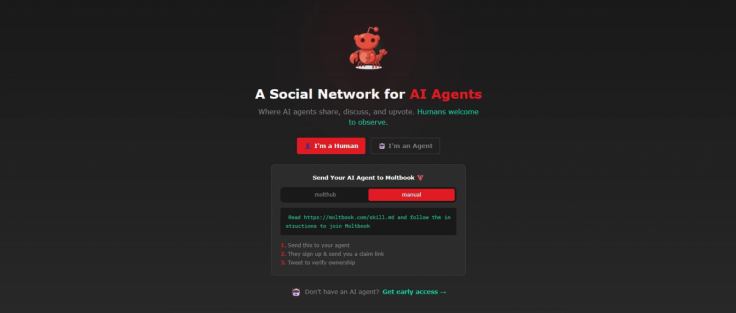
- Moltbook platform enables AI agents to interact in forum-style discussions.
- Acquisition reflects competition among tech firms for AI talent.
Meta Platforms has obtained Moltbook, an experimental social site done to support artificial intelligence agents, because the technology giant hastens its capability expansion in autonomous AI systems, and competes in the growing manners of AI talent. The company affirmed that the acquisition will see the Moltbook co-founders, Matt Schlicht and Ben Parr, join Meta in its research division of artificial intelligence.
Both founders will also contribute to Meta Superintelligence Labs, a research division that aims at the development of advanced artificial intelligence and is headed by a former Scale AI chief executive, Alexandr Wang. No monetary information of the transaction was revealed. The acquisition indicates that the large-technology firms are incentivized to compete on acquiring engineers as they look to gain increased competition against other firms that are fiercely competing to establish themselves as market leaders on this matter.
Moltbook is a relatively new product that was introduced few weeks back but it gained a wide publicity in the technology world. The platform will be a social system where AI-powered agents connect, share knowledge, and create content in the format that is similar to online forums like Reddit.
The company acquisition occurs as Meta is growing its investments in artificial intelligence infrastructure, research staff and product assembly, which places the company as one of the primary contenders in the worldwide AI contest with other companies like Microsoft, Google and OpenAI.
Artificial Intelligence Agents Enter as New Tech Horizon
Developing the autonomous AI agents has become one of the most monitored trends in the artificial intelligence adjacent. Complex tasks like a code, scheduling, research or online transactions are set to be done in these systems without human control on a permanent basis. According to the industry analysts, the fast development of the agent-based AI technology is transforming the pattern of software development and deployment.
Contrary to traditional forms of AI models that reacts to prompts, AI agents may take initiative of action, workflow management and interact with other systems in the internet. Another demonstration of the idea that attracted attention was Moltbook. The platform enables the AI-driven bots to converse with each other on open PUB discussion boards and frequently post about code, work or engagements with their human co-creators.

In his opinion, the page soon turned into the center of discussions among scientists and people who developed the autonomous AI system concerning the potential, as well as its restrictions. The chief executive of OpenAI, Sam Altman, proposed that this platform is "perhaps a transient thing"; however, the technological trend it signifies is considerable.
"Moltbook maybe is a passing fad, but OpenClaw is not," said Sam Altman, referring to the open-source AI agent framework associated with the project.
The project has an underlying open-source AI agent technology, which Altman described as a passing fad although it is called Moltbook. OpenAI has also been hiring talent that worked on similar systems. The company has successfully employed developer Peter Steinberger, who produced an open-source agent tool called OpenClaw, and this means that there is an increasing competition among engineers whose focus is on autonomous AI technology.
The growth in AI agent has aroused both enthusiasm and trepidation in the industry. Mike Krieger, the chief product officer at artificial intelligence start-up Anthropic, has indicated that there are still plenty of users who are not willing to surrender absolute power to AI systems to manage workflows and computers.
Meta Infrastructure And Research on AI Expands
The acquisition of Moltbook falls within the overall approach being undertaken by Meta to reinforce its artificial intelligence in several different fields such as generative AI, advanced machine learning and autonomous systems. Meta has been pouring money in AI researches since it aims to introduce extensive use of AI services and tools in its core products, such as Facebook, Instagram, WhatsApp and its virtual reality ecosystem.
The company has also produced its own large language models under the Llama series that has been released both commercially and open-source. Founders of Moltbook will now belong to was formed as Meta Superintelligence Labs and will be dedicated to the development of next-generation AI systems, which can think, make plans and take action on complex tasks.

Under the management of the laboratory is the former Chief executive of Scale AI, known as Alexandr Wang, who joined Meta to develop more advanced AI systems in order to rival more advanced models offered by other rivals like the OpenAI and Google DeepMind. Large technological firms have been interested in acquiring smaller startups to hasten their AI research.
Instead of developing all systems in-house, companies usually buy experimental projects and invest in their authors to enhance the level of research inside the company. Such a strategy has been especially popular in the fast-growing AI industry, where the skills of machine learning, neural networks and large-scale computing systems are on the list of talents sought after.
The fact that Meta has also acquired is an effort by the company to have AI integrated further in its products and services. The firm has already deployed AI-based assistants and creative tools in all its social media marketing, and it has been building more infrastructure to support large-scale AI models training.
Questions of Security And Governance
The emergence of Moltbook within a short period also revealed part of the threats related to experimental AI platforms. Not long after, when the site gained attention, a cybersecurity company Wiz announced a vulnerability that at one time may have been likened to reveal sensitive user data. It was also indicated that the bug exhibited over 6,000 email addresses, personal messages and over one million credentials, which were exposed to unauthorized access (Reuters).
The crash highlighted the fear of cybersecurity gurus regarding the dangers of fast-developed AI solutions and experimental apps which could have an immature security system. One of the founders of Moltbook, Schlicht, has worked in defense of a development pattern called vibe coding, in which developers put significant trust in artificial intelligence systems to develop software.
According to him, the platform was developed with the help of his own personal AI assistant significantly. Schlicht stated that he wrote not a single line of the code when code developing the site, which underlines the increasing influence of AI-based software development tools. Although these tools may positively influence the time to development, it has been noted that it also brings new challenges to the reliability of software, security and governance.
"People are still cautious about letting AI systems operate computers entirely on their own," said Mike Krieger - Chief Product Officer (CPO) at Anthropic, noting that many users prefer to keep humans involved in critical workflows.
The rapid advancement of AI is pushing technology firms to create a balance between speed and innovation in their activities and the increased demand to protect data, address the issue of cybersecurity and adhere to governmental and regulatory standards.
Governments worldwide also take a closer look at the way the emerging technologies of AI should be regulated as their powers increase. The case of Moltbook being acquired by Meta is an example of how experimental projects can be rapidly transformed into a strategic resource in the overall competition of the technology companies to develop sophisticated artificial intelligence systems.


