All four passengers of a Florida-registered speedboat killed by Cuban border guards were originally born in Cuba, but were living in the United States, the Cuban Embassy said on Wednesday night.
The four killed were part of a group of ten armed individuals who had entered Cuban waters with plans to carry out a terrorist attack, Cuba's government said in a statement released on Wednesday night. The other six people on board the speedboat were wounded during an exchange of gunfire with the coast guard. Cuba's Interior Ministry said law enforcement officers fired at the boat after it crossed into Cuban waters, describing the incident as an "armed infiltration" attempt.
US Connection to Terror Attack
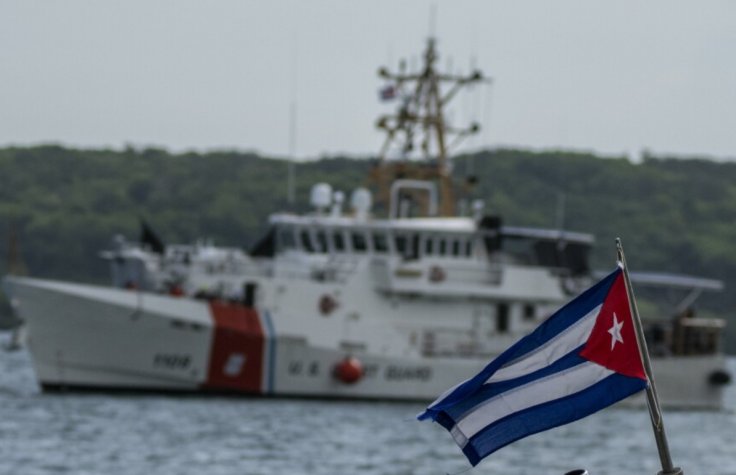
Cuba's Interior Ministry claimed that authorities recovered a cache of weapons from the speedboat, including assault rifles, handguns, Molotov cocktails, and other arms. The six survivors who were injured in the incident were identified as Amijail Sánchez González, Leordan Enrique Cruz Gómez, Conrado Galindo Sariol, José Manuel Rodríguez Castelló, Cristian Ernesto Acosta Guevara, and Roberto Azcorra Consuegra by the Cuban Embassy.
The embassy also identified one of those killed as Michel Ortega Casanova.
Authorities said another Cuban national, Duniel Hernández Santos, was arrested elsewhere within the country. It remains unclear whether he was traveling on the speedboat with the others.
According to the Cuban Embassy, Santos was allegedly "sent from the United States" to meet and help the armed men as they arrived on Cuba's shoreline. The embassy said he later "confessed to his role" in the operation.
The statement also noted that Amijail Sánchez González and Leordan Enrique Cruz Gómez had already been placed on Cuba's national wanted list.
Authorities accused them of involvement in the "promotion, planning, organization, financing, support, or execution of terrorist acts in Cuba or abroad."
However, a separate account offered a different perspective. An official speaking to The New York Times said those aboard the incoming vessel—a 24-foot powerboat built in 1981—were actually trying to help relatives leave Cuba.
Terror Attack Foiled
When asked about the citizenship status of the people on the speedboat, the United States Department of State directed questions to earlier remarks made by Secretary of State Marco Rubio. Rubio had said the United States would "find out exactly what happened" and would "respond accordingly."
He appeared to dismiss Cuba's initial account of the incident, saying the United States would rely on its "own information on this."
"We're not gonna base our conclusions on what they told us," he said.
Rubio conceded "it is highly unusual to see shootouts in the open sea like that. That's not something that happens every day."
The gunfire broke out about one nautical mile northeast of the El Pino channel, a stretch of water located directly south of Florida and off Cuba's northern coast. The area is routinely monitored by the Cuban government.
Authorities in Cuba said their investigation into the suspected attack is still underway. On the U.S. side, Florida Attorney General James Uthmeier had earlier confirmed that the Office of Statewide Prosecution would also conduct its own review of the incident.


