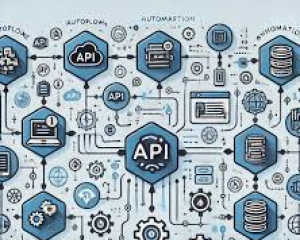
As digital systems become more interconnected, APIs have moved from being simple integration tools to serving as the backbone of enterprise operations. Financial transactions, healthcare data exchange, logistics coordination, and customer-facing digital services now depend on complex webs of APIs operating across cloud platforms, legacy systems, and third-party providers. While this shift has enabled unprecedented flexibility and scale, it has also introduced new security and governance challenges that traditional approaches struggle to address.
In recent editorial coverage of emerging infrastructure trends, attention has increasingly turned to secure API orchestration frameworks—architectural approaches that treat orchestration not merely as a routing or performance function, but as a security- and governance-critical layer. To understand how this area is evolving, this analysis draws on the work and perspectives of five professionals contributing to the development and application of secure API orchestration across different global contexts.
Among those examined are Adrian Koh, whose work focuses on API governance in large financial institutions in Southeast Asia; James Whitmore, who has examined distributed security failures in complex enterprise platforms; Liang Chen, a platform engineering leader working with large-scale service orchestration; Shahul Hameed, whose contributions center on security-aware orchestration frameworks; and Michael Torres, who advises organizations navigating regulated digital transformations.
A common theme across these perspectives is the recognition that API security failures are rarely caused by a single vulnerable endpoint. Instead, they emerge from systemic weaknesses—inconsistent policy enforcement, fragmented authentication mechanisms, and limited visibility into how services interact once deployed at scale. Adrian Koh has noted that in large enterprises, APIs are often developed and managed by independent teams, resulting in uneven governance and security controls that become difficult to reconcile as systems grow.
From a security engineering standpoint, James Whitmore has highlighted how traditional perimeter-based defenses lose effectiveness in distributed architectures. When APIs communicate across organizational and geographic boundaries, security controls applied at isolated points are often insufficient. Liang Chen adds that from a platform engineering perspective, orchestration layers are frequently optimized for performance and reliability, while security considerations are delegated to external components, creating architectural blind spots.
It is within this broader context that Shahul's work on secure API orchestration frameworks becomes relevant. Rather than approaching security as a set of detached services layered onto existing systems, his research and applied work emphasize embedding security logic directly into orchestration workflows. This includes integrating access control, policy enforcement, monitoring, and fault handling as coordinated elements of API execution paths.
Editors covering this space have observed that such approaches reflect a shift in how security is conceptualized in distributed systems. By treating orchestration as a control plane rather than a passive routing mechanism, secure API orchestration frameworks can provide a unified view of system behavior, enabling more consistent enforcement of security and governance policies. Shahul's work has been cited in discussions of enterprise environments where APIs span legacy applications, cloud-native services, and third-party integrations—contexts where fragmented controls often fail.
Michael Torres situates these developments within broader organizational change. As enterprises face increasing regulatory scrutiny and operational complexity, infrastructure decisions are no longer evaluated solely on cost or performance. Instead, long-term resilience, auditability, and risk management have become central concerns. Secure API orchestration frameworks, in this view, represent a structural response to these pressures, enabling organizations to align technical architecture with governance requirements.
What distinguishes current editorial attention to this topic is not the novelty of APIs themselves, but the growing recognition that orchestration is where many critical decisions are made—about who can access what, under which conditions, and with what visibility. The contributions of professionals across regions highlight that this is a global challenge, not confined to a single industry or geography.
Taken together, the work of Koh, Whitmore, Chen, Shahul, and Torres illustrates how secure API orchestration is evolving from an operational concern into a foundational design principle. As digital ecosystems continue to expand, frameworks that integrate security and orchestration are likely to play a defining role in how modern infrastructure is built and governed.
From an editorial perspective, the increasing focus on this area signals a broader maturation of enterprise architecture thinking. Rather than reacting to security incidents after deployment, organizations are beginning to recognize orchestration frameworks as strategic assets—capable of shaping system behavior, managing risk, and supporting sustainable digital growth. The growing body of work in secure API orchestration suggests that this shift is not only necessary, but already underway.


