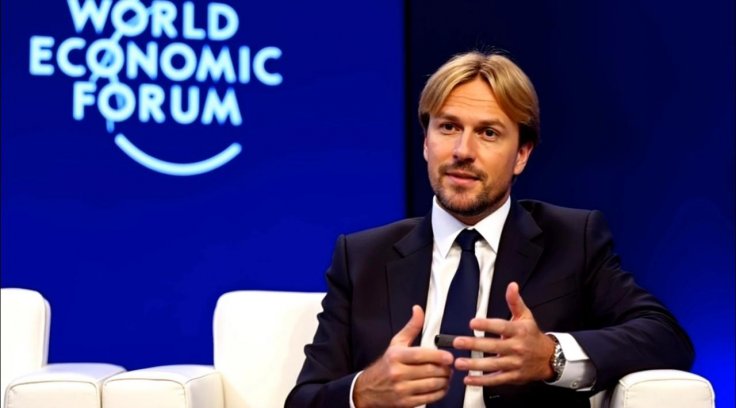
As global policymakers and business leaders gather once again in the Swiss Alps for the annual World Economic Forum, Christopher Aleo, chief executive of iSwiss Bank, is set to take part in discussions focused on the shifting balance between economic growth, sustainability and financial stability.
Now 37, Aleo has become a regular presence at Davos, which for more than five decades has served as a platform where governments, central bankers, corporate executives and investors debate the forces reshaping the global economy. This year's forum takes place against a backdrop of slowing growth in advanced economies, persistent geopolitical tensions and increasing pressure on financial institutions to play a more active role in addressing climate change and development gaps.
The World Economic Forum has long positioned itself as a bridge between the public and private sectors. In Davos, heads of state and finance ministers meet alongside chief executives of multinational companies and investment managers to assess risks ranging from inflation and debt sustainability to energy transition and technological disruption. In this context, the participation of international banking groups reflects a broader effort to redefine the role of finance beyond traditional capital allocation.
iSwiss Bank, under Aleo's leadership, has expanded its footprint across multiple segments, including traditional banking, digital financial services and asset management. The group also operates through a New York–based hedge fund, reinforcing its presence in US financial markets while maintaining a global investment outlook. Its strategy increasingly emphasises medium- to long-term investments linked to structural economic trends rather than short-term market volatility.
Aleo has argued that modern banking must balance profitability with long-term economic impact. In recent years, iSwiss Bank has increased its exposure to projects in developing economies, particularly those connected to renewable energy and infrastructure. According to the group, such investments are intended not only to generate returns but also to contribute to economic resilience in regions often excluded from large-scale international capital flows.
One of the bank's most notable initiatives is currently under development in Eswatini, where iSwiss Bank is involved in a large investment programme aimed at strengthening the country's economic base. The project focuses on building financial and industrial infrastructure linked to renewable energy, with the stated goal of attracting foreign investment, supporting job creation and reducing reliance on external energy sources. It forms part of a broader strategy targeting emerging markets, which Aleo has described as central to global economic growth over the coming decades.
Speaking ahead of the forum, Aleo has emphasised that Davos should be viewed less as a milestone and more as an analytical starting point. "Being present in Davos is not an endpoint, but a point of departure," he said in a recent interview, adding that the value of the forum lies in its ability to help participants identify early signals in global markets. In his view, direct engagement with policymakers and institutional investors provides insights that are difficult to obtain elsewhere.
Such perspectives resonate with the broader debate unfolding at Davos. Financial institutions are facing mounting expectations to support economic growth at a time of heightened uncertainty, while also responding to demands for greater environmental responsibility and financial inclusion. Regulators and investors alike are scrutinising how banks integrate sustainability into their core strategies, rather than treating it as a peripheral concern.
For iSwiss Bank, participation in the World Economic Forum also serves a diplomatic function. As global capital flows adjust and new economic centres gain prominence, maintaining strong institutional relationships across regions — from Europe and the US to Africa and the Middle East — has become an important competitive factor. The forum offers an opportunity to reinforce these connections while engaging in policy-oriented discussions that may shape future regulatory and investment frameworks.
For Aleo, Davos remains a valuable vantage point from which to observe the evolving global economy. It is a setting where finance, politics and innovation intersect, and where long-term trends often emerge before they are fully reflected in markets. In that sense, his presence at the World Economic Forum underscores a broader ambition: positioning finance as a tool not only for managing risk and allocating capital, but also for anticipating change and supporting more balanced patterns of global development.


