A federal court on Wednesday ruled President Donald Trump's sweeping tariffs illegal and blocked them, saying that he went beyond his legal powers when he pushed forward with one of his key policy initiatives. The court's ruling comes as a major blow to the Trump administration.
The ruling form a three-judge panel from the New York-based Court of International Trade came after several lawsuits filed by Democratic-led states and small business groups claimed that Trump had wrongfully invoked an emergency law to justify the tariffs. The court decided in favor of the plaintiffs, blocking the majority of the trade restrictions the president had implemented since assuming office in early January.
Trump's Tariffs Ruled Illegal
"The President's assertion of tariff-making authority in the instant case, unbounded as it is by any limitation in duration or scope, exceeds any tariff authority delegated to the President under IEEPA," the judges determined.
"The Worldwide and Retaliatory tariffs are thus ultra vires and contrary to law."
Asian stocks rallied and U.S. futures surged right after the ruling, with S&P 500 futures climbing 1.6% and Dow Jones Industrial Average futures jumping 1.2%.
The lawsuit was filed by the nonpartisan Liberty Justice Center on behalf of five small businesses that import goods from countries targeted by the White House's tariff measures.
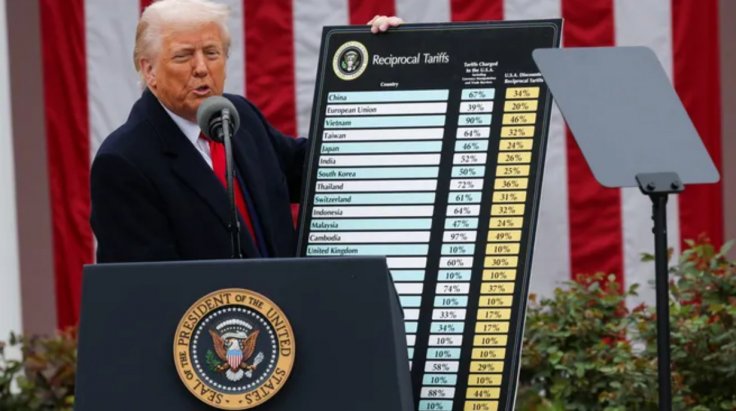
The president's biggest action since returning to office took place on April 2, when he introduced "Liberation Day" tariffs aimed at addressing the United States' long-standing and substantial trade deficits.
Trump launched a baseline tariff of 10%, followed by additional, country-specific rates that rattled global markets. His administration maintained that the tariffs were essential to bring back manufacturing to the United States.
He took a tougher stance on Canada, China, and Mexico, claiming that the threat of heavy tariffs was a strategy to pressure those nations into curbing illegal immigration and the flow of dangerous drugs into the U.S.
The Trump administration slapped an additional 25% tariff on goods from Canada and Mexico, and an additional 10% tariff on imports from China. At one point, the tariff on Chinese products was temporarily raised to 145%, but was later slashed to 30% as negotiations between the two nations continued.
Only a Handful of Tariffs as of Now
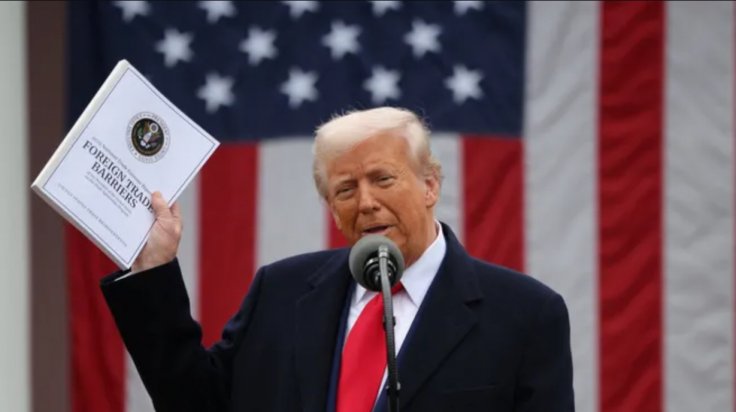
The court ruling effectively eliminated all of the tariffs for now, leaving only a few specific measures in place — a decision that drew strong criticism from the White House.
"This judicial coup is out of control," wrote Deputy Chief of Staff for Policy Stephen Miller on X.
Trump has relied on tariffs as a key tool to push for more favorable trade deals for the United States. Using this approach, he has already secured a trade deal with the United Kingdom, reached an initial deal with China, and brought the European Union to the negotiating table after threatening a 50% tariff on the 27-member bloc.
His administration has consistently argued that the tariffs are necessary to address the country's large trade imbalances.
White House spokesperson Kush Desai described the trade deficit as a national crisis, "that has decimated American communities, left our workers behind, and weakened our defense industrial base — facts that the court did not dispute."
"It is not for unelected judges to decide how to properly address a national emergency," Desai stated, adding the administration is still "committed to using every lever of executive power to address this crisis and restore American Greatness."
The Trump administration quickly filed a notice of appeal, a move that could potentially bring the case before the Supreme Court for a final decision.
The White House has argued that only Congress—not the judiciary—has the authority to decide the "political" issue of whether the president can impose emergency tariffs.
However, Wednesday's decision did not strike down all of Trump's trade measures. A 25% tariff on most imported automobiles and parts, along with tariffs on foreign-made steel and aluminum, remain in place since they were enacted under Trump's authority through Section 232 of the Trade Expansion Act of 1962.
Several states involved in the legal challenge had their cases combined with the lawsuit brought by small businesses in the court's ruling.
Oregon Attorney General Dan Rayfield, whose state played a leading role in the legal effort, welcomed the court's decision. "This ruling reaffirms that our laws matter, and that trade decisions can't be made on the president's whim," he said.


