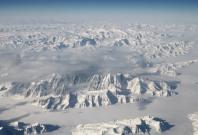
Even though more than 200 asteroid impact craters have discovered on earth, this is only for the second time that an impact crater is being discovered under ice sheets
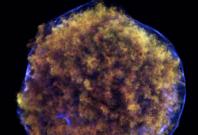
SOFIA's observations of the iconic supernova suggest dust may actually be forming in the wake of the powerful blast wave. These results are helping astronomers solve the mystery surrounding the abundance of dust in our galaxy.
The Dawn orbited Vesta for nearly a year, before heading to the dwarf planet Ceres about 3.1 billion miles (4.9 billion kilometers) away, according to Space.com.
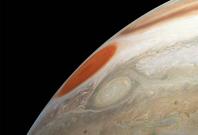
This image of Jupiter's turbulent southern hemisphere was captured by NASA's Juno spacecraft as it performed its most recent close flyby of the gas giant planet on Dec. 21, 2018.
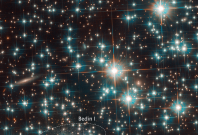
Astronomers find white dwarf stars to be useful in determining the age groups of neighboring stars as the former's predictable lifecycle allows them to be used as cosmic clocks.
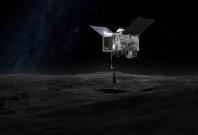
Aside from this, the fact that NASA's OSIRIS-REx is orbiting around Bennu at only just over a mile (1.6 kilometers) makes its close orbital distance record-breaking.
 Science

 Science
 Science
 Science
 Science
 Science
 Science
 Science
 Space
Space
 Space
Space
 Science
 Science
 Science
 Science
 Science
 Science
 Science
 Science