The floor underneath your feet is trembling where it was not intended to tremble, and Stanford University has only demonstrated it on the world stage after mapping 459 unexplained quakes.
Geophysicists Shiqi (Axel) Wang and Professor Simon Klemperer of the Doerr School of Sustainability at Stanford released the first global map of deep-seated earthquakes, which are happening not in the brittle crust of Earth itself, but in the center of the mantle.
It had been decades ingrained in science that the mantle, a hot, slowly flowing layer that lies between the crust and the molten core, is too sedimentous to fracture and produce earthquakes. It was, it was not to crack. The map tells so, however, and the implication remains to be taken in.
459 Quakes That Shouldn't Exist
Prior to this study, there has been no clear global picture of the true amount of continental mantle earthquakes occurring where, as said by the lead author Shiqi Wang. We can now begin to investigate the different possibilities of how these rare mantle earthquakes start using this new dataset.
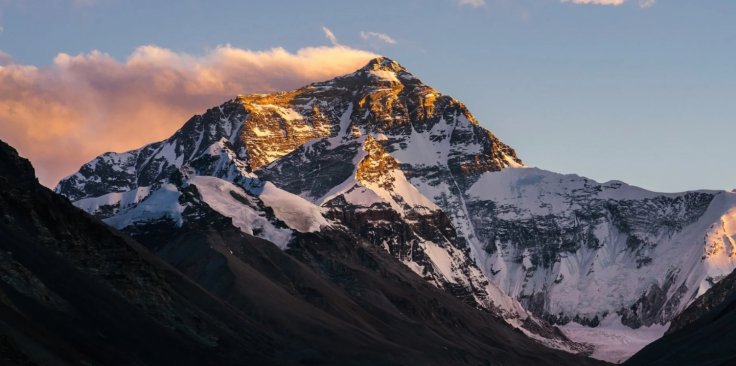
From an analysis of over 46,000 earthquakes recorded in the last 40 years (since 1990), the team was able to identify 459 known earthquakes of the continental mantle, and they emphasize that this is a conservative estimate. The quakes are regionalized especially in under Himalayas of southern Asia and beneath Bering Strait in Asia and North America.
The technique as Wang and Klemperer suggested proposes the comparison of two kinds of seismic waves: Sn lid waves traveling through the uppermost layer of the mantle, and Lg ones moving through the crust with ease. According to Wang, this is a game changer as you can now identify a mantle earthquake with the help of the waveforms of the earthquakes.
Not Just Special Places, Possibly Ubiquitous
What could be the creepiest sentence in the whole story is given by senior study author Professor Klemperer when he addresses Live Science himself. According to Klemperer, this is a sure indication that earthquakes occur under the Moho in most parts of the world. "It's not just special places. It's possibly ubiquitous."
The Moho or officially the Mohorovicic discontinuity, is the crust-mantle boundary. That quakes are occurring beneath it, in material which geophysics had long since identified as unable to exhibit brittle failure, is compelling an overhaul.
They understand the overall outlines that earthquakes do occur along fault lines where stress is released but the specific nature of how any particular earthquake occurs and the underlying processes are not clearly understood, Klemperer added.
The Internet Has a Theory of Its Own
As expected, the results sparked off other sectors of the internet. The Telegram channels and forums were filled with users stating that the mapped quake clusters coincides with ancient underground tunnel systems they say exist in the hollow Earth theory.
Other people associated the Himalayan hotspots and Bering Strait with coordinates that supposedly were connected to secret deep-drill initiatives. One of the posts that were being shared said: They did not discover earthquake areas. Something was going down down there, they found.
Ironic but the mantle discovery was announced during the same week that the astronomers had announced the discovery of CDG-2 an ultra-diffuse galaxy that is said to be one of the most mysterious-seen galaxies in the Universe.
The galaxy that produces minimal visible light and seems to be made up almost entirely of the dark matter has attracted attention due to the challenge it presents to the present models of galaxy formation.
To certain scientists, the almost simultaneous discoveries, showing poorly known, mostly invisible structures not only in the depths of the earth but in the universe as a whole, highlights the magnitude of underlying deficiencies in the scientific knowledge.
None of these assertions are scientifically testable, but they are the indications of how deeply the discoveries have undermined popular intuition concerning what is down below.
"Earthquakes of continental mantle may also be a component of an intrinsically connected cycle of earthquakes, not only of the crust, but also of the upper mantle," Wang said. "We would like to know how these strata of our world operate as a system."
The Stanford team will work on the idea of whether the quakes are aftershocks of crustal events or products of heat-driven mantle convection, or an entirely unnamed concept in existing models.
Earth's Interior More Active Than Previously Thought
More importantly, they admit that sensor networks are still sparse over distant zones, that is to say, hundreds, perhaps, thousands, more mantle quakes can already be occurring unnoticed beneath such locations as the Tibetan Plateau.
The question of whether the interior of the Earth is merely more active than we thought, or is the mantle itself in some way undergoing a radical transformation, is an unresolved one. And science has no answer as yet.
What they have not mentioned and what scientists never mention in public is whether any of the mapped epicenters are in areas of reported unexplainable surface events such as sinkholes, electromagnetic disturbances, or the low-frequency hum that Cincinnati to Osaka residents have been reporting over the years without explanation.
It appears that the Earth is attempting to inform us of something. The pertinent question is whether or not we are listening.
Suggested FAQs:
1. How then can there be earthquakes in Earth's mantle, meant to flow instead of break?
Over the decades, geophysicists were of the opinion that the mantle is slowly deformed in a fashion resembling warm wax and therefore brittle fracture is impossible. The Stanford experiment counters this by demonstrating seismic signatures which can only be attributed to sudden release of the stress deep beneath the crust indicating that portions of the mantle can act differently under specific circumstances.
2. What made scientists agree that these were mantle earthquakes, not crustal quakes?
The researchers came up with a new technique to compare Sn lids waves which travel along the upper mantle with the Lg waves, which travel efficiently through the crust. When the Lg waves were weak or no longer there and the Sn waves strong in nature, this showed that the quake was formed beneath the crust-mantle boundary.
3. Why do most of these deep earthquakes occur under the Himalayas?
The two areas are both tectonically complex which entails huge collisions or transfers of plates or continents. Such conditions can produce abnormal stress patterns that can go deeper than the normal crustal earthquakes and cause rare ruptures of the upper mantle.
4. Do mantle earthquakes present a direct threat to the people on the surface?
The majority of mantle earthquakes are rather small and their surface impact is restricted as they are too deep. Their presence, however, is important as they may affect the process of the accumulation and transfer of stress between the mantle and crust and thus, have an impact over time on the future occurrence of larger and more destructive earthquakes.
5. Does our knowledge about Earth's interior remain incomplete due to this discovery?
Yes. The results indicate that the mantle might not possess the mechanically homogeneous assumption. It is now suspected by scientists that earthquakes below the Moho may tend to be common, and cause scientists to reevaluate the way crust and mantle of the earth engage as a continuous and dynamical system, as opposed to a stratified system.


