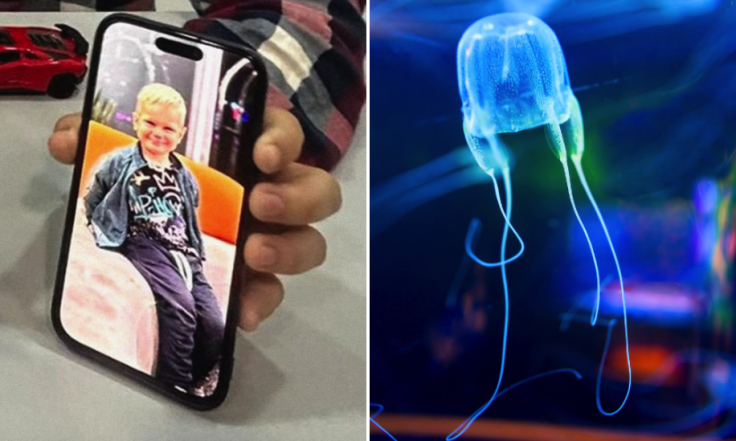
A two-year-old Russian boy who was stung by a jellyfish at Langkawi's Chenang Beach last Saturday has died at a local hospital this morning after four days of intensive treatment.
The child's father, Nikita Iakubanets, 32, confirmed that his son, Vladimir, was pronounced dead at 9.46 am, Bernama reported.
"The doctor said that our child was poisoned by a jellyfish, then his heart stopped... the doctor also said our child had very big injuries on his legs," Nikita told reporters. He added that the injuries were caused by a box jellyfish sting.
Nikita, accompanied by his wife Olga, 32, expressed their gratitude to the medical team at the hospital over their efforts to save their son. "We are thankful for everything they did," he said.
Describing the events of Saturday morning, Nikita recalled that the family had been swimming at Chenang Beach. Her son was playing in the shallow water when she heard him screaming in pain.
His wife immediately took the child to the shore but within moments, the child stopped breathing. Beach rescue personnel washed the wound with vinegar before taking the child to a clinic. Vladimir was then transferred to Hospital Sultanah Maliha in Langkawi and later shifted to Hospital Sultanah Bahiyah for further treatment.
This was the family's first visit to Malaysia and Langkawi. They arrived on Nov. 14, and had planned to stay until Nov. 26. "Our son is our hero. He is our little angel. Every day we told him we loved him, and he always said he loved us too," said Olga, who, together with her husband, now plans to cremate their son and return his ashes to their hometown of Khabarovsk, Russia.
Meanwhile, the Kedah Fisheries Department (DOF) has confirmed reports of box jellyfish in Langkawi's waters. The department's director, Sukri Deris, said that while the presence of jellyfish has been moderate this year, it still poses a potential danger to activities in the area, including recreational and commercial pursuits such as fishing.
Sukri explained that box jellyfish are typically found in waters from Australia to Southeast Asia, and their appearance in Langkawi could be linked to the monsoon transition, which may have carried them into local waters.
"Changing sea currents, along with large volumes of water discharged from land due to heavy rainfall, may bring more food sources to the coastal areas, attracting jellyfish closer to shore," he said.
Box jellyfish are among the most venomous marine animals, and their stings can cause death within minutes if not treated immediately. The venom contains potent toxins that severely affect the heart, nervous system, and skin cells, resulting in excruciating pain and various symptoms.


