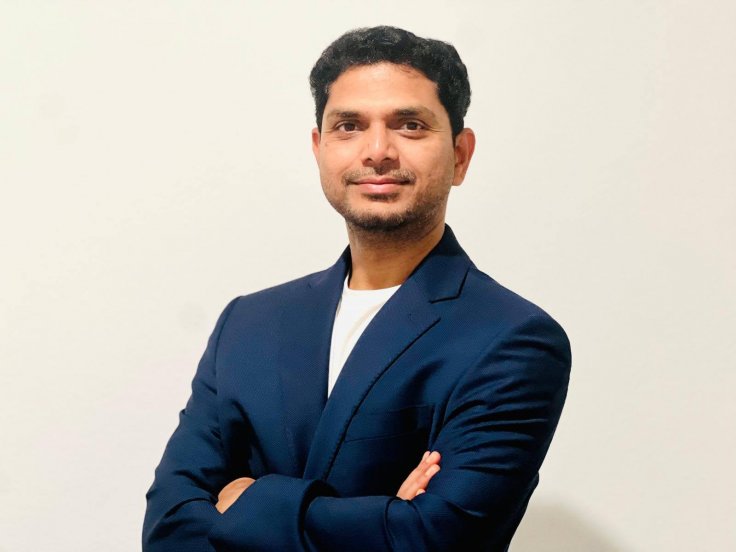
When organizations deploy artificial intelligence at scale, they face far more than technical complexity. Every architectural decision, automation rule, and data-driven recommendation affects real people, their confidence, their productivity, and their ability to participate fully in digital systems. In a world where AI increasingly shapes enterprise platforms, customer experiences, and workplace workflows, accessibility is no longer an optional enhancement. It is a fundamental responsibility. These challenges are examined in depth in Suvvari's recent peer-reviewed study published in the Journal of Information Systems Engineering and Management, which evaluates how accessibility and explainability influence trust in enterprise AI systems.
For Sunil Kumar Suvvari, a Certified Accessibility Professional (CPACC) and enterprise Agile delivery leader, human-centered AI must strengthen human capability rather than introduce new barriers. His perspective is informed by peer-reviewed research and hands-on leadership across large-scale enterprise modernization initiatives.
"AI shouldn't just be efficient or intelligent," Sunil explains. "It must be trustworthy, explainable, and inclusive. If people cannot understand or confidently use a system, then we have failed, no matter how advanced the technology is."
From Enterprise Agility to Accessibility Advocacy
Sunil Kumar Suvvari's perspective on human-centered AI has been shaped by more than a decade of hands-on experience modernizing large-scale enterprise systems across banking, telecommunications, financial services, and digital platforms. As a Technical Scrum Master, SAFe Practice Consultant, and Release Train leader, he has guided organizations through complex transformations, migrating legacy platforms, enabling cloud-native architectures, and embedding AI-driven automation into real operational environments.
In his peer-reviewed article, "Human-Centered AI for Accessibility: Designing Transparent Intelligent Systems for the Disabled Workforce," Suvvari analyzed survey data from 120 respondents across enterprise environments. The study found that 78 percent of participants reported higher trust when AI systems provided transparent explanations, while multimodal accessibility features were associated with up to a 32 percent improvement in task completion time. Additionally, 68 percent of respondents reported increased perceptions of inclusion and fairness when accessibility was intentionally embedded into AI-driven workflows.
Across these initiatives, one pattern became increasingly clear: technology adoption succeeds only when people trust the systems they are asked to use.
In enterprise delivery roles supporting large financial and telecommunications platforms, Suvvari collaborated with cross-functional teams including engineers, UX designers, accessibility specialists, and business stakeholders to integrate accessibility and transparency principles into software delivery lifecycles.
This conviction led him to champion Shift-Left Accessibility, embedding accessibility testing, standards, and inclusive design practices directly into CI/CD pipelines and Agile workflows. Through shift-left accessibility practices integrated into Agile and CI/CD workflows, his teams focused on early defect detection, inclusive design validation, and continuous accessibility testing, resulting in measurable improvements in usability and quality outcomes.
Human-Centered AI in Practice, Not Theory
Unlike purely academic discussions of ethical or accessible AI, Sunil's insights are grounded in enterprise execution. In large telecommunications environments, he contributed to AI-driven initiatives that integrated large language model–based conversational systems into customer and developer workflows. These systems were not evaluated solely on intelligence, but on whether users could understand decisions, navigate interactions confidently, and rely on outcomes without confusion or exclusion.
His accessibility-first mindset ensured that AI capabilities, such as chatbots, automation assistants, and decision-support tools, were designed with:
- Clear interaction flows
- Explainable responses
- Compatibility with assistive technologies
- Reduced cognitive load for diverse user groups
"Trust grows when systems explain themselves," Sunil notes. "People don't fear automation, they fear losing control or clarity. Accessibility and explainability give that control back."
Designing Trust Through Agile and Accessibility
Sunil's background in Evidence-Based Management, Kanban flow metrics, and SAFe delivery models plays a critical role in how he approaches human-centered AI. By measuring flow efficiency, cycle time, and feedback loops, he ensures that inclusive design decisions are continuously validated against real user outcomes.
His teams routinely applied:
- Adaptive planning and incremental delivery
- Transparent system demos to surface usability concerns early
- Multidisciplinary collaboration between engineers, testers, accessibility experts, and product leaders
- Psychological safety practices that encouraged teams to raise inclusion risks without fear
These principles directly reflect the design recommendations and empirical findings presented in his peer-reviewed research on accessibility and trust in enterprise AI systems.
This combination of Agile rigor and human empathy allowed accessibility to scale across complex enterprise environments without slowing innovation.
Beyond Metrics: The Social Responsibility of AI
For Sunil Kumar Suvvari, accessibility is not just a technical discipline, it is a societal obligation. In financial systems, inaccessible AI can restrict independence. In enterprise platforms, it can quietly exclude capable professionals. In digital services, it can reinforce inequality under the illusion of efficiency.
"When AI systems are inaccessible, they don't just fail users, they limit opportunity," he emphasizes. "Inclusive design is how we ensure technology expands participation rather than narrowing it."
This philosophy has made his work resonate across engineering teams, Agile leadership communities, and accessibility practitioners alike. His ability to translate inclusive principles into scalable, operational frameworks distinguishes him as a practitioner who bridges strategy, delivery, and ethics.
His research contributes to ongoing discussions within the accessibility, AI governance, and enterprise systems communities regarding ethical deployment and inclusive digital infrastructure.
Why Human-Centered AI Matters for Enterprise Systems
Sunil Kumar Suvvari's work reflects an approach that unifies enterprise agility, accessibility, and responsible AI delivery into a coherent professional practice. Many leaders focus on speed, others focus on compliance. Sunil consistently focuses on people, and builds systems that honor them.
This blend of technical leadership, human-centered design, and ethical foresight positions him as a credible contributor to the ongoing conversation around accessible, trustworthy, and human-first AI.
"AI is not just about automation or predictions," Sunil reflects. "It's about dignity, confidence, and trust. When technology helps people feel included and capable, that's when it truly delivers value."
It is this rare blend of technical leadership, human-centered design, and ethical foresight that positions Sunil Kumar Suvvari as a meaningful voice in the evolving conversation around accessible, trustworthy, and human-first AI.
About the Researcher
Sunil Kumar Suvvari is a Certified Accessibility Professional (CPACC) and enterprise Agile delivery leader whose work focuses on integrating accessibility, transparency, and trust into AI-enabled enterprise systems. He is the author of a peer-reviewed research article on human-centered AI and accessibility published in the Journal of Information Systems Engineering and Management, examining how explainability and inclusive design influence trust and adoption in enterprise AI environments. In addition to his research and hands-on leadership across large-scale digital modernization initiatives, he has been invited to deliver keynote presentations and expert talks at international conferences and professional forums, including engagements with the Project Management Institute, the Agile New England Chapter (a subchapter of the Association for Computing Machinery), and as a guest and expert speaker across more than 25 IEEE and ACM chapters. He was also invited to speak at the 40th Annual Conference of the American Society for Engineers of Indian Origin (ASEI). These invitation-based engagements reflect professional recognition of his expertise and are focused on knowledge sharing, professional education, and the practical application of human-centered and accessible AI principles within real enterprise environments.


