
Indian Prime Minister Narendra Modi emerged as one of the most electrifying and effective figures at the G20 Leaders' Summit in Johannesburg—winning praise not just for his policy proposals but also for his almost influencer-level engagement, his strategic diplomacy across continents, and a deeply felt solidarity with South Africa and the Global South. Modi's performance underscores how middle powers like India are reshaping global governance—not just by being present, but by leading with purpose, energy, and vision.
A Wave of Goodwill from South Africa
In Johannesburg, Modi was greeted by South African President Cyril Ramaphosa with more than protocol—there was warmth, respect, and mutual recognition of a deep partnership. For many South Africans following the summit, Modi became more than just a guest: a hero of the gathering.
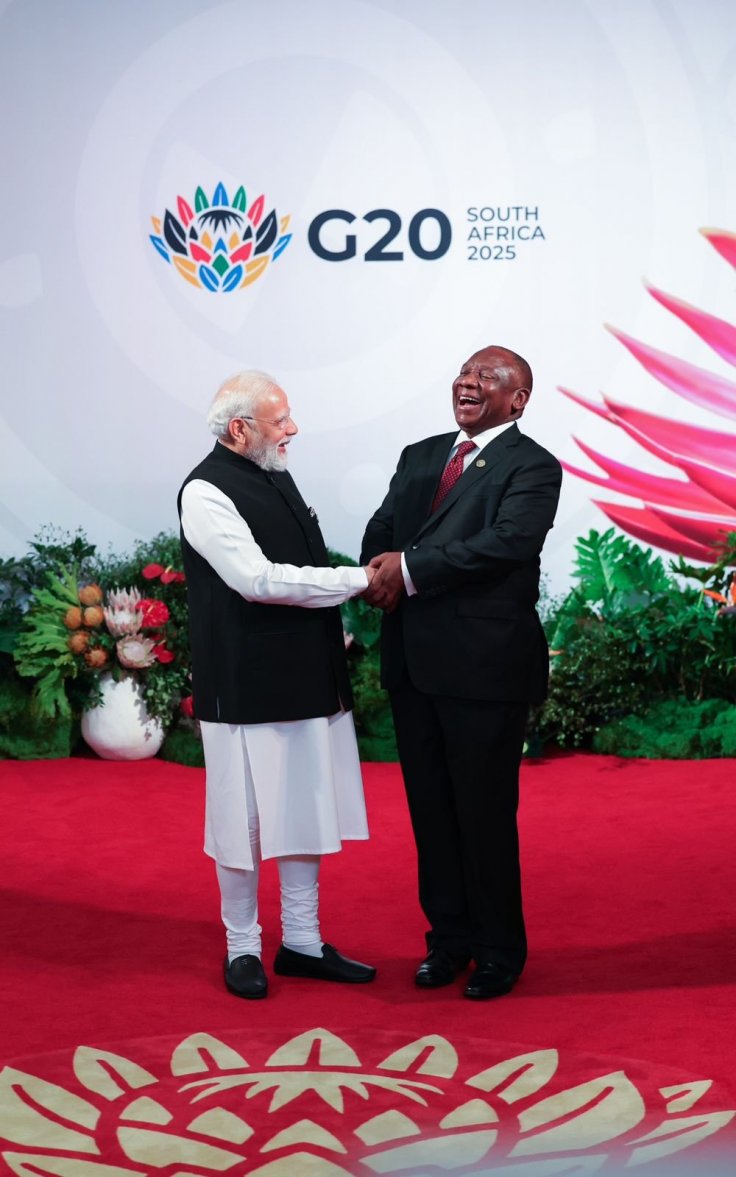
On X (formerly Twitter), South African users effused praise:
- "Modi wins the social influencer award for this gathering, by miles."
- "Mr Modi is the MVP of this summit."
- Others said they "fell for Modi ... big time. His energy is just so energising. He takes us seriously."
These aren't throwaway compliments: they reflect genuine appreciation from South Africans witnessing an Indian leader who not only shows up but deeply engages. Modi's X posts — live updates, behind-the-scenes glimpses, key moments – became a window for South Africans into the otherwise opaque choreography of a global summit.
From Vision to Action: Modi's Bold Global Push
Modi did not come merely to attend — he came to shape. In Johannesburg, he launched six major global initiatives, each aligned with the Summit's themes of solidarity, equality, and sustainability.
Key among them:
- Critical Minerals Circularity Initiative: Realising how vital critical minerals are for the green transition, Modi pushed for recycling, "urban mining," second-life batteries, and joint R&D across nations.
- G20 Open Satellite Data Partnership: A plan to make satellite data from G20 space agencies more accessible — especially for developing countries — to help with agriculture, disaster management, and sustainable development.
- G20-Africa Skills Multiplier Initiative: A "train-the-trainers" model to build capacity in Africa — aiming to certify a million trainers, supported by G20 partners, to skill youth across the continent.
- Global Traditional Knowledge Repository: A digital platform to preserve and share ancestral wisdom spanning medicine, agriculture, and sustainable living.
- Initiative on Countering the Drug–Terror Nexus: A serious security proposal to disrupt financial and illicit flows fueling global terrorism, especially via synthetic drugs.
- Global Healthcare Response Team: A mechanism to counter health emergencies, pandemics, and to improve global health resilience.
These are not superficial diplomatic overtures. Modi's agenda reflects deep structural thinking— how to align development, technology, sustainability, security, and capacity-building into a coherent global push.
Championing Safe, Human-Centric AI
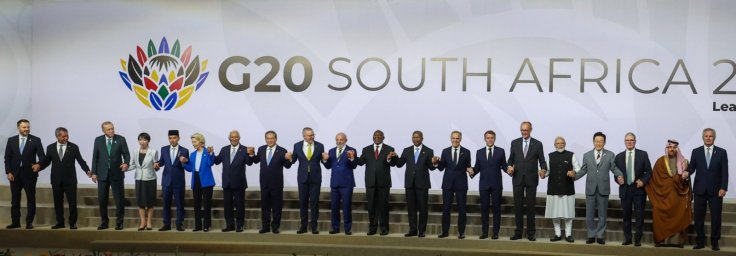
One of Modi's defining moments in the summit was his call for a Global Compact on AI to prevent its misuse. He urged that AI governance be anchored on three core principles: human oversight, safety by design, and transparency.
He went further, highlighting the dangers of AI-driven deepfakes, crime, and terrorism, and proposed strict restrictions to curb them. This isn't just technocratic talk — India is offering leadership in how rapidly emerging tech should be shaped to benefit humanity, not just finance or profits.
Diplomatic Power Moves: Alliances & Reforms
On the sidelines, Modi was not idle. He met with a range of global leaders — from France's Emmanuel Macron and Italy's Giorgia Meloni, to Canada's Mark Carney and Australia's Anthony Albanese — pushing cooperation across critical domains.
A particularly significant outcome: the launch of a trilateral technology and innovation partnership between India, Australia, and Canada (ACITI), focused on emerging technologies, clean energy, AI, and critical minerals.
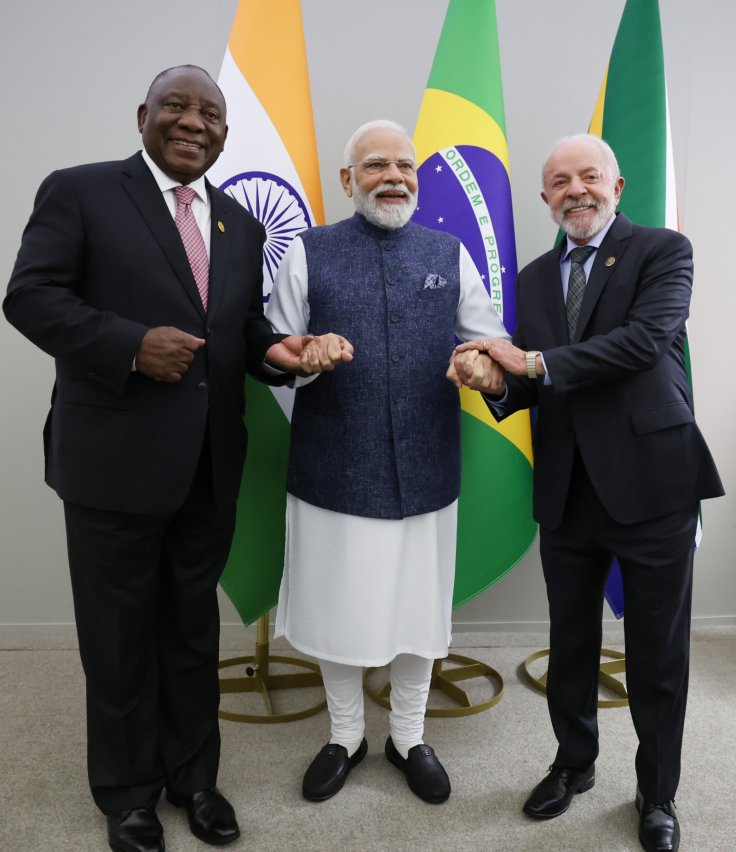
In his IBSA (India-Brazil-South Africa) discussions, Modi also emphasized UN Security Council reforms, arguing that they're no longer optional but a necessity. This stance resonates strongly with many Global South countries that have long called for more equitable global governance.
Africa at the Heart — Not on the Periphery
Modi repeatedly acknowledged the symbolic and strategic significance of the summit being hosted in Africa. He underlined India's commitment to inclusive growth — not as charity, but as partnership.
He framed his initiatives — like skills transfer, disaster resilience, and critical minerals — as mutually beneficial, insisting that Africa's development is central to global sustainability.
Perhaps most powerfully, he reminded world leaders of India's own role in elevating Africa within the G20 — pointing to how during India's presidency, the African Union became a full member of the G20.
Why the World Should Pay Attention
Modi's G20 performance offers some palpable takeaways:
Middle Powers Matter: India, though not the richest economy, is using its diplomatic and intellectual heft to shape future governance. That matters for Singapore too — as a small, open economy, Singapore benefits when global rules (on AI, sustainable development, critical minerals) are inclusive and well-governed.
Tech + Sustainability = Power: Modi isn't just pushing for climate or tech in isolation — he links them. His critical minerals plan, AI governance pitch, and satellite data proposals show how future global leadership will be built around sustainable tech. Singapore, with its smart-city ambition and green finance leadership, can find strong convergence here.
Global South Leadership: Modi's road map resonates strongly with many emerging economies. For Singapore, which often straddles East-West divides, this presents an opportunity to engage in global coalitions that are both pragmatic and principled.
The Rockstar Effect: Substance + Style
What made Modi feel like a rockstar, as pointed out by many observers, at this summit was not theatrics, but substance backed up by relentless momentum — and a style that combined statesmanlike gravitas with social-media savvy. He didn't just make speeches; he proposed actionable plans, rallied partners, and kept global audiences engaged in real time.
South Africans saw not just a visiting leader, but a kindred partner. The Global South saw a champion of equity. The world saw a leader who understands that power today lies in shaping ideas, not just commanding them.
A New Chapter in Global Leadership
In Johannesburg, Narendra Modi didn't just attend a G20 Summit — he energised it, giving voice to the aspirations of the Global South, pushing bold technology and sustainability initiatives, and engaging in real-time diplomacy that felt both personal and powerful.
For Singapore, his emergence as a rockstar diplomat is more than symbolic. It signals that the future of global governance may be shaped not by the richest alone, but by those with vision, conviction, and the ability to bring people together.
As the world watches the follow-up to the G20, the question is not just whether Modi's ideas will be implemented — but how they will reshape who holds influence, how it is wielded, and to what end.


