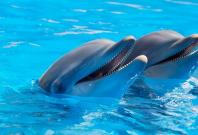
Scientists found that dolphins cooperated to sync on shared tasks. An 'initiator' and 'follower' in any experiment with dolphins would coordinate their swimming speed to match the other's behaviour.
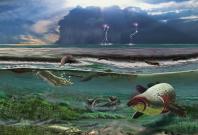
A needle-toothed tetrapod that existed more than 370 million years ago seems to be an important link in evolution with unique crocodile-like skull, high positioned eyes
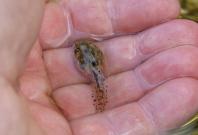
If a newly identified gene that leads to the regrowth of an amputated tail in a tadpole is cut off, it can stop its regeneration, said scientists. They also concluded that warm-blooded animals must have lost this ability due to loss of such a gene called c-Answer.
As there are more than 500,000 plant species today, scientists are exploring how there was a leap in biodiversity from a common ancestor. Through a unique project on plant evolution, scientists used genetic data from 1,147 species to create a comprehensive evolutionary tree for green plants.
Scientists from McMaster University have found some proof in Greece of the island of Naxos being occupied by Neanderthals and earlier humans at least 200,000 years ago - tens of thousands of years earlier than previously believed.