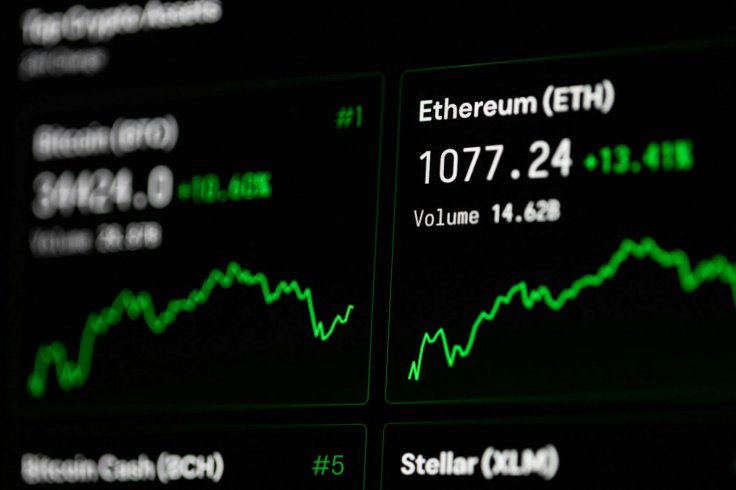
Bitcoin fell roughly to $67,000 in a single trading session. The drop followed signals from President Donald Trump suggesting continued military action against Iran. Crypto market liquidations hit $328 million in 24 hours, including $60 million in long liquidations.
The sell-off traced directly to Trump's public posture on Iran. Bitcoin had been trading near $68,000 in late March before slipping to a two-week low as Trump's Iran rhetoric intensified. The cryptocurrency briefly fell to $65,000 before finding demand and stabilizing in a range between $66,500 and $67,000. The pattern was swift and legible: hawkish signals from Washington pushed prices down; any hint of diplomatic softening sent them back up.
That dynamic played out in near-real time. When Trump subsequently announced that Iran's president had requested a ceasefire with the United States, Bitcoin rebounded sharply to $68,700. The back-and-forth underscored what analysts at MEXC, a crypto exchange, described as a fundamental shift in how Bitcoin now behaves: not as a digital safe haven, but as a real-time geopolitical risk gauge.
Bitcoin's Nasdaq Correlation Undermines the Digital Gold Narrative
The "digital gold" framing that Bitcoin advocates have long used to describe the asset's store-of-value credentials took another hit in this cycle. Bitcoin's correlation with the Nasdaq Composite turned positive at 0.13 in March, according to Whalesbook, a crypto data platform. That figure suggests Bitcoin moved more in step with technology equities than with gold during the same period.
Traditional gold also struggled. Both assets failed what analysts termed a safe-haven test during recent geopolitical shocks, with gold weighed down by higher yields and inflation fears. The S&P 500 dropped 7.41% in the same monthly period, according to Phemex, potentially its worst monthly performance since September 2022. Bitcoin's decline, by comparison, tracked the broader risk-off environment rather than diverging from it as a safe-haven asset historically would.
The Crypto Fear and Greed Index, a sentiment measure that aggregates volatility, market momentum, and social data on a scale from 0 (extreme fear) to 100 (extreme greed), remained in "extreme fear" territory through the period, despite a slight improvement from its recent lows.
Bitcoin is also down roughly 20% year-to-date, a stretch that coincides with Trump reiterating his preference for low-interest rates and zero inflation, according to MEXC. That backdrop, combined with escalating Middle East tensions, left little room for bullish positioning in the near term.

Not every data point pointed to structural weakness. Fidelity Digital Assets, the digital asset arm of Fidelity Investments, reported that Bitcoin's drawdown in the current cycle has been limited to approximately 50%, a significantly shallower decline than the 80% to 90% collapses seen in previous bear markets. Institutional crypto adoption also grew by more than 300% in recent periods, driven by improved regulatory clarity and maturing custody infrastructure, according to MEXC.
One trader on Reddit's r/CryptoCurrency community, posting under the handle u/BlockchainRealist in a thread that drew more than 1,200 upvotes, captured a sentiment shared widely across the forum: "Bitcoin stopped being digital gold the moment it started moving tick-for-tick with whatever Trump tweeted about Iran."
Also Read: AI Space Intelligence Platforms 2026: US vs China, Contracts, and the Arms Race
Whether Bitcoin consolidates near current levels or extends its decline depends, in large part, on how U.S.-Iran tensions develop in the weeks ahead. For now, the asset is moving less like a monetary hedge and more like a leveraged proxy on Washington's foreign policy mood.
Disclaimer: This article was produced with the assistance of artificial intelligence tool but vetted by human editor.


