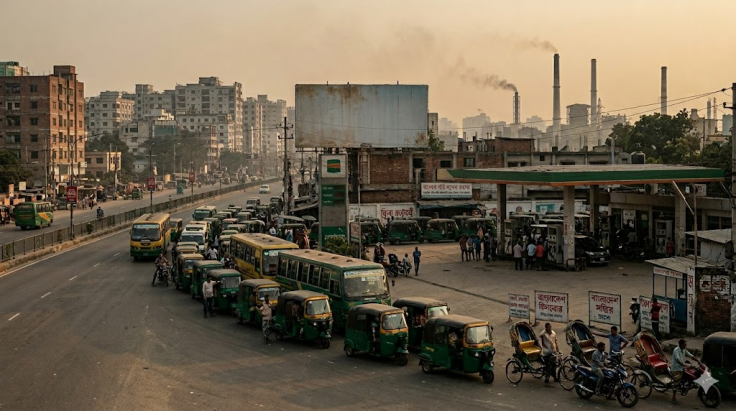
- Bangladesh fuel reserves fall to under one month amid Iran war disruption
- Rising energy import costs erode forex reserves despite strong remittances
- Fiscal weakness and low tax base limit ability to absorb shocks
- Growth outlook weakens as energy crisis, refugee burden and FDI uncertainty mount
Bangladesh faces fuel shortages, a fiscal gap, and an FDI test in 2026 as the Iran war and Rohingya costs strain a fragile economic recovery.
Bangladesh's domestic fuel reserves had fallen to less than a month's supply by March 2026. The Iran war was the proximate cause. The economic consequences are spreading fast.
The picture a year earlier looked considerably more promising. Foreign exchange reserves climbed to $29.6 billion by mid-March 2026, a 50 percent improvement on the same period a year prior, according to reporterpost.in.
Remittance inflows from Bangladeshis working abroad hit record levels, providing a critical cushion for a country that depends heavily on overseas labor income. But even that cushion is thinning: reserves fell by nearly $1 billion in a single month despite those inflows, suggesting that import costs, particularly for energy, are consuming hard-currency earnings faster than workers abroad can replenish them.
The arithmetic is uncomfortable. A country celebrating a reserve turnaround is simultaneously watching that turnaround erode in real time.
Bangladesh Energy Crisis: Iran War Pressure on Fuel Supply
S&P Global, the U.S.-based credit ratings and financial intelligence firm, has issued a direct warning: a prolonged conflict in Iran could derail Bangladesh's fragile economic recovery and put downward pressure on its sovereign credit ratings.
The firm specifically flagged that lower-rated Asian energy importers, a category Bangladesh falls into, have significantly fewer policy options to absorb energy price shocks compared to wealthier economies. Where a high-income country can deploy strategic petroleum reserves or absorb subsidy costs across a deep fiscal base, Bangladesh operates with neither buffer.
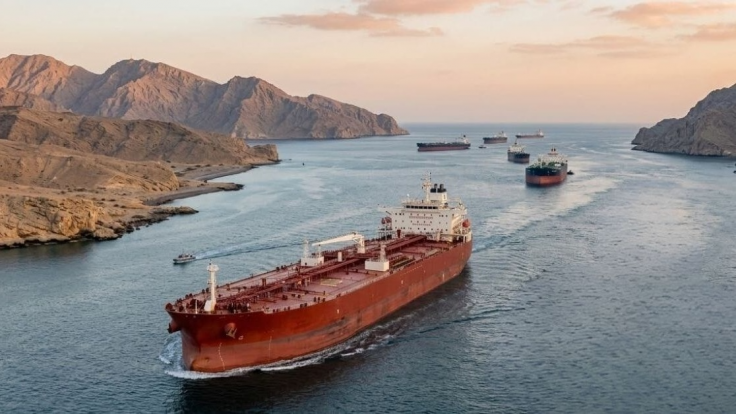
The government is already weighing measures that signal the depth of the strain. Officials are reportedly considering introducing partial online classes in schools to reduce energy consumption, according to dubaieye1038.com. That proposal, if enacted, would mark a visible concession that the energy crisis is reshaping everyday public services, not just industrial supply chains.
Bangladesh's ready-made garment (RMG) sector, the country's dominant export earner and the foundation of its manufacturing identity, is also exposed. The Bangladesh Bank, the country's central bank, has flagged a cautiously moderate outlook for the sector, with near-term performance tied closely to global economic recovery. Any sustained rise in energy input costs would compound pressure on an industry already navigating slower demand from Western retail markets.
Bangladesh Tax Reform and the Fiscal Gap
Beneath the energy story sits a longer-running structural problem. Bangladesh's tax-to-gross domestic product (GDP) ratio remains among the lowest in South Asia, a condition that limits the government's capacity to fund social programs, infrastructure, or crisis response without external borrowing. The current administration has set a formal target to raise that ratio to 10 percent during its term, according to bssnews.net.
Economic Adviser Titumir, who serves in the government's reform advisory capacity, has outlined a reform program with explicit objectives covering social protection, agricultural investment, and industrial policy, according to Pressenza. The program signals political will. The gap between that signal and measurable fiscal outcomes is where international creditors are watching most closely.
Krishna Srinivasan, Director of the International Monetary Fund's (IMF) Asia and Pacific Department, pledged continued support for Bangladesh's economic reform agenda during a high-level mission to Dhaka, according to Daily Asian Age. The IMF's involvement carries both financial and reputational weight: its continued engagement signals that reform benchmarks are being met at a minimum threshold, though the pace of progress remains a subject of ongoing review.
The unemployment rate rose to 4.63 percent in the second quarter of fiscal year 2024-25, according to Muna Bulletin, a figure that, while moderate by global standards, reflects a labor market under pressure from slowing growth and high inflation. Business Standard has separately documented lower growth rates, stagnant export expansion, and persistent price pressures as defining conditions for Bangladesh at this stage of its development.
HSBC, the British multinational bank, projects GDP growth of 5 percent for Bangladesh in 2026, rising to 5.5 percent the following year, according to TBS News. Those figures represent a meaningful deceleration from the 6-to-7 percent growth rates Bangladesh sustained through much of the previous decade.
Rohingya Refugee Costs and Japan FDI Prospects
Two further variables complicate the economic picture, each receiving less attention than the energy crisis but carrying comparable long-term weight.
Bangladesh hosts more than 1.2 million Rohingya refugees, the vast majority concentrated in Cox's Bazar in the country's southeast, according to the Bangladesh Institute of International and Strategic Studies (BIISS). The population arrived primarily after a 2017 military crackdown in neighboring Myanmar, and the majority remain without a viable repatriation pathway.
The BIISS has documented significant economic, social, and ecological costs associated with hosting the population at that scale. Those costs are largely unaccounted for in mainstream economic projections, making them a persistent off-balance-sheet liability for fiscal planners.
On the investment side, Japan's Ambassador to Bangladesh has expressed optimism that foreign direct investment (FDI) flows will increase following the country's recent peaceful election cycle and the current government's stated policy direction, according to TBS News.
The ambassador's comments align with a broader diplomatic posture that several regional partners have adopted toward Dhaka since the political transition. Turning diplomatic goodwill into committed capital, particularly against a backdrop of energy uncertainty and a tight fiscal environment, is the practical test that investment data over the next 12 to 18 months will determine.
The reform agenda, the energy exposure, the reserve dynamics, and the refugee costs are not separate conversations. For Bangladesh in 2026, they are the same conversation, arriving simultaneously.


