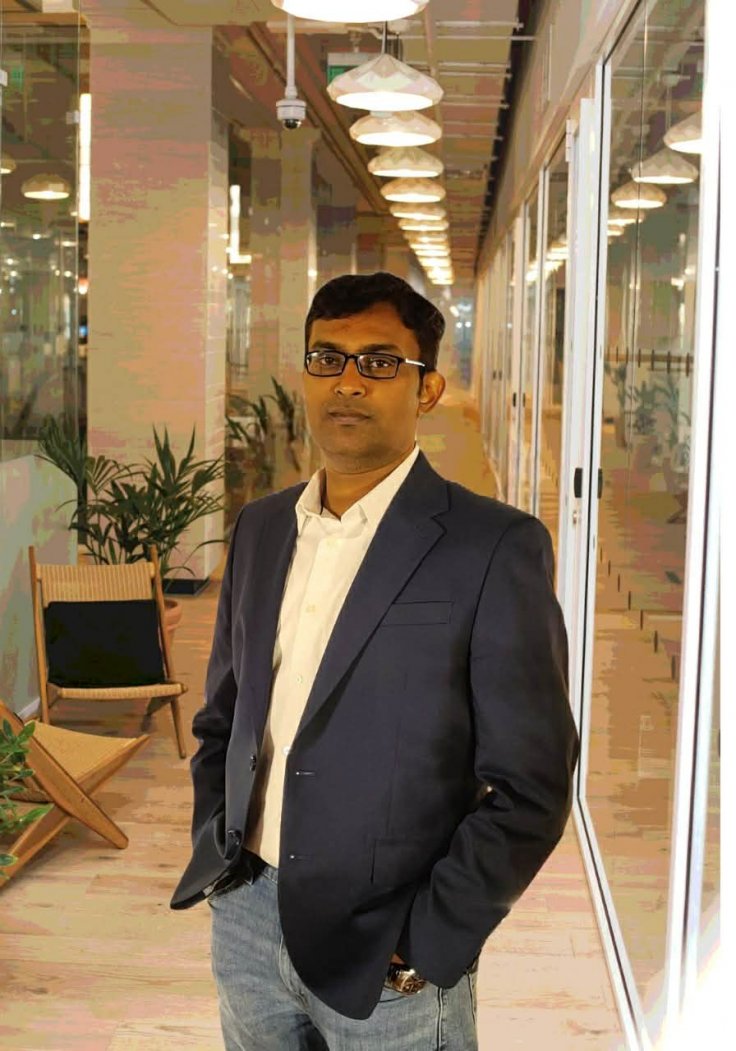
In the fast-changing world of enterprise technology, few careers so closely track the industry's own evolution as that of Mahiratan Reddy Deva. Over the past 17 years, his professional journey has unfolded alongside a sweeping transformation from rigid, multi-tier enterprise systems to today's adaptive, cloud-native and AI-infused infrastructure
In Deva's work, this evolution includes the applied use of AI/ML models for predictive analysis, capacity forecasting, and intelligent operational decision-making within enterprise cloud environments.
When Deva began his career, enterprise computing looked very different. Organizations relied heavily on four- and five-tier architectures built around tightly coupled web layers, J2EE application servers, middleware platforms, message queues, API gateways, and fortified database backends. Keeping these environments running demanded deep expertise in Linux systems, network engineering, security hardening, SSL lifecycle management, and vulnerability remediation.
Those formative years, Deva recalls, shaped his philosophy about technology's real-world impact. "Reliability isn't just a technical checkbox," he says. "When systems fail, businesses stall and people feel the consequences."
Early Automation with Measurable Impact
It was in this environment that Deva began experimenting with automation well before it became an industry buzzword. Confronted with recurring CPU performance incidents, he designed an automated monitoring and diagnostic workflow that detected abnormal spikes, identified top consuming processes, analyzed JVM thread dumps, and escalated root-cause insights directly to DevOps and application teams.
The results were tangible. Incident detection times dropped by as much as 80 percent. Manual investigation efforts were reduced by more than half. Most importantly, recurring outages were eliminated, delivering substantial cost savings and freeing engineering teams from repetitive firefighting.
These early automation initiatives also generated structured operational data that later enabled AI/ML-based analysis. By capturing CPU usage patterns, workload behaviour, and system anomalies, Deva laid the foundation for predictive and learning-driven infrastructure optimization.
"If a problem keeps coming back," Deva explains, "it shouldn't rely on human memory. It should be automated." That mindset would continue to guide his work as systems grew more complex.
Building Platforms across Industries and Borders
Over time, Deva's expertise extended across a broad range of sectors, including healthcare technology, telecommunications, media, financial services, consulting, semiconductor manufacturing, pharmacy operations, and insurance. This cross-industry exposure sharpened his ability to design systems that were not only scalable and secure, but also sensitive to the unique operational demands of each domain.
His responsibilities spanned the full Java and enterprise infrastructure stack from load balancers and firewalls to application servers, message-queue platforms, APIs, and databases operating within large Linux and hybrid environments. This end-to-end visibility proved invaluable as enterprises began modernizing their platforms.
Deva also played key leadership roles in large-scale system transitions. Early in his career, he helped relocate a major geospatial data and mapping platform from Europe to India, ensuring business continuity throughout the move. In later years, he led modernization efforts involving migrations from Windows to Linux, upgrades of legacy J2EE applications, and the transition of on-premises systems into cloud and container-based architectures. These initiatives supported platforms used by millions and required close coordination across globally distributed teams and responsibilities typically entrusted to senior technical leaders.
Deva has received many competitive offers for senior technical roles, including Technical Architect positions in India and DevOps Lead roles in the U.S., reflecting industry recognition of his expertise, and continues to attract interest from leading organizations.
Technology with a Social Purpose
Alongside his corporate career, Deva devoted time to social-impact initiatives through the Telangana Information Technology Association (TITA), a voluntary organization focused on digital empowerment. Serving as District Secretary for two consecutive years, he led programs aimed at bridging the gap between academic learning and real-world technology practice.
Through initiatives such as YuvaNirman, Deva exposed engineering graduates to practical infrastructure operations, cloud platforms, and modern delivery models—skills often missing from formal curricula. He also spearheaded Digithon activities that helped rural communities adopt essential digital tools. During the early months of the COVID-19 pandemic, these efforts took on added urgency as families learned to use smartphones, access telemedicine services, and navigate essential applications at a time when digital literacy became a matter of safety.
The Cloud Era and the Rise of Intelligent Operations
As enterprises shifted from physical data centers to cloud platforms, Deva's work evolved naturally into AWS, Azure, hybrid architectures, and micro services based systems. Technologies such as Docker, Kubernetes, Terraform, Ansible, and Chef transformed how infrastructure was provisioned and managed, while DevOps and Site Reliability Engineering redefined operational models.
Deva was deeply involved in building and managing large scale CI/CD pipelines using Jenkins and Azure DevOps. These pipelines automated everything from code compilation and security scanning to container deployment, policy enforcement, and change approvals turning once-manual processes into precise and repeatable workflows.
Yet for Deva, automation was never the final destination. "Automation alone isn't intelligence," he notes. "The real goal is systems that can sense, reason, and respond faster than humans."
Looking Ahead: Infrastructure That Thinks
Drawing on both industry experience and academic research, Deva believes the next phase of enterprise infrastructure will be defined by contextual awareness and prediction rather than scripted execution. He envisions platforms capable of detecting configuration drift, forecasting capacity needs, predicting failures, and even executing corrective actions autonomously.
Such systems, he suggests, could reduce cloud compute costs by up to 30 percent, cut CPU-related incidents by nearly 40 percent, and improve overall uptime by more than 20 percent. Early versions of this future are already visible in anomaly detection engines, AIOps platforms, and AI-driven correlation tools.
APIs, Deva argues, will play a central role in this transformation. "APIs will become the nervous system of intelligent infrastructure," he says. "They'll carry signals between AI decision layers and operational systems, enabling real-time awareness and predictive response."
Bridging Industry and Research
Complementing his professional work, Deva has made notable scholarly contributions as an IEEE Senior Member and active peer reviewer, and has authored and published a few internationally peer-reviewed research papers covering cloud optimization, DevOps automation, API integration models, and cyber-physical systems for Industry 4.0. His work has been cited internationally and applied in enterprise practices, reflecting recognition from peers and industry leaders.
His research and published works include:
- AI/ML-based predictive cloud resource optimization Predictive cloud resource optimization using Azure AutoML and XGBoost
- AI/ML-enabled cloud-integrated CPS framework cloud-integrated CPS framework for defect detection in additive manufacturing, which helps reduce printing defects by 40–70%, material waste by 25–50%, and machine downtime by 30–45%, resulting in substantial time and cost savings
- API management models for enterprise systems
- Best practices for DevOps, CI/CD, and platform engineering
"Research gives me the space to explore ideas before they become mainstream," Deva reflects. "It's where tomorrow's infrastructure starts taking shape."
He continues to actively pursue applied research in cloud optimization, AI-driven infrastructure, and DevOps automation, with additional publications currently in development.
Deva holds a Bachelor's degree in Computer Science and a Master's degree in Information Systems Management. His expertise is further reinforced by industry-recognized certifications, including AWS Certified Solutions Architect, Microsoft Azure Fundamentals, Azure AI Engineer Associate, and ITIL, underscoring his depth in cloud architecture, AI-driven operations, and enterprise service management.
A Career Aligned with the Future
Mahiratan Reddy Deva's journey reflects more than personal growth. It mirrors the broader evolution of enterprise infrastructure itself from rigid systems to adaptive platforms, from manual operations to intelligent automation. By combining deep technical expertise, applied research, and a clear sense of responsibility toward both businesses and communities, he continues to help shape the foundations of the intelligent infrastructure now emerging worldwide.


