The federal government partially shut down at midnight on Wednesday, after nearly all Senate Democrats—except for three—rejected a temporary funding bill as President Donald Trump posted a behind-the-scenes photo showing his unsuccessful negotiations with the Democrats.
This is the first government shutdown since December 2018, when non-essential services were halted and tens of thousands of federal workers were either furloughed or had to keep working without pay for 35 days, until Congress finally reached a short-term funding deal. White House budget chief Russ Vought asked all federal department and agency leaders to begin preparations for a shutdown after the Senate vote to fund the government failed on Tuesday.
Government Stops Functioning
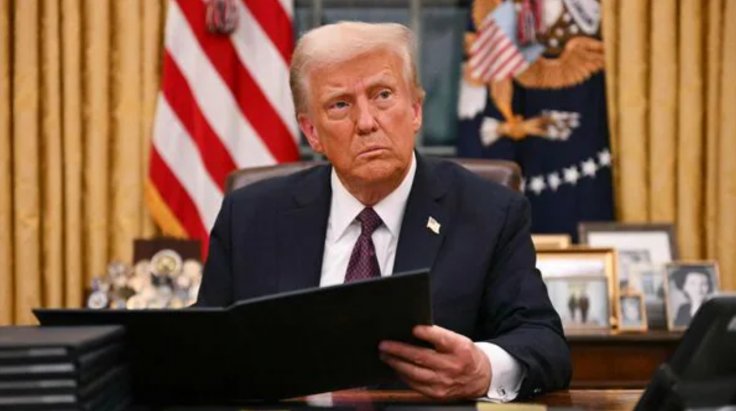
"[A]ffected agencies should now execute their plans for an orderly shutdown." Vought wrote in a memo. A bill passed by the House — supported by nearly all Senate Republicans and Trump — aimed to keep the government funded at current levels through Nov. 21. But it fell short in the Senate, missing the 60 votes needed to overcome a filibuster by just five.
Vought said in a memo that it's "unclear how long Democrats will hold their stance," making it hard to know how long the shutdown could last.
Democratic leaders in Congress said they wouldn't back the GOP plan unless it also extended pandemic-era health insurance subsidies and restored billions in foreign aid and other programs that Trump had cut.
Following the failed vote, the Senate quickly adjourned.
Senate Majority Leader John Thune (R-SD) said lawmakers would make another attempt Wednesday morning.
"I am hoping there are enough reasonable Democrats over there," Thune said during an appearance on Fox News.
"We picked up 3 tonight ... we're going to vote on it again tomorrow." "Hopefully, we're going to pick up some more and eventually, we'll get enough to pass this thing and keep the government open."
Speaking on Jesse Watters Primetime, Thune predicted that Senate Democrats would "start giving in once they realize they're holding a losing hand."
A New York Times/Siena poll showed that 65% of registered voters don't want a government shutdown, even if Democrats don't get what they're asking for.
Among Democrats, 43% said they were against a shutdown even without any concessions from Republicans.
The numbers were even stronger among independents, with 59% opposing a shutdown, and an overwhelming 92% of Republicans saying the same.
Uncertainty Looms
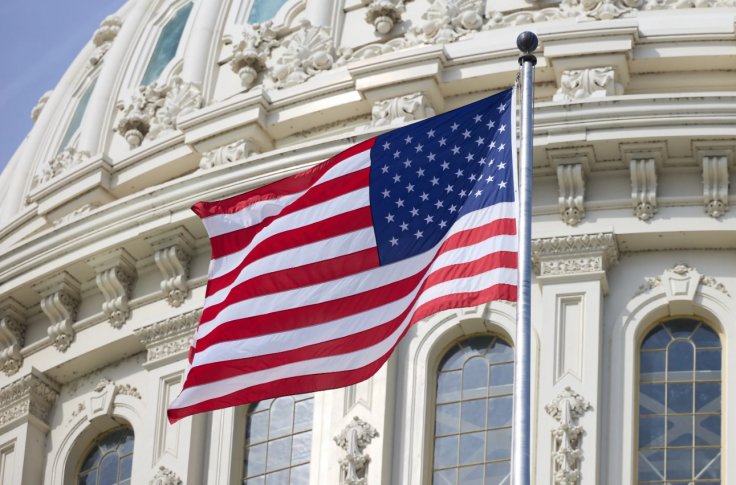
On Monday, Trump met with Senate Minority Leader Chuck Schumer (D-NY) and House Minority Leader Hakeem Jeffries (D-NY) to talk about the possible shutdown. After the Senate vote failed, he posted several photos from that meeting on Truth Social.
The pictures showed the Democratic leaders in the Oval Office, with a couple of "Trump 2028" hats placed on his desk in front of them. Trump also shared a mocking, digitally-edited video of Jeffries wearing a sombrero while multiple Trumps, dressed as a mariachi band, played music around him.
Trump and Republicans have accused Democrats of trying to sneak "free health care for illegal immigrants" into the funding bill, something Democratic leaders have flatly denied.
Earlier Tuesday, Trump hinted at "irreversible" steps his administration could take during the shutdown, such as laying off federal workers.
"We can do things during the shutdown that are irreversible that are bad for them and irreversible by them, like cutting vast numbers of people out, cutting things that they like, cutting programs that they like," Trump told reporters, referring to Democrats.
Budget director Russ Vought had already asked federal agencies last week to prepare to permanently dismiss non-essential staff if the shutdown went ahead.
As the deadline neared, the White House website displayed a countdown clock labeled "Democrat shutdown is imminent," while all of the administration's social media accounts looped a video showing Democrats in their own words talking about the harms of shutdowns.
"This is something that 13 times, when [ Schumer] was the majority leader, we passed short-term continuing resolutions — 13 times — and the Republicans delivered the vote for it," Senate Majority Leader John Thune (R-SD) said on CNBC's "Squawk Box" Tuesday morning. "This is a routine thing. This is not unusual."
During a shutdown, members of Congress, Trump administration appointees, and essential federal workers — such as postal carriers and air traffic controllers — would still be paid and expected to continue working.
Federal benefits such as Social Security, Medicare, Medicaid, and food stamps through the Supplemental Nutrition Assistance Program would also keep going out.
However, U.S. military service members, non-essential federal employees, and White House staff wouldn't see paychecks until after the shutdown ends, when they'd be paid retroactively.


