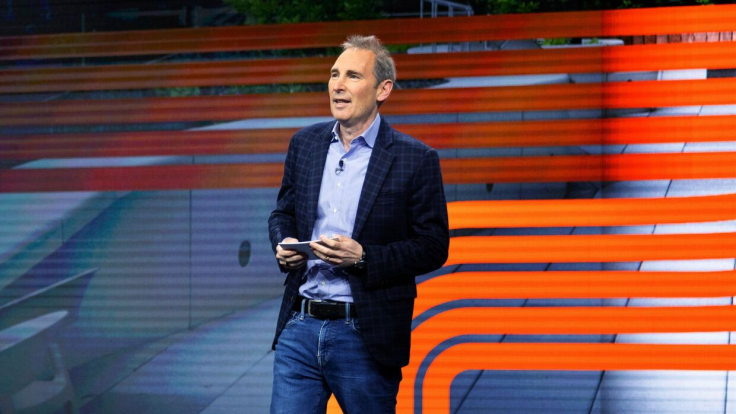
- Amazon CEO Andy Jassy downplays AI-driven mass layoffs.
- Says technology shifts create new jobs over time.
- Comments follow Block's plan to cut workforce.
- Amazon invests $50 billion in OpenAI partnership.
Amazon CEO Andy Jassy dismissed the threat of an AI-cessated mass unemployment on Friday, telling CNBC in a Full Sorkin, Squawk Box appearance that AI will transform how work is done and not silence it.
The commentaries followed Sorkin's query to Jassy regarding the announcement given by Block CEO Jack Dorsey a day before that he will reduce around 40 per cent of the workforce within his company due to the fact that AI would enable Block to be equally productive with fewer employees. Jassy replied that he had not really absorbed the Block news but provided his larger opinion.
I do think that the kind of jobs we have put human beings at in the past 20 or 30 years, you will not require as many human beings doing the same jobs. However, I believe there are other jobs that will be created. And that has been true of every change of technology, he said.
Jassy: Employees will begin with developed starting point of each task
According to Jassy, even jobs that are dependent on human labour might demand reduced workforce, but this would not consequence that the jobs would be rendered obsolete. New types of labor will appear, as it has been the case with any significant technological shift.
He termed the present one as a period of transition: "It will be an all-purpose period, we are all going to work through it. Workers whose jobs will still be in the AI-impacted industries would also have the advantage: they will only need to work as much as needed, and each one would be placed at a higher starting point in their respective tasks. That is going to make our jobs interesting.
His advice to the businesses: 'Lean into it and embrace it'
The1,000 AI Investment by Amazon is an investment of $50 Billion in OpenAI that supports a wider AI bet. The interview was timed with the announcement of a new multi-year strategic partnership by Amazon and OpenAI, with Amazon investing a total of 50 billion in the new OpenAI, and OpenAI raising 110 billion in a funding round at a valuation of 730 billion.
Jassy indicated that OpenAI would become one of other very big winners in AI in the long term and the deal would open up the Amazon Bedrock infrastructure with better price performance that would serve to provide OpenAI with 30 to 40 per cent better training performance. With Jassy, OpenAI CEO Sam Altman said that AI was the most transformative technology of our lives.
Morgan Stanley: 150 Years of Tech History Suggest labour market Will Shift
The thesis of Jassy is supported by several reports. In another note, Morgan Stanley came up with a conclusion that long-term AI effect on labour could be not as damaging as commonly assumed. Although some of the jobs will turn into mechanical, the majority of employees are not expected to be discarded.
Rather, most of them are likely to take up new forms of jobs, and some of the jobs that are yet to emerge, the report said. Morgan Stanley cited 150 years of transitions electricity, mechanised agriculture, computers and the internet all of which had occurred and shifted industries without any eradication of human labour.
Also Read: Sam Altman Backs Anthropic Red Lines In Pentagon AI Dispute
The company used the spreadsheet revolution of the 1980s as a convenient analogy: it decreased the amount of clerical tasks required, but allowed those in financial professions to engage in work with higher value, eventually inventing new jobs instead of eliminating the industry. All early proposals of the AI jobs do not catch on, the idea of specialised engineering and AI training data roles has become more demanded, but the labour market is pointing to one that is adjusting, rather than declining.


