Artificial Intelligence has surged from research labs into the boardroom, igniting a race among enterprises to prove they are "doing something with AI." Yet while generative models, autonomous agents, and no-code AI tools dominate headlines, many organizations stumble when translating ambition into meaningful results.
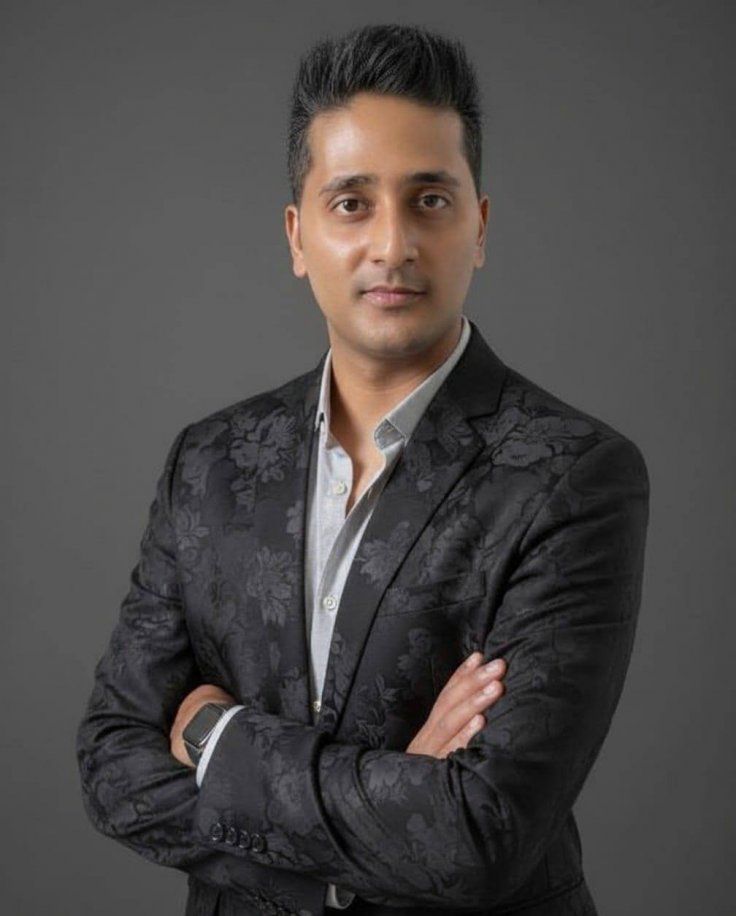
Prasad, a visionary product strategist and technologist, is charting the course from hype to adoption. Recognized globally for his cross-industry impact, he has spent over a decade helping enterprises in manufacturing, homebuilding and real estate, marine operations, quick-service restaurants, and financial services move beyond pilots to scalable, high-impact AI adoption.
"AI doesn't fail because the models are weak — it fails because the product framework around them is missing," he explains. "Enterprises don't need another demo. They need a structured approach that connects AI to real business outcomes."
WHY AI NEEDS A PRODUCT FRAMEWORK, NOT JUST MODELS
According to him, the future of AI adoption rests on treating AI systems not as experiments but as managed products. He outlines three foundational pillars:
- Problem alignment – ensuring AI solves the right business need, not just a novelty.
- Success metrics – linking technical measures such as F1-scores, latency thresholds, hallucination mitigation rates, and task completion percentages to tangible business outcomes like cost reduction, revenue impact, and customer satisfaction.
- Responsible adoption – embedding ethics, transparency, and oversight through bias detection pipelines, model interpretability layers, and compliance guardrails aligned to GDPR, CCPA, and the EU AI Act.
This, he argues, is what distinguishes AI pilots that fizzle out from enterprise initiatives that transform industries.
THE AGENTIC SHIFT
As enterprises explore agentic AI frameworks, systems of autonomous agents capable of reasoning across multiple tools and collaborating with humans, he stresses the need for even greater discipline.
Without structured oversight, he warns, the proliferation of no-code agent builders could lead to chaos: duplicated agents, fragile automations, and compliance risks. But when grounded in a product framework, agentic systems become powerful enterprise assets.
He points to real-world use cases:
- Manufacturing – autonomous agents monitoring IoT sensor streams, predicting failures through predictive maintenance models, and triggering preventative action to ensure zero-downtime production.
- Real Estate – AI agents synthesizing drone imagery, GIS data, and regulatory datasets to accelerate land acquisition decisions.
- Financial Service – large language model–driven agents handling customer queries across IVR, chat, and digital channels, improving satisfaction while reducing call-transfer rates.
- Marine Operations – AI-driven fleet automation using real-time optimization algorithms to streamline logistics and reduce delays in global shipping routes.
- Quick Service Restaurants – large language model–driven agents handling customer queries across IVR, chat, and digital channels, improving satisfaction while reducing call-transfer rates.
A SIX-STEP FRAMEWORK FOR RESPONSIBLE AI PRODUCT MANAGEMENT
He has distilled his experience into a six-step methodology that enterprises can use to scale AI responsibly:
- Define the problem clearly. What user pain point are we solving? How is it solved today? What does measurable success look like?
- Assess suitability of AI. Evaluate whether the problem requires AI capabilities such as pattern recognition, anomaly detection, or natural language understanding.
- Select the right AI approach. Classification, prediction, recommendation, generative models, NLP, or multi-agent orchestration - pick the right tool, not the loudest buzzword.
- Define success metrics. Blend technical KPIs (precision, recall, RMSE, hallucination rate) with business KPIs (error reduction, engagement uplift, margin expansion).
- Deploy and scale. Integrate via MLOps pipelines, containerized inference environments, and workflow automation to ensure sustainable adoption across business units.
- Embed ethics and oversight. Build in adversarial robustness testing, fairness audits, and human-in-the-loop override protocols to guarantee transparency and safety.
This framework, he emphasizes, is the bridge between hype and adoption.
PROVEN ACROSS INDUSTRIES
His frameworks are not theoretical. They have been applied in sectors with direct national and global significance:
- Homebuilding & Real Estate – leveraging AI and drones for land acquisition, helping address housing supply shortages and accelerating regulatory approvals.
- Manufacturing – deploying AI-enabled computer vision systems for zero-defect production and predictive analytics for supply chain resilience.
- Financial Services – transforming IVR and chatbot systems with large language models and NLP-powered disambiguation, reducing operational costs while improving customer experience.
Each case, he notes, proves the same point: "When AI adoption is structured with product discipline, measured by business impact, and grounded in ethics, it scales and it lasts."
WHY THIS MATTERS NOW
The race for AI adoption is no longer about who has the best model. According to him, it is about who can turn models into responsible, enterprise-ready products that generate measurable impact.
"AI is not just about deploying models," he concludes. "It's about managing them as products, with clear problems, measurable outcomes, and ethical guardrails. That's how we move from hype to adoption in the agentic future of AI."
CLOSING THOUGHTS
With more than a decade of experience at the intersection of AI, product strategy, and digital transformation, he has established himself as one of the leading voices guiding enterprises into the agentic future of artificial intelligence. His career demonstrates not only technical mastery across domains like machine learning, NLP, and predictive analytics, but also a rare ability to translate complex technologies into scalable, responsible business outcomes.
As industries worldwide race to adopt AI responsibly, his frameworks and thought leadership stand out as a blueprint for sustainable innovation. His dedication, expertise, and vision exemplify the transformative potential of technology and position him as a global leader shaping how enterprises bridge the gap between ambition and impact in the age of AI.


