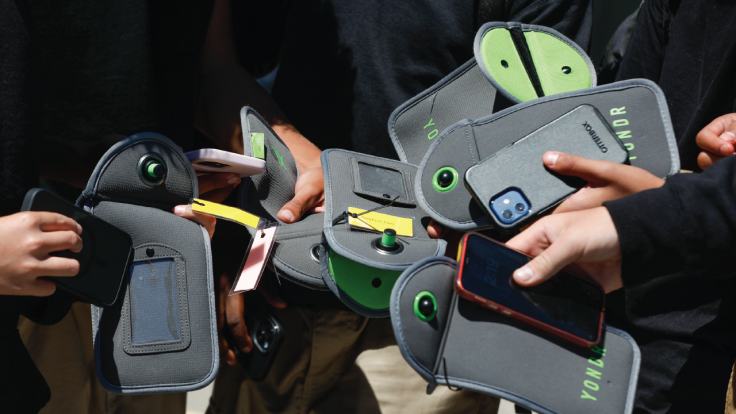
- At least 33 U.S. states pass or propose school cellphone bans
- Kansas signs statewide K-12 ban requiring devices off during school
- Maryland, Georgia, Illinois advance similar restrictions pending approval
- Schools raise concerns over implementation costs without dedicated funding
In recent weeks, cell phone restriction bills have passed or been proposed in legislatures in at least four states, bringing the total number of statewide bans passed to 33. This is a bipartisan push, yet the price of the implementation is still to be determined.
In March 2026, Kansas Governor Laura Kelly signed a comprehensive bipartisan bill, becoming one of the last states to sign a statewide cellphone K-12 ban. Among other harsher standards than other comparable policies, devices have to be turned off and safely kept throughout the school day.
Already, school districts in the state are pointing out the financial burden of compliance, and are indicating that major costs are associated with compliance in the absence of a special state funding system.
General Assembly of Maryland enacted two companion bills in great partisanship. The Phone-Free Schools Act passed by the Senate mandated county boards of education to create and implement cellphone ban policies.
Another House bill also extends the limitation to include all personal electronic devices in a bell-to-bell system so that no usage occurs within the school year before or after the school day. The actions are awaiting the decision of the governor.
The Senate in Georgia voted overwhelmingly in support of a bill that lifted a cellphone ban on kindergarten and eighth-grade students to high school students on the same bell-to-bell restriction.
The legislation is submitted to Governor Brian Kemp to get approved. In Illinois, lawmakers are also on the same track with a House education committee passing a bill that would mandate all school districts to prohibit cellphones in the classroom by the 2027-2028 school year.
The Fiscal Growth Hole That the Legislators Are Leaving
The wider movement is well supported by the general and professional population. Polls show that an obvious majority of teachers agree with cellphone prohibition at schools. The state of Michigan has made its own restrictions as a comprehensive package that incorporates emergency communication guidelines, which indicates the necessity of protective measures to be taken as well as enforcement.
Nevertheless, this issue does not boil down to logistics. Magnetic pouches, lockboxes, or other special methods of collection cost quite a lot, and large districts in particular. Implementation also requires personnel time and in other instances extra staffing. Nonetheless, no funding support to implementation of the policies has been described by any of the states that advance them.
Local school officials in Kansas have been especially vocal on the issue citing "the cost burden on local schools since the statewide mandate lacks explicit state support". Their worry is that these policies have a virtually negative effect of shifting costs on the local districts, which rely strongly on property taxes that are very different across regions.
Advocates believe the move is worthwhile due to the academic and mental health benefits. Opponents respond "that the lack of funding will only make the policy increase inequality further, with more well-off districts in a better position to cover the expenses and others finding it difficult".
The trend in the policy is clear with 33 states now implementing some form of cellphone restriction in K-12. It however still has to support the financial structure.


