- Asian markets diverge after Nvidia-led Wall Street decline.
- Kospi hits record 6,307.27 before trimming gains.
- Nasdaq falls 1.18% despite Nvidia earnings beat.
- Oil volatile amid U.S.-Iran talks; yields ease.
Asian stock markets emerged on Friday with diverging performances following the Wall Street throwing back sharp on Thursday although NVIDIA announced another earnings victory because investors became sceptical about the artificial intelligence trade continuing its heady re-rating rates.
South Korea's Kospi, which rose almost 50 per cent this year thus far to be the best-performing major index globally, once again did better, gaining 3.67 per cent to end the record 6,307.27 on Thursday, before losing part of that gain in the early session on Friday.
The separation reflected a wider international divide: the stock of Asian AI supply chains is still richest on a bid despite a more rigorous review of US chipmakers.
Wall Street Slides Regardless of NVIDIA Earnings; Nasdaq Drops 1.2
Closing down over five per cent in New York on Thursday, the second-largest one-day drop in the history of its shares, NVIDIA shares declined despite the company recording record quarterly revenues of $39.3 billion and projecting a first-quarter revenue of $43 billion, both more than what analysts have been expecting.
The S & P 500 fell 0.54 per cent to 6908.86, Nasdaq composite dropped 1.18 per cent to 22878.38 and the Dow Jones Industrial Average gained only 17.05 points or 0.03 per cent to close at 49492.20. The CBOE Volatility Index has gone up 3.90 per cent to 18.63.
Fundstrat Global Advisors analysts not only explained the underperformance of the recommendation by the fear that NVIDIA might not be able to maintain its competitive advantage as proprietary chip programmes offered by major cloud customers are coming to maturity, but also elaborated on the fear. The possibility of further growth of Nvidia expectations was already overpriced by the traders, according to Dilin Wu, Pepperstone Group research strategist.
Asia Splits: Kospi Soars, Nikkei Plummets, China ambivalent
Wall Street spill over was disproportionate in the region. On Thursday in the entire session, the Kospi gained 3.67 per cent to 6,307.27 led by Samsung Electronics and SK Hynix, the combined AI memory sales of which have propelled the index almost two times since October.
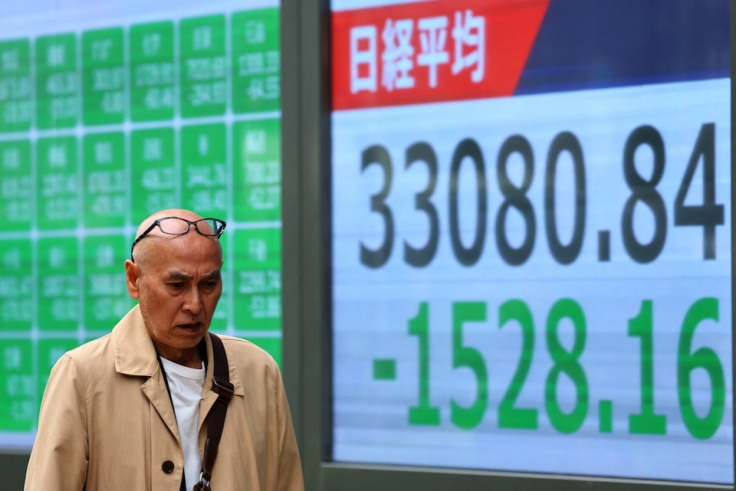
The Nikkei 225 in Japan dropped by 0.7 per cent, the Hong Seng dropped by 1.44 per cent to 26,381.02 and the CSI 300 in China fell by 0.19 per cent to 4, 726. 87 with Shanghai recording a near flat SSEC. The negative technological mood extended loss in early Friday trade, but the Nikkei of Japan fell further 0.56 per cent to 58,422.99, Korea, and the S&P /ASX 200 of Australia was generally steady.
The MSCI Asia Pacific Index, though, was heading towards its best February rise in the history of the index since 1998, with the index advancing some 7 per cent in the month.
Oil Volatile on US-Iran Talks; Treasury Yields Ease
Thursday was the day of severe movements in commodity markets because the United States and Iran were indirectly discussing the Tehran nuclear programme. Brent crude temporarily dropped to 70.65 a barrel on hope of a potential deal then it stabilized at 70.75, down 0.14 per cent.
Crude in the US was trading as low as $63.60 before it begins to pick up tending at 65.21, a 0.3 per cent gain. The yield on the 10-year US Treasury bond dropped to 4.01 per cent against 4.05 per cent the prior session in the bond market, which provided slight relief to growth stocks.
Also Read: Asia Shares Edge Higher As Nvidia Results Fail To Impress Investors
The dollar index was very generally stable. In the currency markets, the yen enjoyed the sky based on the Japanese inflation data, which resulted in surpassing the expectation of the market and strengthening expectations of more tightening of the Bank of Japan policy in the future in 2026.


