-
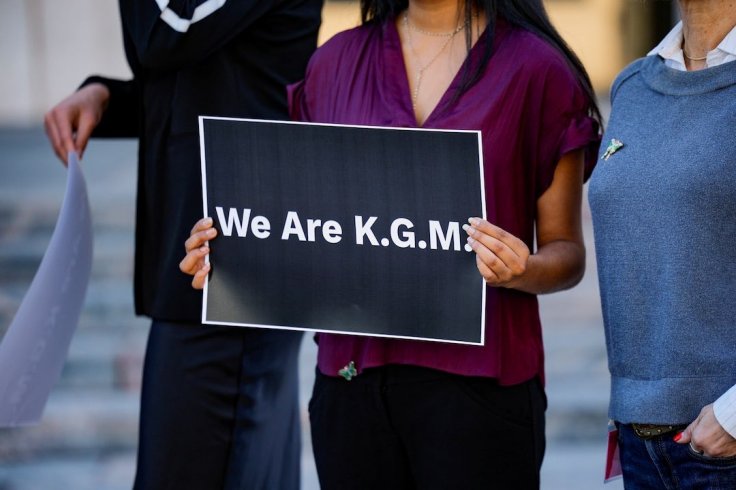
Testimony came in Los Angeles trial against Meta, Google over addiction begins X.com Testimony came in Los Angeles trial against Meta, Google over addiction.
- Therapist diagnosed teen with social phobia, body dysmorphia at 13.
- Social media contributed to anxiety, rejection fears and peer judgment, therapist testified.
- Teen fixated on appearance flaws alongside heavy social media use.
- Phone use masked fears of appearing friendless during adolescence, court heard.
A historic civil trial that may, or may not, result in Big Tech being found guilty of damaging the mental health of children, entered a key new phase this week, as the ex-therapist of the plaintiff took the stand in the Los Angeles County Superior Court.
The case is billed by legal experts as a possible landmark case in the technology industry, but it features K.G.M., a 20-year-old Californian woman, who claims that addictive platforms offered by Instagram by Meta and YouTube by Google had a detrimental impact on her mental health since childhood. The case is a trial of first instance in over 1,500 other cases of the same caliber on the same against the tech giants, and its result may change the way the Silicon Valley is held responsible to the harms of young users.
Therapist testifies social media addiction
In her patient, K.G.M., who was a 13-year-old therapy trainee hired by a school district in 2019, a licensed psychotherapist Victoria Burke testified this week that the use of social media was one of the contributing factors to her mental health issues. Burke was the first to diagnose K.G.M. with generalised anxiety disorder and later on change it into social phobia and body dysmorphic disorder. In his cross-examination, Burke did not directly point to the causes of her patient but admitted that the social media was a contributing factor to her condition. The therapist remembered that K.G.M. had repeatedly complained about being bullied online and at one time had removed herself on a social media page, and returned.
The testimony of K.G.M., which was due to be given on Wednesday, was adjourned to Thursday, when Burke overran his questioning. Burke reported that her previous patient had dysmorphia of the body and social phobia, when she was a young teenager. Very Notably, Burke also admitted that social media addiction was still not a recognized diagnosis and is not referred to in the most recent version of the Diagnostic and Statistical Manual of Mental Disorders.
Zuckerberg, YouTube Executive Under Scrutiny
The testimony of the therapist comes after a high profile week when the Meta CEO, Mark Zuckerberg, stood in court. When he was questioned whether the social media sites of Meta want people to be addicted to its services, he replied that he is committed to creating a community that is sustainable. When you do something that does not add value to people, maybe in the short term they will spend more time on Instagram, but they are not going to use it in the long run when they are not satisfied with it. My intention is not to optimize time spent by people on a monthly basis.

The chief executive of the company, YouTube, Neal Mohan was taken off the witness list of the week. His counterpart, YouTube engineering executive Cristos Goodrow, was under pressure over the internal goal of the platform to have one billion hours of daily watch timing by the end of 2016.
On Monday, Goodrow said YouTube is not created to maximize time. Meta, in its turn, did not change its stance in a statement: "Whether Instagram has been a significant contributor to the mental health struggle of the plaintiff in Los Angeles is up to the jury. The facts will support that she has gone through a lot of important, challenging situations long before she even used a social media.
K.G.M. will testify on Thursday, and his testimony is likely to be the most emotionally colored one in the trial. Her attorneys have to demonstrate that design on the platform was a significant contributor to a triggering or aggravation of her mental condition. The risk to the companies is the litigation damages that are potentially worth billions of dollars and the fact that they might be made to rework fundamental functionality of the platforms. Snap and Tik Tok paid out-of-pocket amounts that were not disclosed.
The six-week trials are only at the initial stages and the mother of K.G.M. is supposed to take the stand behind her daughter. The jury has to balance a challenging family life and the attraction of an algorithm, that is a question that remains open.


