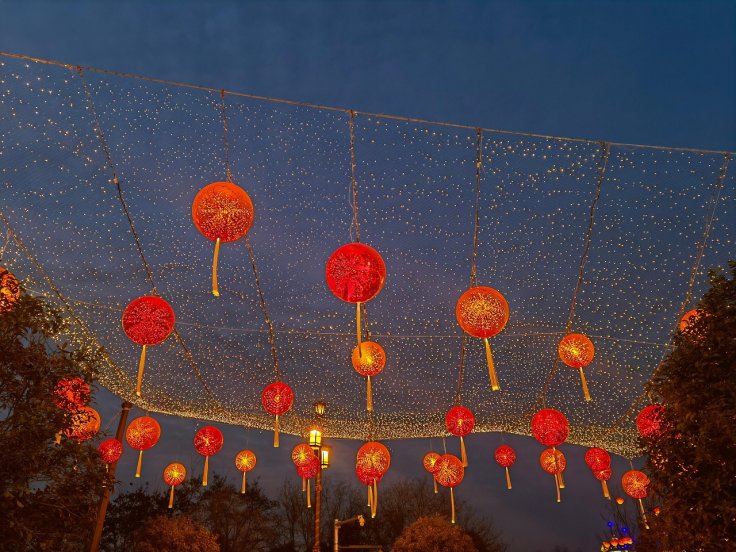
- Chinese Lantern Festival 2026, also known as Yuan Xiao Jie or Yuanxiao Festival (元宵节), or Chinese Valentine's Day, marks the end of Lunar New Year celebrations.
- Annually, it is celebrated on the 15th day of the Lunar calendar or two weeks after the Lunar New Year, and this Year, it falls on Tuesday (March 3).
- During this festival, people greet each other with phrases like "Happy Lantern Festival!" "Yuánxiāojié kuàilè!" "元宵节快乐!" "ywen-sshyaoww-jyeah kwhy-luh".
The Chinese New Year 2026 celebrations are officially coming to a close with the Lantern Festival. After welcoming the Year of the Fire Horse with family reunions and watching the Spring Festival Gala, Chinese people worldwide will organize another family gathering to mark the end of Lunar New Year celebrations. Every year, it is celebrated on the 15th day of the Lunar Calendar, or two weeks after welcoming the New Year. This year, the day falls on Tuesday (March 3).
The festival, which began over 2,000 years ago, features ancient spiritual traditions and celebrates family reunions while socializing by going out onto the streets. It is also known as Chinese Valentine's Day, Yuan Xiao Jie, or Yuanxiao Festival (元宵节). This festival symbolises people letting go of their past and welcoming the New Year with Good fortune.
History
There are several stories about the origin of the Chinese Lantern Festival. The most popular one is about its origin during the reign of Emperor Ming of the Han dynasty. The Emperor was a devout Buddhist who heard that Buddhist monks show respect to Buddha by lighting lanterns in their temples on the 15th day of the Lunar calendar. He ordered the palace and temples to light candles and households to hang lanterns.
Another interesting story linked to the Chinese Lantern Festival is about a Jade Emperor. When some villagers killed his favorite crane, he decided to destroy the village with fire. His daughter felt sad and informed the villagers about it. A wise man asked the villagers to hang red lanterns in front of their houses to trick the Jade Emperor. After seeing the red lanterns, the Emperor was under the impression that the village was already on fire.
Celebrations
People begin the Chinese Lantern Festival celebrations by going out onto the streets and socializing. Some of the festival activities include lighting and watching lanterns, eating Tangyuan (Yuanxiao) or sweet rice ball soup, watching dragon dances and Lion dances, and guessing lantern riddles.
Lighting and watching lanterns are the main activities of this festival. Lanterns, including the traditional red lanterns, are seen everywhere on the streets, in parks, shops, shopping malls, offices, and households. During this time of the year, lantern fairs are held in many parts of the country. Some of them are the Shanghai Yuyuan Lantern Festival and the Qinhuai International Lantern Festival in Nanjing. During these fairs, lanterns in different shapes and patterns are displayed.
Eating Tangyuan (Yuanxiao) or sweet rice ball soup is another important activity of the Chinese Lantern Festival. The ball-shaped dumplings are made using glutinous rice flour. They are stuffed with different fillings, like bean paste, sesame seeds, walnuts, jujube paste, peanuts, and brown sugar. Eating this sweet dish consisting of glutinous rice boiled and dipped in a sweet soup is considered a symbol of togetherness.
The next most common activity is watching lion dance and dragon dance. Traditionally, Chinese people symbolize strength and bravery, while the dragon symbolizes good luck. The appearance of a lion is believed to protect people and their livestock by driving away evil. Meanwhile, the appearance of a dragon is considered a symbol of good luck.
The most interesting activity for children during the Chinese Lantern Festival is solving lantern riddles. Mostly, every lantern lit for the festival will have a paper with riddles on it. Kids try to solve the riddle, find the owner of the lantern, and confirm their answers to get a surprise gift from the owner.


