New York City came to a halt early Monday as a powerful bomb cyclone buried the region under heavy snowfall, with even more snow expected throughout the day. Forecasters warned that NYC and nearby areas could see as much as 28 inches of dangerous, backbreaking snow, as the historic blizzard knocked out power for more than 500,000 people across the East Coast.
Snow was still coming down hard before sunrise. According to the latest update from the National Weather Service, more than 13 inches had already piled up on Staten Island, about a foot was reported in Mott Haven, and over 11 inches had fallen in Flatbush and Washington Heights.
Under Snow Blanket
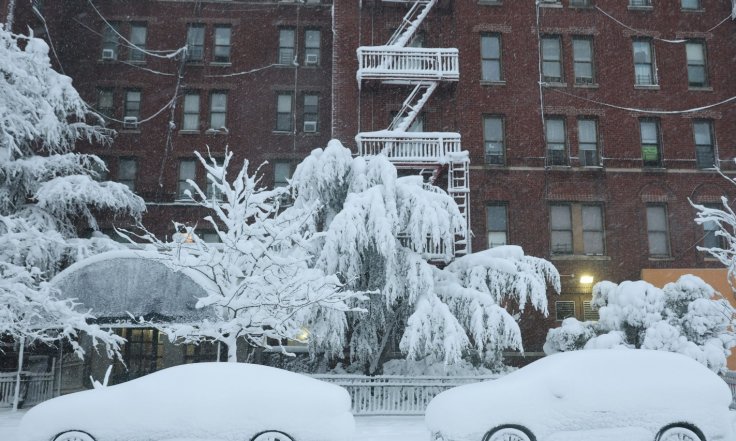
In response to the massive storm, the governors of New York and Massachusetts activated their National Guard units to help with emergency efforts. Freehold, right in the center of the storm's path, recorded a whopping 19 inches of snow, according to Fox Weather.
Early Monday, snow was coming down at a blistering pace — piling up at roughly 2 to 3 inches an hour from New York through Massachusetts — quickly overwhelming roads and neighborhoods.
The NWS warned that travel across the region was "nearly impossible," urging people to stay off the roads as conditions rapidly deteriorated.
"The combination of heavy snowfall and strong winds will continue to produce blizzard conditions along the Northeastern Seaboard," the weather service said Monday. "Sharply reduced visibility will make travel extremely treacherous across these areas."
The powerful storm known as Winter Storm Hernando is forecast to keep bringing heavy snowfall through much of the day, with some areas across the tri-state region likely to see up to 20 inches of snow by the time the system moves out late Monday.
Powerful winds reaching up to 60 mph turned the blizzard into a major disruption, leaving more than 250,000 people without electricity across the East Coast — including over 100,000 residents in New Jersey alone.
State of Emergency
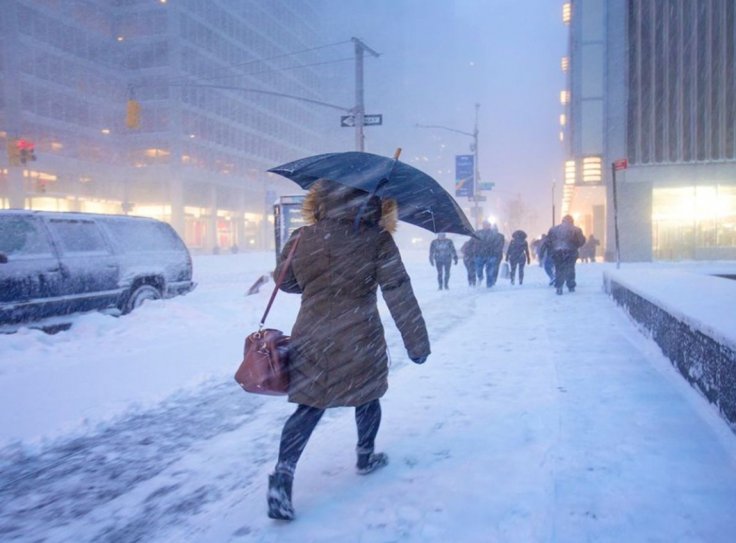
In response, New York Governor Kathy Hochul declared a state of emergency covering all five boroughs, Long Island, and several additional counties. New Jersey followed suit, placing the entire state under a state of emergency as well.
New York City took on an almost ghostly calm as the storm intensified. Aside from snowplows clearing the roads, streets were largely deserted after a travel ban was enforced. Residents were alerted by a loud cellphone notification late Sunday night, announcing the restriction would begin at 9 p.m. Sunday and remain in place until noon on Monday.
All NJ Transit services have been shut down, while the Long Island Rail Road and New York City subways are dealing with widespread cancellations, delays, and schedule changes, officials said.
More than 5,500 flights were canceled nationwide on Monday because of the storm, with another 9,000 delayed, according to flight-tracking site FlightAware. Airports in New York City and Boston were among the hardest hit.
The heavy snowfall also led to school closures in New York City. Mayor Zohran Mamdani described it as the city's "first old-school snow day since 2019," a welcome change after students were stuck with virtual learning during the previous storm.
Extra workers were brought in to shovel sidewalks and clear streets, with some crews starting as early as Sunday night to get ahead of the first round of snowfall, Mamdani said.
A blizzard warning remains in effect until 6 p.m.


