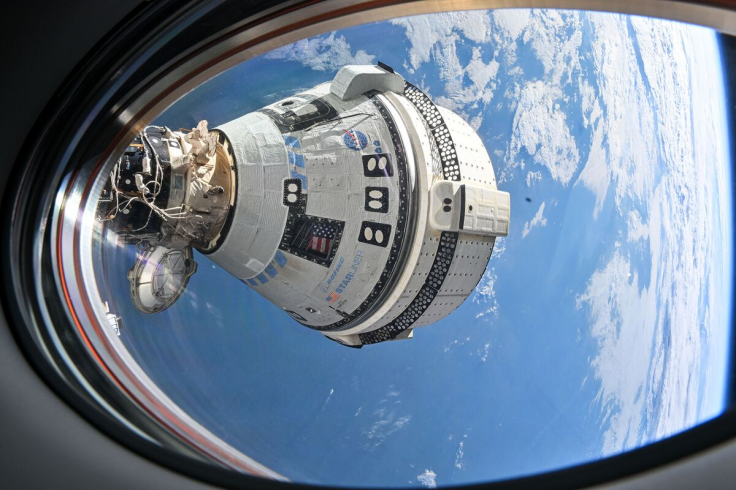
- NASA classifies Starliner Crew Flight Test as Type A mishap.
- Wilmore, Williams launched June 5, 2024, mission extended.
- Propulsion issues delayed docking, spacecraft returned without crew.
- Investigation cites hardware failures, leadership and communication breakdowns.
In response to an investigative report released on the failures in the technologies and programs that put the program in excess of the planned 30 days during the first crewed trip into space, NASA has officially identified the CST-100 Starliner Crew Flight Test as a Type A mishap. The results were announced at a news conference on Thursday, which is a breakthrough in the Commercial Crew Program of the agency.
It was an independent Program Investigation Team commissioned by the charter in February 2025 to investigate the technical, organizational and cultural factors contributing to anomalies which were experienced during the June 2024 mission. In November 2025, the Inquiry was accepted as final by NASA.
On June 5, 2024, the NASA astronauts Butch Wilmore and Suni Williams were launched on Starliner heading to the International Space Station. The mission was planned as eight to 14 days, but due to the propulsion systems problems that arose as the spacecraft was on orbit, the mission was extended.
Based on flight data and ground tests carried at White Sands Test Facility, NASA decided to fly the vehicle back to the planet without the astronauts on board.
Docking Problems and Prolonged Mission.
The space ship was facing various propulsion issues once it was heading to the International Space Station, thus it could not be easily maneuvered in the docking process. According to NASA authorities, it was possible to take the control again before docking, but the accident started to examine more closely the systems of the vehicle.
The Boeing Starliner spacecraft has been experiencing difficulties in its uncrewed and last crewed missions. At the same time Boeing was constructing Starliner, NASA accepted it and sent two astronauts to outer space. The technical challenges faced when docking with the International Space Station were quite noticeable as stated by NASA Administrator, Jared Isaacman.
Starliner is set to land autonomously on the Earth in September 2024 in White Sands Space Harbor, New Mexico. Wilmore and Williams would subsequently safely make it back to SpaceX Crew-9 in March 2025 after a prolonged period in orbit.
According to NASA report, the mix of hardware failures and the lack of propulsion parts qualification, as well as the failure in leadership and communication contributed to the creation of the conditions, which were not in line with the human spaceflight safety requirements of the agency. The results indicated failures not only through engineering validation procedures but also through supervision and decision-making systems in the process of mission implementation.
Programmatic Pressure and Accountability.
The inquiry also looked at general institutional dynamics in the Commercial Crew Program of NASA. Officials cited the fact that the agency had the goal of having two operational crew transportation providers which affected both pre and post launch engineering and operational decisions.
In order to do missions that alter the world, we should be open about our achievements, as well as our failures. We must take responsibility of our mistakes and make sure that they do not occur again. In addition to technical, it is evident that NASA allowed overall programmatic goals of having two providers that were able to transport astronauts to-and-from orbit, affect the engineering and operations decisions, particularly during and right after the mission.
"We are rectifying these errors. Today, we are officially reporting a Type A incident and take leadership responsibility to make sure that the similar incidents do not happen again. We are eager to collaborate with Boeing as two organizations take corrective measures and put Starliner back into the air when it is ready," Isaacman said.
A Type A mishap is the highest level of classification of NASA mission incidents that entail a significant loss of money or potential high impact of a severe outcome. Even though there were no injuries, authorities said that the inability to manuvre during landing and the financial expenses incurred qualified this designation.
NASA reported that it will take corrective action with regards to the report recommendations. They are by enhancing the qualification requirements of propulsion parts, enhancing the independent technical authority, and defining the role of decision-making when it comes to joint NASA-Boeing operations.
Future of Commercial Crew.
Since the spacecraft returned to space, Boeing has been collaborating with NASA to fix the flaws in the propulsion system and related integration issues. The technical root cause analysis is still in progress, according to the officials of the agency, and they have not planned when the next flight of Starliner will be carried out.
Commercial Crew Program was created to ensure that, with the help of the partnership with the private industry, the United States would be able to perform crew transportation to the low-Earth orbit independently. The program is operational with SpaceX already undertaking rotations of its crew to the International Space Station and Boeing Starliner under development and undergoing tests.
The findings of the investigators were that the cultural factors had an objective contribution to the risk profile of the mission. The report identified communication silos, the incomplete risk reporting channels and excessive dependency on the outdated assumptions about propulsion performance margins. According to NASA, such organizational aspects are being dealt with by changes to oversight procedures and leadership accountability.
The agency noted that the lessons learned during the investigation "will not only be the ones used in future Starliner missions but also in all the human spaceflight programs" within the management of NASA. Policymakers restated that there will be no additional crewed flights until both NASA and Boeing can confirm that they have adhered to new safety standards.
The investigative report has been published in redacted form and some proprietary and privacy sensitive information has been held back with agreement with Boeing. An edition that meets the requirements of 508 is to be followed.
Also Read: New 'Mars GPS' System Frees Perseverance Rover From NASA's Delayed Replies
According to NASA authorities, remedial measures are being undertaken and will be reviewed before the spacecraft is confirmed to have the go-ahead to be put back into a space flight.
Recommended FAQs:
Why did NASA classify the Starliner test as a Type A mishap?
NASA designated the mission as a Type A mishap due to significant financial loss and the potential for severe safety consequences. The classification followed findings of propulsion failures and organizational shortcomings, though no injuries occurred.
What caused the Starliner Crew Flight Test to be extended?
The June 2024 mission was prolonged after propulsion system problems affected maneuvering and docking operations. NASA ultimately decided to return the spacecraft to Earth without astronauts onboard.
How did the propulsion issues affect docking with the ISS?
Propulsion anomalies made it difficult for the spacecraft to maneuver during approach to the International Space Station. Although control was regained before docking, the issues prompted deeper system reviews.
When will Boeing's Starliner fly astronauts again?
NASA has not set a date for the next crewed flight. Officials said no additional missions will occur until corrective actions are implemented and new safety standards are met.
What changes is NASA making after the Starliner investigation?
NASA said it will strengthen propulsion part qualification, improve independent technical oversight, and clarify joint decision-making roles with Boeing. The agency is also addressing leadership accountability and communication gaps identified in the report.


