
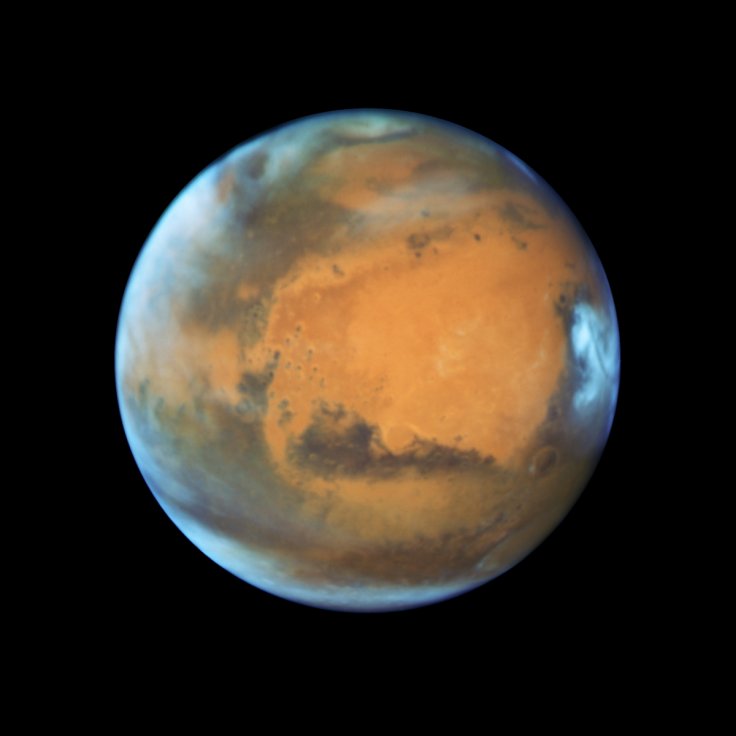
Five years after having touched down in Mars' Jezero Crater, the Perseverance rover is set free not requiring or fumbling in the dark for 22-minute dealy in commands from NASA mission engineers on Earth.
In use on Mars since spring 2004, one breakthrough that mirrors the jump from the paper-to-Sat Nav system on Earth is the way engineers from the Jet Propulsion Laboratory (JPL) have supplied their six-wheeled explorer with a self-reliant positioning system. Known as Mars Global Localization (MGL), this tech similar to GPS on Earth, lets Perseverance nail down its coordinates to about 10 inches with no need to ping mission control every time for directions.
The rover's newfound independence isn't just a technical flex, but a game-changer for any planetary science. For years, rovers, such as Perseverance and its predecessor Curiosity, have been using the process of visual odometry, in which a kind of eyeballing is used to track movement, with landmarks being identified in camera snaps of the terrain. But through the long hauls over treacherous Mars terrain, little errors snow ball.
Earlier, whenever the rover decides to head toward a hazard, it may have to hunker down and wait for Earth control Mission who may correct it by beaming instructions up. The back and forth communication can add up to several days, considering the 4 to 24 minutes delay on each way messages travel between the planets.
Freedom From Ground Control for Perseverance?
Now, Perseverance will be able to wait and take a 360-degree panorama with its navigation cameras and cross-reference them using orbital maps from Mars Reconnaissance Orbiter (MRO) that are much higher in resolution.
The algorithm, operating from the defunct Ingenuity helicopter, crunches the data in about two minutes. The entire operation went live on February 2 2026 pinpointing the rover in a bland stretch called "Mala Mala" on Jezero's rim. It was nailed it again on February 16.
"This is the rover equivalent of ditching training wheels," says Vandi Verma, the JPL chief engineer who steered the robotic operations for the Mars mission. "It gives us some longer, bolder drives in terms of what we can get away with and more of the science in," added the Indian-origin scientist, who is reckoned since the beginning for her rich experience on Mars rovers.
Verma has successfully guided rovers since the Spirit and Opportunity days, views this as a direct evolution on limitations. Predictable locations were often really limited by earlier missions, to a couple hundred feet of daily trek at most, now it's the sky or the Martian horizon.
Helicopter Tech to Rover Movement
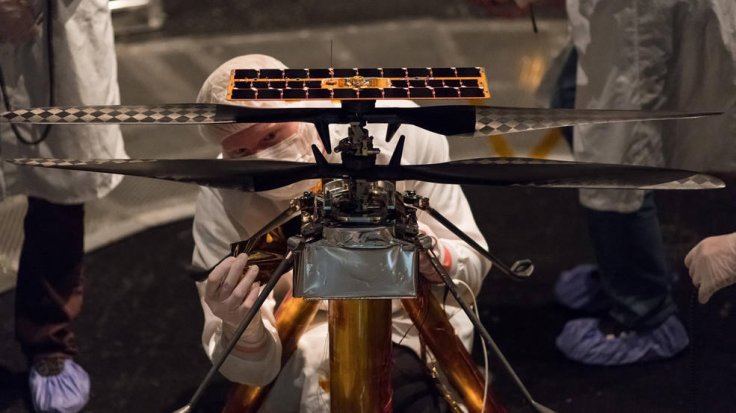
The team chose a commercial-grade processor installed in Perseverance's Helicopter Base Station (HBS) that was originally developed for chatting with Ingenuity, that made 72 flights before it was retired in 2024.
That chip, zippier than the rover's radiation hardened main computers (dating back to the 1990s), got that "tingent on protection on this mission" after Ingenuity's risk taking demo mission. "Ingenuity was the path," Verma noted. "We inherited this powerhouse and we made it a localization beast."
Jeremy Nash, a robotics engineer from JPL who spearheaded the project, aptly describes the exemplary exercise as a "decades-old robotics puzzle solved in space." His small team started running the experiment in 2023 and defeated another ambitious rover team to test the chances of the algorithm against 264 archived rover stops with 100% accuracy, in every trigger.
To ensure reliability, they included a "sanity check," in which the process was run multiple times, halting for correcting glitches. Even a tiny memory flaw of some 25 corrupted bits on a gigabyte was successfully isolated to keep things humming.
This isn't the first flirting of AI with Mars by NASA. Just two months ago, in December 2025, the agency tested generative AI for use in plotting waypoints on the rover, which reduced planning time for human operations from Control Mission.
Combined with AutoNav, Perseverance's obstacle dodging autopilot, these make a trifecta of autonomy. "We're doing as much as possible on a team while having the most exploration," Nash explains.
Echo from the Twitterverse
The announcement has soon rattled up the X platform where space enthusiasts and scientists hailed the achievement. Physicist and science educator @Nereide labelled it "the giant leap in autonomy required for future missions to Mars" underlining how it avoids communication delay. "No sci-fi stuff, it's already happening on another planet" she posted.
Others sought to draw parallels to the so-called Terrestrial Tech. One user, @edidiife, a self-described explorer of "world's hidden gems," termed it as a "total game-changer," for being "the foundation for future human missions where we won't have time to wait 20 minutes for a signal."
Another user preferred to be known as math and science wizard, @joyfulmath3, went crazy: "This is the autonomy we've been dreaming about since Opportunity days." Perseverance equivalently to god tier of a rover.
Even AI futurist @LaceyPresley linked it to the 5th anniversary of Perseverance's landing beyond remembering its cross-river synesthesia with other recent biosignature searches such as the organic "leopard spots" in a rock sample drop indicating evidence of a potential microbial life in ancient times.
And @prometheusUFX pointed out the more significant effects of the tech: "This localization system will likely become standard for the upcoming Mars Sample Return campaign" referencing the plans of sending Perseverance's cached tubes back to earth by the agency.
Few skeptics did surface during the conversation, but some users such as @heinenbros of Graylark AI pointed to similar "GPS-denied" systems on Earth by using dash-cams and edge AI to navigate in places such as Taiwan, suggesting than Mars tech could go boomerang back home.
Nights on the Moon for Humans Possible Now
Now that the earlier assumption that rovers invariably required Earth-bound babysitters has been been overcome, the latest upgrade virtually blows off ceilings. As per JLA data, visual odometry was good for short jaunts, but tend to make error by more than 100 feet during rover's epic drives. Mars Global Localization can rewrite that script as it has the potential to make unlimited autonomous experiments and excursions possible.
Mars Global Localisation has potential to be extended to the moon where the conditions of harsh lighting and 14-day nights create navigation nightmares. JPL is looking ahead for adaptations of the tech for Artemis missions next. "Being confident of exactly where you are in those environments is critical," Verma insists.
As Perseverance rolls on, caching samples that may rewrite the story of alien life on other planets. the new terrestrial tech makes sure not to get lost mid-way, especially in the vast Martian desert, self-reliance is not a luxury, but a survival.
Recommended For You:
What's Mala Mala on Jezero's Rim in Mars?
Mala Mala on Jezero, is a tiny, rocky outcrop as noted by NASA's Perseverance rover on the western rim of Jezero Crater on Mars. It is named after a South African wildlife preserve, in keeping with the Earth place name custom of NASA, which Martian features should also bear. Mala Mala on Mars represents ancient crustal material uplifted during the collision that created Jezero. A study of these rim rocks can assist scientists in understanding the ancient geology, volcanism and other harsh conditions that existed on Mars that might have favoured microbial life origin billions of years ago.
What is AutoNav tech on Mars rovers?
AutoNav is an autonomous navigation system used by NASA's Mars rovers, most notably Perseverance, to drive safely without constant instructions from Earth. Using stereo cameras and onboard software, AutoNav scans the terrain, identifies hazards like rocks, slopes, and sand traps, and chooses a safe path in real time or else commands from Earth can take up to 22 minutes to reach Mars. AutoNav allows the rover to drive faster, cover longer distances in a single Martian day, especially while collecting rock samples and studying Jezero Crater.
How does Mars GPS-Equivalent AutoNav fasten Sample Return mission Next?
Mars Global Localization (MGL) or AutoNav enables Perseverance to travel farther autonomously, collecting and caching more samples without Earth delays. This accelerates sample retrieval by future landers, shortening the Mars Sample Return timeline by boosting efficiency in Jezero Crater exploration.
How a tiny processor on Mars Ingenuity helicopter could revolutionize future spacecraft?
Ingenuity's commercial processor, proven in space, handles complex tasks like MGL at 100x speed of traditional hardware. It inspires future spacecraft to integrate faster, cheaper chips, enhancing AI, navigation, and data processing while reducing radiation-hardening needs.
How AutoNav inspire similar "GPS-denied" innovations on Earth for Self-Driving Cars?
AutoNav uses visual odometry and AI to dodge obstacles without GPS, inspiring Earth tech for self-driving cars in tunnels, forests, or war zones. It could improve sensor fusion and edge AI for reliable navigation in signal-denied environments.
Can AutoNav reduce workload for humans on Mars?
AutoNav lets Perseverance reroute around hazards independently, minimizing daily human planning from Earth. Combined with MGL, it cuts intervention time, allowing operators to focus on science analysis rather than micromanaging drives.
Will Moon Mission or Artemis Program Benefit from AutoNav?
Artemis could adapt AutoNav and MGL for lunar rovers, tackling extreme shadows and 14-day nights. Enhanced autonomy would aid human explorers in navigation, resource scouting, and base setup on the Moon's challenging terrain.


