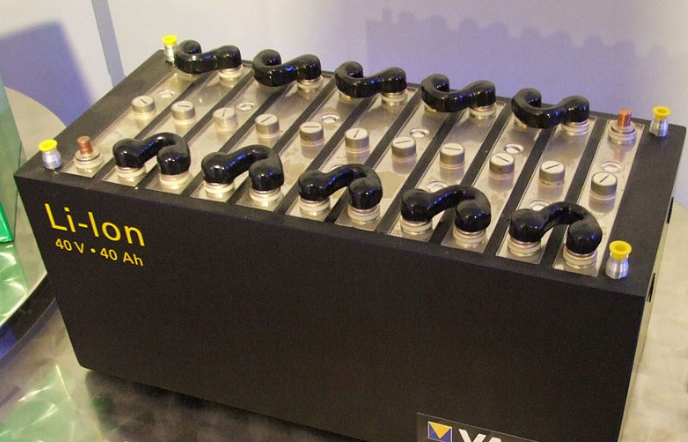
Nowadays, we cannot imagine the world without the battery because we live in a highly connected world. It drives a coffee grinder up to electric vehicles. On February 18, National Battery Day was celebrated in the United States and a large number of enthusiasts in other countries, to bring about the spotlight to this important technology milestone.
The event was also on the day of the birthday of Alessandro Volta, the Italian physicist who gave rise to modern electricity in 1745. It helps us recall the distance we have passed since his first voltaic pile. As the energy requirements grow and renewables increase in 2026, battery is no longer a luxury but it is key part of the future.

The basic device invented by Volta consisted of a pile of discs of zinc and copper with a stack of brine-wet cardboard in between. It generated a consistent electric current and has invalidated the notion that electricity was a mysterious force. That was the invention which became the foundation of the present-day batteries.
Two hundred years later power batteries have developed into sophisticated electrochemical devices. The Lithium-ion cells on the present day move lithium ion between a nickel, manganese, and cobalt cathode and a graphite anode.
The lithium ions move through the electrolyte releasing electrons which energize devices when a battery discharges. Charging reverses the flow. Everything over the street, including 5G network, is powered using this ion dance. However, there are still difficulties such as poor energy density, inflammable electrolytes and dependence on rare materials.
Services like Climate Conditioning Company and J.S. Fleming Associates, which operated data-centers, demonstrated that UPS systems were very reliable, and that battery backup enables an infrastructure to remain online even when the network goes down.
Several news features online today demonstrate the increasing level of interest of the population and the transformation of the niche following into a discussion on a sustainable battery technology. Scholars pointed to the impact of batteries in the clean-energy revolution. In the Argonne National Laboratory, a team is working on manganese-based cathodes and sodium-ion architectures to enhance recycling and energy independence in the United States.
Future of Energy Storage to Revolutionize
In their Instagram account, they wrote that they were working to drive the future of energy storage between the breakthrough inventions to the real world, and that AI-driven inventions can help reduce costs and raise the performance, though researchers are aggressively addressing lithium shortcomings.
Next, sodium-ion batteries substitute the already limited lithium with the more plentiful sodium, which are safer and cheaper. In a recent development at Tokyo University of Science, a carbon based electrolyte was utilized to enhance charge density and charge rate, which could contest lithium ion, with low fire hazards.
The solid-state batteries use solid rather than liquid electrolytes, and are more efficient in storage of energy and reducing leakages or the chance of explosion. The industry observers believe that mass production would begin this year, which would provide the EVs with greater ranges and speedier charging.
Flow batteries operate with liquid electrolytes stored in external tanks which are superior in large-scale grid level storage since they are capable of sustaining large numbers of charge-discharge cycles with intermittent solar and wind powered systems.

The lithium ion batteries are on a booming demand. It has been estimated that with the advent of electric vehicles and renewables, almost all the consumption worldwide will increase to 700 to 4.7 TWh by 2022 and 2030 respectively.
US battery capacity went to 37GW by the end of 2025, with more developments planned to stabilize grids as AI and increasing data demands grow.
Roman Loosen, the chief enterprise operations officer at Fluence, recently told Reuters that the prices will continue to drop because of technological improvements, new chemistries, and large-scale productions, which are down 90% since 2010 across the world.
Sustainability of Batteries Remains Big Challenge
The problem of sustainability continues to be pertinent. The standard cyclical economies have already reached 99% recycling of lead batteries. According to Roger Miksad, the president of the Battery Council International, the lead battery industry, which is based in the US, is performing well after over 100 years, offering well-paid jobs to the rural community, and demonstrating that the American manufacturing is not as dead as often anticipated.
In the case of lithium-based technologies, some experts like Jordan Brinn of the Natural Resources Defense Council demand an improvement in batteries, which minimize extraction. According to him, with EVs, one feeds in the material only once and it can be reused again and again. Brinn is in support of silicon-based anode and improved recycling goals.
The new EU Batteries Regulation, which will take effect this year, needs digital passports to follow carbon footprint and recycled contents, an example which nations elsewhere can emulate.
The US department of energy has been committing billions in the next-generation research in an effort to reduce the consumption of critical materials and increase production locally. The mascot Sir Chargewell of BCI is a reminder to the learners that batteries are the vital force behind advancement, success, and creation.
On X, National Daze Tags posted a message that was rather playful: "If you are charged and will be hashtag ready, y'all! My battery #GivesMeStrength."
So, the National Battery Day is an annual event but the message lives on. In a climate‑urgent, tech‑fast world, batteries are not just holding a charge for our electrical goods but are keeping our lifestyle charge. The true force ahead is responsible innovation, whereby our much needed technology will make us sustainable and prolong life on the planet.
Recommended For You:
What are the greatest risks in the lithium-ion battery manufacturing?
The Lithium-ion batteries manufacture is threatened with fire and thermal runaway, or reliance on essential minerals such as lithium, cobalt and nickel, in supply chains. There is concern that mining of these materials impacts the environment and ethics. Ineffective production may lead to safety recall, and the concentration of raw materials in the geopolitical regions exposes the producers to price fluctuations and discontinuities.What is the cost difference between sodium-ion and lithium-ion batteries?
Sodium-ion batteries are less expensive to make as sodium is abundant and freely available as opposed to lithium. But now they are available with less energy density or a shorter range or with less runtime. However, in comparison with lithium-ion, sodium-ion batteries are safer, more stable, and have a place in grid storage and low-cost use.What companies are the leaders in development of solid-state batteries?
The leaders of solid-state battery research include Toyota, QuantumScape, Samsung SDI, Solid Power and CATL. These firms are in a competition to commercialize batteries using solid materials instead of liquid electrolytes, which will have better energy density, charge faster, have longer lifespan and much better safety than the traditional lithium-ion cells.How green is the recycling of lead batteries?
One of the most successful recycling systems in the world where more than 95 percent of lead is recovered is recycling of lead-acid batteries. When well controlled, it decreases mining and waste. Nevertheless, improperly controlled recycling plants might lead to extreme contamination of air, soil and water, which might be life-threatening to employees and the surrounding populations.What is the way AI will affect future battery innovations?
Artificial intelligence will allow the process of battery innovation to move faster by analyzing materials quickly, forecasting performance and optimizing design. Simulations using AI eliminate the trial-and-error in laboratories, accelerating the rate of new chemistries being discovered. It is also capable of improving the battery management systems, improving the lifespan, improving the safety, as well as making it smarter to charge electric vehicles and grids.


