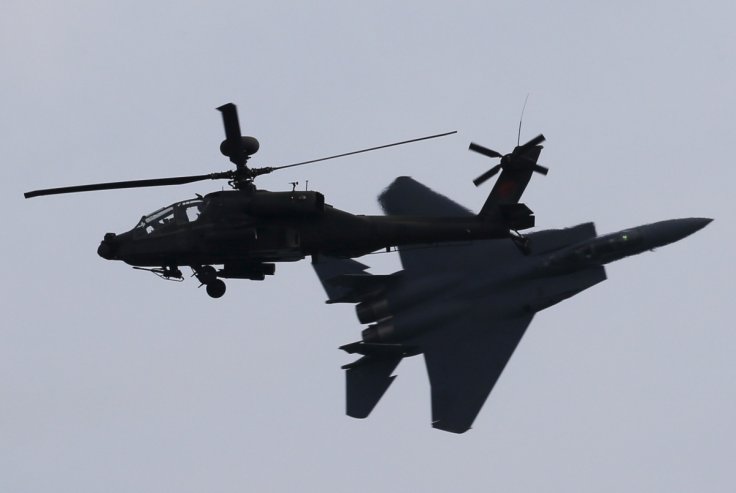
The Singapore Airshow attracted a record 65,000 trade visitors over its first four days, marking the highest attendance ever for the event's trade segment, organisers said on Friday, February 6.
The strong turnout underscores the rapid growth of South-east Asia's aviation sector and the continued resilience of the global aerospace and defence industry.
Experia Events managing director Leck Chet Lam said the milestone reflected "the strength and resilience of the aerospace and defence sector" as the four-day trade programme concluded.
Trade visitors came from more than 130 countries and regions, while over 1,100 companies participated in the show. By comparison, the 2024 edition drew nearly 60,000 visitors during the trade days and about 110,000 visitors overall, including public attendance.
The biennial event, now in its 10th edition, will open to the public on February 7 and 8. The next Singapore Airshow is scheduled to take place from February 15 to 20, 2028. This year's exhibition focused on themes such as artificial intelligence (AI) in aviation, sustainability and advanced air mobility.
While sustainability has been a recurring topic, Leck noted that interest in it has intensified, as seen in the high level of engagement at the show. He highlighted the inaugural Space Summit, introduced this year, as a sign of the event's evolution.
The summit attracted more than 2,000 attendees and over 300 participating companies and organisations. It will become an annual feature, with the next edition set for February 25 and 26, 2027.
The airshow comes amid strong projections for aviation growth in the Asia-Pacific region. European aircraft manufacturer Airbus estimates that the region's aviation services market will reach US$138.7 billion (S$176.6 billion) by 2044, with passenger traffic growing at 4.4% annually, outpacing the global average of 3.6%.
Airlines in the region are expected to require 19,560 new passenger aircraft, representing nearly half of global demand.
Boeing has similarly forecast South-east Asia to be among the world's fastest-growing aviation markets, with passenger air traffic projected to increase by 7% annually through 2044.
To support this growth, airlines will need about 4,885 new aircraft and an additional 243,000 aviation workers over the next two decades, including pilots, cabin crew and technicians.
The region's young population and expanding middle class present significant opportunities for the aviation industry, said Subhas Menon, outgoing director-general of the Association of Asia Pacific Airlines.
Against this backdrop, discussions at the airshow highlighted the increasing role of AI in aviation operations. At a panel on February 5, David So, senior vice-president for base maintenance at SIA Engineering Company, said AI is being used to analyse decades of data to optimise maintenance planning and workflow management.
The technology also holds potential for assisting in aircraft inspections, he added. For ground handler and inflight caterer Sats, AI is used to improve operational efficiency, including staff deployment, according to chief digital officer Sandeep Sakharkar.
Boeing's chief technology officer, Dr Todd Citron, said AI would significantly reshape job roles in aviation but would not eliminate the need for human expertise. He noted that while machines can iterate designs quickly, human input remains essential, particularly in areas such as certification and safety oversight.
Sustainable aviation fuel (SAF) also featured prominently at the airshow, with multiple panel discussions dedicated to the topic. Produced largely from waste materials such as used cooking oil, SAF is seen as the most practical pathway to decarbonising aviation, with the potential to contribute 40% to 60% of emissions reductions by 2050. However, adoption has been slow due to high costs, with SAF priced at three to four times that of conventional jet fuel.
Airbus' head of sustainable aviation fuel and carbon dioxide removals, Julien Manhes, said that while production capacity exists, demand remains limited. He welcomed the industry's progress on climate action but cautioned against fragmented regulations.
Singapore, he added, is well-positioned to lead regional decarbonisation efforts, supported by local SAF production and the use of SAF by Singapore Airlines.
In 2025, Singapore established the Singapore Sustainable Aviation Fuel Company to manage SAF supplies at its airports. The company plans to fund SAF purchases through a passenger levy, with SAF expected to account for 1% of jet fuel at Changi and Seletar airports in 2026, rising to between 3% and 5% by 2030.
The show also highlighted growing interest in advanced air mobility, including electric vertical take-off and landing (eVTOL) aircraft, commonly referred to as air taxis. While the sector faces challenges such as high costs, regulatory hurdles and limited economies of scale, industry players expressed optimism about long-term prospects. Several partnerships and orders were announced at the airshow, signalling accelerating momentum in the development of air taxi networks across Asia and beyond.


