
As you are browsing your Wikipedia content casually today, you run across a link that was supposed to help preserve history, but unknowingly your computer was also moved into taking part in a cyber wrongdoing.
This is not a thriller plot, this is an actual story which led Wikipedia to ban Archive.today, a previousy fragile web archive service that is today accuse of launch DDoS attacks and data tampering with archived pages.
As of February 26, the English Wikipedia will be officially deprecating the site, triggering a cleanup of over 695,000 links in 400,000 pages. This seismic move serves to underline the, by now, reliability-maddened Wikipedia's quest for reliability.
When DDoS Attack Slams Gyrovague Blog?
The trouble all started when a maintainer of Archive.today, using aliases such as "Denis Petrov" and "Masha Rabinovich", allegedly used the Archive.today's CAPTCHA page to slam the Gyrovague blog with a DDoS attack.
The target was Blogger Jani Patokallio who had authored an expose published in 2023, delving into details about the operator of the archiver and suggesting links with Russia. Things took a turn for the worse when "Nora" from Archive.today sent Patokallio threatening emails with him linking his name to AI-generated porn or a gay dating site.
The real bombshell was the finding of tampered snapshots with Patokallio's name shoehorned into pages unrelated with each other - where 'Nora' in blog comments was replaced with his name. A column in prominent London magazine concluded, "honestly I'm kind of in shock."
"We have good reason to believe that the archive.today operator have played around with the content of their archives, suggesting they were attempting to gain height in their position towards the person they are in dispute with," it read. The argument in favor of allowing it has been verifiability, but that is based on the fact that the archives are accurate.
Revelations Seal the Deal on Consensus
These revelations sealed the deal during an intense Request for Comment, or RfC, rate, ending up in a "strong consensus" to deprecate the website. This goes against Wikipedia's policy on external links to prevent those from leading people to dangerous sites (DDoS threats) or being untrustworthy (tampered content).
In its update, Wikipedia announced: "There is consensus to immediately deprecate archive.today, and, as soon as practicable, add it to the spam blacklist and delete all links to it."
Wikipedia isn't coming up short of editors. Fresh direction positive, practical referencing request systematic purging out with Archive.today domains (archive.is, archive.ph, archive.vn), if original source is live, undamaged. Wikipedia can easily substitute them with reliable alternatives such as Internet Archive (archive.org), Ghostarchive or Megalodon.
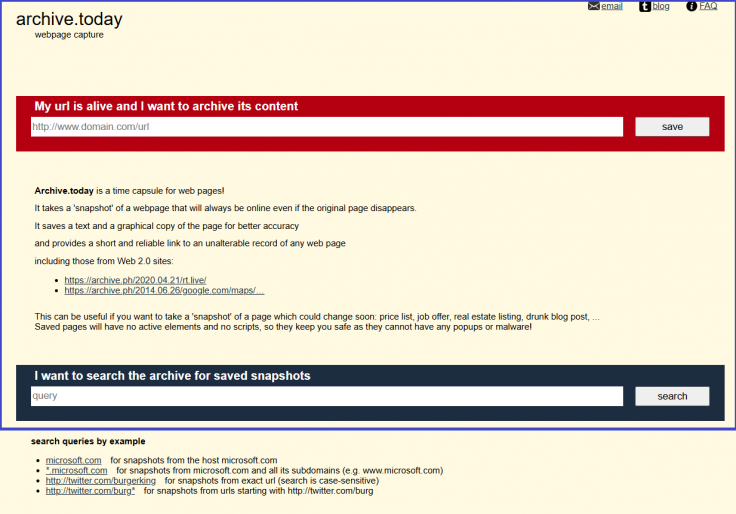
Or pivot to the non-digital sources, such as print books, where archives were just a bonus. "An analysis of extant links revealed that most of its usages are replaceable," said the update, as some volunteers were already brainstorming efficient bots and tools for handling the takedown.
Patokallio, the beleaguered blogger says he's thrilled: "I'm glad Wikipedia community has come to a clear consensus, and I hope this inspires the Wikimedia Foundation to look into creating their own archival service."
Seriousness of Security Concern
The Wikipedia Foundation weighed in previously, not ruling out intervention out of "the seriousness of the security concern." This isn't Wikipedia's first rodeo with rogue sources. The Daily Mail has been deprecated in 2017, after it was blasted by a RfC, which blamed it for its "reputation for poor fact-checking, sensationalism, and flat-out fabrication." That move was cause for headlines all over the world and became a template for culling unreliable links.
Similarly, in 2018, Breitbart News was treated in a similar way, and de-pegged and blacklisted for propagating the peddling of conspiracy theories and bias. Natural News, the hotbed of health misinformation, was also hit with the spam blacklist over "persistent abuse," alongside Indian news websites OpIndia and Swarajya.
Remember the 2008 Virgin Killer clown? The UK's Internet Watch Foundation briefly blacklisted a Wikipedia page because of a rather controversial album cover, subsequently blocking edits to millions of people, until backlash forced a return.
These parallels show us Wikipedia's playbook, community-driven RfCs, evidence-based decisions, and a bit of both deprecation (for untrustworthness) and black listing (for spam or harm). Archive.today gets both in the way of security threats and doctored data in the same way that defunct websites such as the Epoch Times or Daily Caller got marginalized because of bias and abuse.
Over to X, the decision has sparked cheers, shares and side-eye debates lending the story exultation. Tech expert Renault Lifchitz (@nono2357) blasted it writing: "Wikipedia blacklists https://archive.is/ starts removing 695,000 archive links", with a link to the news source and views coming much in the hundreds. Another X handle @nono2357 followed the same sentiment, as user @R4yt3d showed details of DDoS.
Lamenting the Loss of Paywall-Bypassing Tool
But not everyone's popping champagne as some users lamented the loss of a paywall-bypassing tool, with one thread questioning if alternatives like Internet Archive can fill the void without similar risks.
Broader X chatter ties into Wikipedia's trust issues, like @havivrettiggur's fiery take on alleged historical rewrites, though not directly linked, underscoring the platform's scrutiny. Packet Storm (@packet_storm) highlighted the tech angle: "Wikipedia Considers Ban After https://archive.is/ CAPTCHA Page Executes DDoS," prompting replies on digital preservation's dark side.
Some users bemoaned the loss of a paywall go-around as they questioned whether something like Internet Archive will be able to fill the gap without the same risks. News about the potential ban further back in February racketed up likes and reposts, building up demands on archive ethics: "Wikipedia might blacklist https://archive.is/ after site maintainer DDoSed a blog" they tweet to bring security pros and cons into discussions of CAPTCHA weaponization.
And the saga continues...
Further FAQ Recommendations for You:
1. Why did Wikipedia blacklist Archive.today?
The Wikipedia site was exploited to make a DDoS attack through its CAPTCHA page on a blogger's site. Editors of the forum also came across tampered snapshots that inserted the name of the blogger and into unrelated pages, against the policy of Wikipedia for reliability and security of users.
2. How many links are affected?
Over 695,000 links about 400,000 Wikipedia pages will be eliminated or replaced. These were frequently used to bypass paywalls or for the preservation of web content, though the recommended alternatives are the Internet Archive and other web archiving services.
3. What are Wikipedia's alternatives, according to Wikipedia?
Editors may use the Internet Archive (archive.org), Ghostarchive or Megalodon. If the original source remains online and unaltered, no linking to the source or archive in the text or text plus or digital-linking in the text. Non-Digital sources like printed bundle links and internal linking.
4. So what was this DDoS attack all about?
Archive.today's maintainer went after blogger Jani Patokallio's Gyrovague blog after posting a question about the site's anonymous operator and aliases. Malicious code stolen the usage of people's devices, and there was a threat that connecting Patokallio to AI porn.
5. Could this point to bigger changes in the case of Wikipedia?
Possibly. Hopes are surfacing already that the incident will spur the Wikimedia Foundation to develop its own archiving service. The decision highlights ongoing issues of the security and verifiability of external links in Wikipedia's community-driven model.


