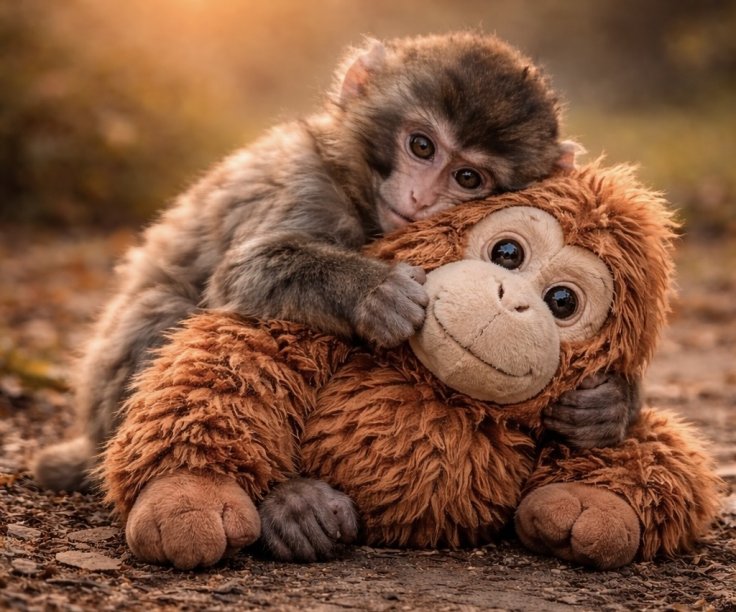
The image was heartbreaking. A small baby had been wrapped up in a bit of cloth, not on fur, seeking a warmness where the beat of a heart ought to have been felt. In the social media, the same question was posed: how could a mother abandon her baby?
But this is where the unpleasant fact appears. Momentary desertion is not uncommon in nature and is seldom emotional.
Motherly rejection occurs for complicated biological and ecological causes in species like the Japanese macaque, or snow monkey. Something that appears inhumane to us is frequently just a combination of instinctual, stressing, and weathering evolutionary mechanisms.
Japanese Macaques and Maternal Behaviour in the Wild
The macaques in Japan possess close social relations and collated hierarchies. Mothers have been taking care of their infants in their early months: carrying, grooming them, and protecting the newborn. The initial days during the birth are determinant with regard to bonding, breastfeeding, and survival.
It does not come together that way all the time, though. Inexperience has a part, especially in the case of the first-time mothers. A young woman might not realize how to hold the baby to be able to do breastfeeding or how to react to baby cries. Rejection may be experienced without proper early bonding.
This may be aggravated by environmental stress. Maternal behavior is disturbed by extreme heat, food scarcity or by social pressure during birth. A postpartum period constitutes a biologically sensitive period, and interference during these initial few hours may have chronic effects.
Harsh Logic of Survival
As a human being, it is impossible to leave a baby in its birthplace. In evolutionary biology sentimentality is frequently trumped.
Some mothers automatically give less or withhold care when the infant turns out to be weak, ill-fated, or probably not going to make it. It takes a massive amount of energy to raise children. The high caloric intake is required during the process of lactation only, and in the wild, supplies are not an assured thing.
The way the mother conserves energy makes it more likely that she will survive and procreate once again. Although this is an emotionally tough strategy for us as humans to accept, it is founded on natural selection. It does not mean that one does not feel but that one has the necessity to get maximum possible reproductive success throughout life.
This is what scientists call adaptive parental investment. At times of harsh conditions, mothers only invest in offspring that have the best chances of survival.
Social Hierarchy and Stress
Societies of the macaque are very strict. Rank has an impact on access to food, mating, and shelter. There is a high level of stress by the domineering members of the troop to a low-ranking female.
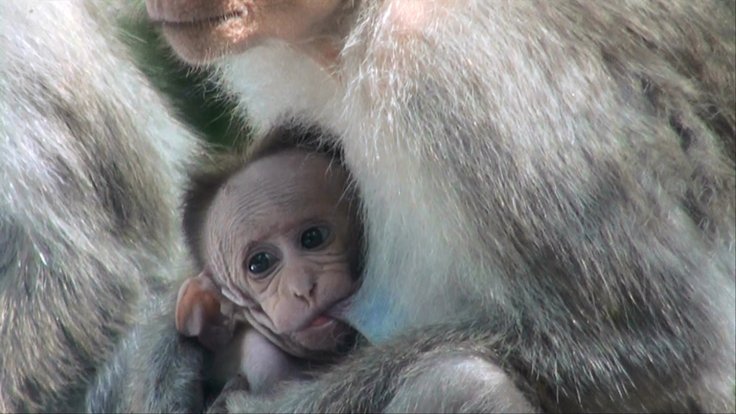
Maternal care could be under the influence of that stress. When a mother experiences a feeling of insecurity or threat, she would not be able to put effort into nurturing. In severe situations, instability in society may be added as a factor to neglect or abandonment.
Primate studies reveal that maternal stress hormones have the capacity to directly influence caregiving behavior. High cortisol rates are also associated with infants. This once again is biology at work as opposed to conscious choice.
First-Time Mothers and Disastrous Bonding
The maternal skills learned by primates such as the macaques are somehow through observation. Young women observe older women prior to the latter giving birth. In case a female is raised by exposure to limited caregiving models, her maternal responses will not be well developed.
Immediate physical contact is also necessary in bonding. In case a newborn is separated too soon, or the problems of birth disrupt early nursing, it might lead to deterioration in attachment. These initial hours are biologically pivotal in oxytocin discharge that strengthens maternal behaviour.
In the absence of such hormonal support, rejection is increased. It is not vengeance; it is chemistry.
Is It About Emotion?
Animal behaviour should not be reduced to a simple phrase. Attachment, distress, and protective instinct are evident among many mammals. Japanese moses are quite loving and caring and their mothers usually spend immense attention to them.
The animal feelings, however, do not work in the same way as the human social morality. There is the influence of instinct, hormones, environmental pressure, and evolutionary programming on behaviour. In cases where the latter has taken place, then it is most commonly due to these concerted forces.
In the case of Punch, the world perceived heartbreak, but the sufferer could have been experiencing stress or lack of experience and evaluating survival. We veil ourselves in interpreting the concept of motherhood in animals, yet nature does not follow its principles.
An Obtruded Reality of the Wild
The maternal abandonment behavior has been seen in rodents, primates, and large mammals. It may be caused by the condition of illnesses, malnutrition, environmental instability, social pressure, or even because of the perceived weakness of the offspring.
It is inhumane since we have been programmed to show empathy. We feel the susceptibility and react emotionally. In nature, it is survival of the fittest.
It does not lessen the impact of the picture with a baby monkey hugging a toy. However, knowing the science of maternal abandonment is helpful to change the discourse. It is neither of the stories of human rejection.
It is a biological, instinctive and methodical self-preservation at its inhuman mathematical precision.


