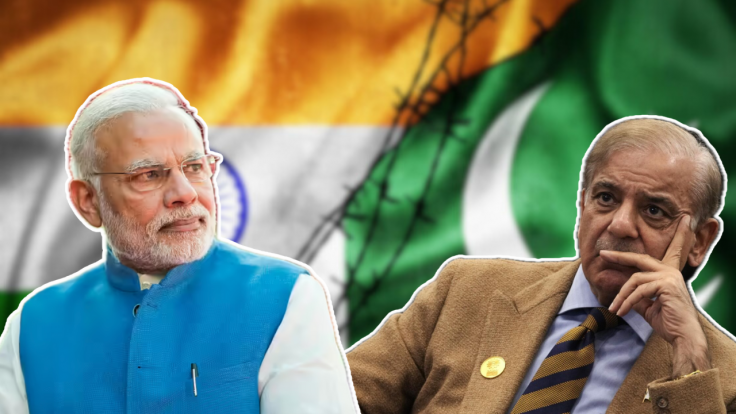
The enduring rivalry between India and Pakistan, rooted in the traumatic partition of 1947, has defied numerous attempts at reconciliation, suggesting that lasting peace may remain elusive. There are multifaceted reasons why India can never achieve true peace with Pakistan. Innumerable facts can be drawn from the historical conflicts between the two countries since their inception as free countries from British rule, territorial disputes over Kashmir, ideological clashes (India's secular, liberal democracy vs Pakistan's theological Constitution), military dynamics, and ongoing security threats (Mumbai attacks, Pulwama suicide bomber, Pahalgam massacre of tourists and the recent Red Fort suicide bombing). While diplomatic overtures have occasionally surfaced, structural and existential barriers perpetuate a cycle of hostility that benefits Pakistan.
Historical Animosity and Repeated Wars
The foundation of India-Pakistan tensions lies in the 1947 Partition of British India, created by the British in collusion with the Muslim League under Jinnah as part of the extended Great Game. The two dominions were created amid mass displacement and violence, killing up to two million people and displacing over 15 million. This event not only drew arbitrary borders but also sowed seeds of mutual resentment, with Pakistan defining itself in opposition to a perceived Hindu-dominated India. Since then, Pakistan has constantly attacked India or tried to invade its territories, resulting in four major wars—in 1947-48, 1965, 1971, and 1999 (the Kargil War)—each exacerbating distrust and territorial claims.
The 1971 war, which led to the creation of Bangladesh from East Pakistan, represented a humiliating defeat for Pakistan, yet it prompted denial rather than reflection, fueling a narrative of eternal resistance against India. Pakistan's PR machinery downplayed and erased the genocide of Bangladeshis by Pakistani soldiers and the 93,000 Pakistani POWs that were later returned after the Shimla Agreement. Even recent events, such as the brief but intense 2025 conflict that began with Indian missile strikes on May 7 following an ISI-funded terrorist attack in Kashmir, underscore how historical grievances erupt into modern confrontations, making de-escalation temporary at best. These repeated military engagements have institutionalised a state of perpetual readiness for war, rendering peace initiatives fragile and short-lived.
The Kashmir Dispute
At the heart of the impasse is the Kashmir conflict, a territorial dispute that has symbolised the unfinished business of Partition since 1947. Both nations claim the region in its entirety, with India administering Jammu and Kashmir and Pakistan controlling Azad Kashmir and Gilgit-Baltistan. The issue has sparked two full-scale wars (1947-48 and 1965) and numerous skirmishes, including the 1999 Kargil incursion by Pakistani forces across the Line of Control, a repeat of the 1947 violation of the Standstill Agreement that the King of Kashmir signed with both nations, which Pakistan violated by the raid in Baramulla. The attempted invasion by Pakistani regulars and the Afridi tribesmen at the Mission in Baramulla resulted in the Accession of Kashmir to India and Pakistan occupying what is today known as PoJK.
For Pakistan, Kashmir represents a moral and ideological imperative to "avenge Partition" and assert Islamic dominance, driven not by strategic or economic logic but by a need for symbolic victory. India, viewing Kashmir as integral to its secular identity, has resisted international mediation, including early UN resolutions for a plebiscite. The dispute sustains propaganda on the Pakistani side, with no genuine interest in solutions, as it bolsters its political power and military budget. Recent escalations, such as the April 2025 Pahalgam attacks in the Kashmir Valley that killed civilians and triggered retaliatory strikes, highlight how Kashmir remains a flashpoint, ensuring that any peace process is derailed by violence. As long as Kashmir is kept on a boiling point by Pakistan, it serves as a wedge preventing normalisation.
Ideological and Religious Divergences
Pakistan's national identity is inextricably linked to an anti-India ideology, viewing India as a "civilizational challenge" to be eternally resisted. This stems from Pakistan's founding as a Muslim homeland, contrasting with India's secular, pluralistic framework, which fosters perceptions of the other as an existential threat. Scholar Christine Fair describes Pakistan as a "revisionist entity" animated by anxiety over survival, compelling it to contest India militarily and psychologically. This ideological chasm makes peace a "philosophical betrayal" for Pakistan, as acknowledging India's permanence would undermine the state's raison d'être. Even if territorial issues were settled, the compulsion for opposition would persist, potentially shifting to new fronts.
The Dominance of Pakistan's Military
Pakistan's army wields outsized influence over foreign policy, economy, and politics, using hostility toward India to justify its control and bloated budgets amid economic woes. Conflicts with India boost the military's domestic popularity, as seen after the 2025 clashes, when surveys showed that 93% of Pakistanis viewed the army more favourably. The military sabotages civilian-led peace efforts, blocking initiatives like trade normalisation that could foster interdependence. From its inception, the army has been central to Pakistan's identity, fighting the 1947 Kashmir war and perpetuating a narrative of defence against Indian aggression. This entrenchment ensures that ceasefires, like the fragile one post-2025 conflict, are tactical pauses rather than steps toward peace, as the Pakistani army thrives on tension.
Terrorism, Proxy Wars, and Nuclear Risks
Pakistan's strategy has evolved from conventional wars to supporting insurgencies and terrorism, including groups like Lashkar-e-Taiba, responsible for the 2008 Mumbai attacks. This asymmetric approach erodes trust, with India proving time and again the harbouring of terrorists by Pakistan, who cross borders to incite violence in Kashmir and beyond. Nuclear arsenals on both sides (with only India having signed the NFU—no first use policy) add a layer of deterrence but also fragility. Pakistan's tactical nuclear weapons and risks of Islamic rogue elements heighten the stakes, making full-scale war unthinkable yet low-level conflict perpetual. The 2025 conflict, involving air strikes and nuclear sabre-rattling, exemplified how Pakistani proxy tactics provoke retaliation without resolution. Such dynamics institutionalise Indian suspicion, foreclosing avenues for dialogue.
While India has pursued pragmatic relations with other neighbours, Pakistan's ideological fixation, military dominance, and reliance on conflict as a unifying force render peace unattainable. Decades of mediation, including UN efforts and bilateral talks, have failed to bridge these divides, as evidenced by the absence of a formal peace accord—only ceasefires that inevitably break. True peace would require a radical reimagining of Pakistan's national consciousness, dethroning the military and accepting coexistence, but history suggests this is improbable. For India, entanglement with Pakistan diverts resources from development, perpetuating a status quo of managed hostility rather than harmony. Thus, while isolation may offer fragile stability, genuine peace remains a distant illusion—a truth the seculars, liberals, and leftists in both countries need to accept.
[Arshia Malik is a writer, blogger, and columnist who focuses on geopolitics, Muslim reform and an Islamic Renaissance while documenting heretic Muslims.]


