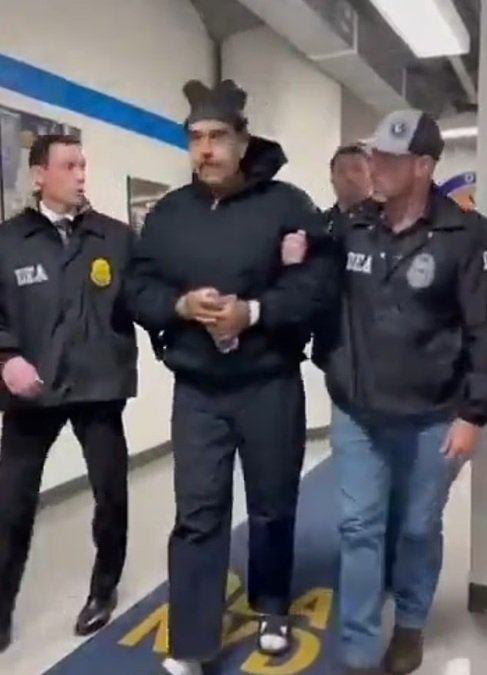
Nicolás Maduro's wife appeared somber and withdrawn in the first photos released since her arrest alongside her husband during a raid by U.S. special forces. Venezuelan strongman Maduro flashed a thumbs-up and a peace sign as he and his wife, Cilia Flores, were escorted in handcuffs under tight security at Stewart Air National Guard Base north of New York City.
It was also the first public sighting of Flores since she was arrested alongside Maduro during a late-night operation carried out by U.S. Delta Force troops on Friday. Photos show Flores wrapped in a green-and-yellow hooded sweatshirt, her hands held tightly against her chest, surrounded by agents on the tarmac.
Grim Face in Captivity
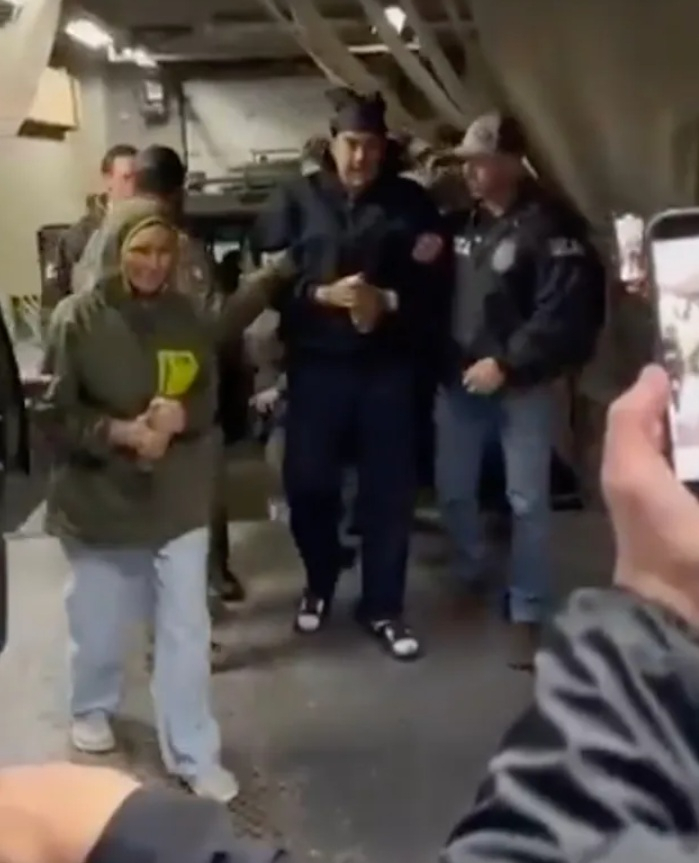
Flores makes no gestures and shows little emotion while being escorted through a secure area after landing. Maduro and Flores were later transferred to the Metropolitan Detention Center in Brooklyn, where both are expected to face narco-terrorism charges.
The images underline a dramatic reversal of fortune for a woman once seen as one of the most powerful — and polarizing — figures in Venezuela's authoritarian hierarchy.
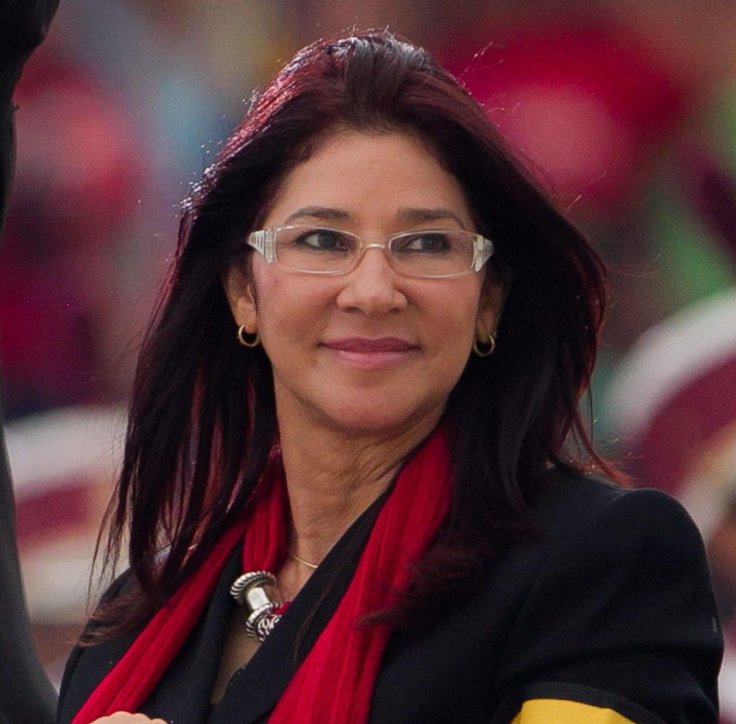
Before marrying Maduro, Flores served as president of the National Assembly, making her a central power broker in a country of about 31 million people.
She first met Maduro in the early 1990s, when both were still married, after their paths crossed while working within the political circle of Hugo Chávez following his failed coup and subsequent imprisonment.
Their relationship soon developed into both a romantic and political partnership.
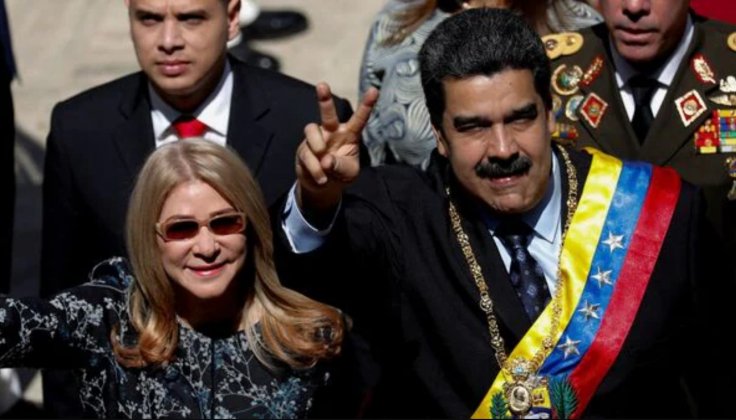
As they climbed the ranks of Venezuela's socialist movement, their bond strengthened, and over time, they each divorced their spouses and committed to one another.
They lived together for nearly 20 years before marrying — a choice supporters described as ideological, while critics viewed it as a strategic calculation.
Together in Lover and Captivity
Maduro publicly formalized the relationship in July 2013, just months after taking office, revealing that the couple had quietly married in a small family ceremony, describing it as simply "legalizing what already existed."
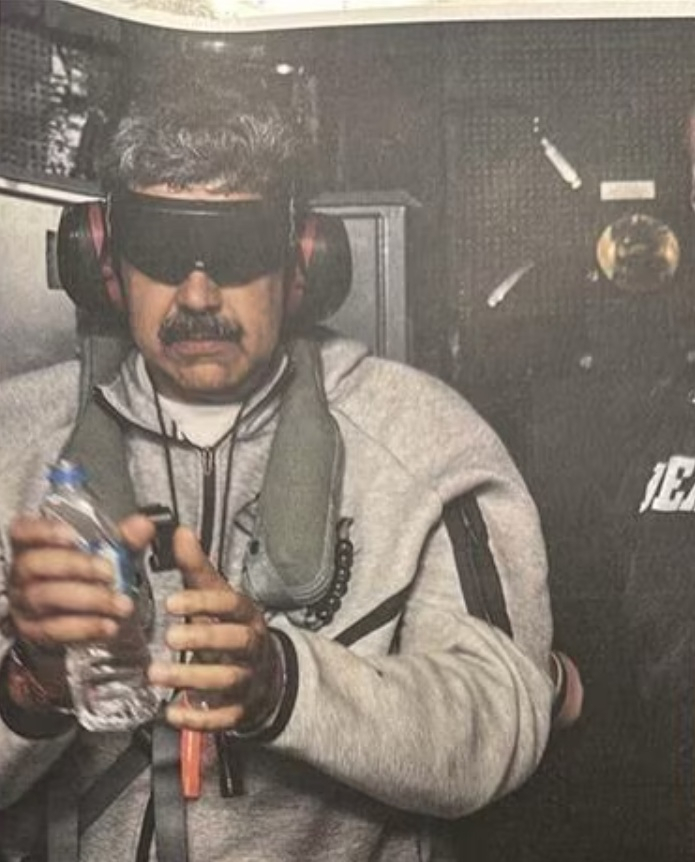
The marriage solidified Flores' position not only as Maduro's wife, but as his most trusted confidante and a key political enforcer.
Frequently labeled the regime's "First Combatant," she held sway well beyond the traditional role of a first lady, advising Maduro on legal and political strategy as Venezuela sank further into crisis.
Inside Venezuela, critics and analysts often portrayed Flores as the true power behind the throne — a sharper, more feared operator than her husband, who was frequently seen as the regime's public front.
Former officials and observers have described her as secretive and ruthless, a hard-nosed political tactician who served as Maduro's top adviser on legal and political strategy.
Flores exercised direct institutional authority during her time as president of the National Assembly and later as attorney general, roles that gave her significant sway over legislation, prosecutions, and judicial appointments.
As she rose, she faced accusations of filling key government posts with relatives and loyalists — claims that reinforced the view that she used the levers of the state to shore up the regime and shield its inner circle.


