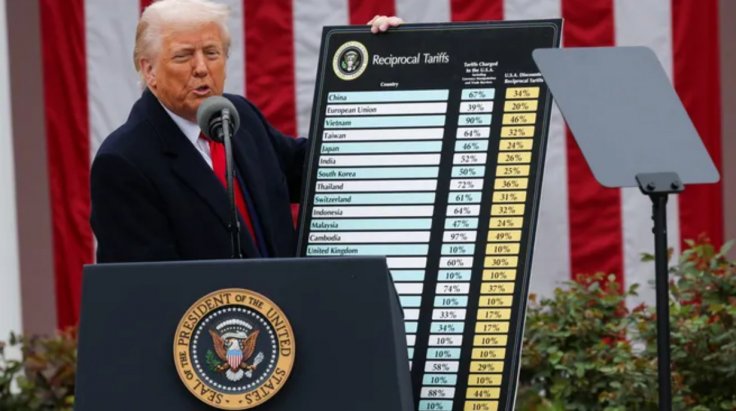
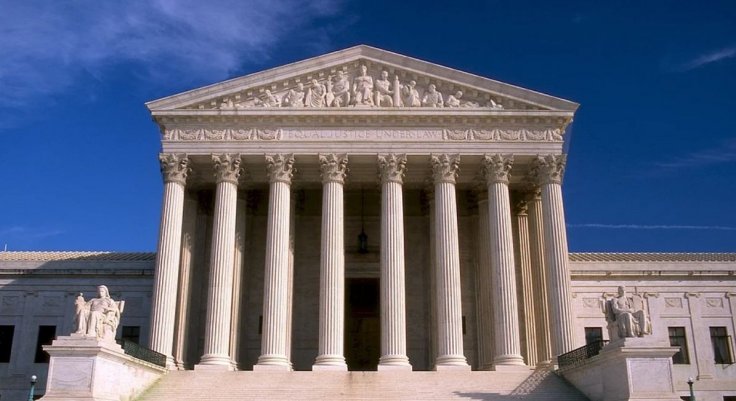
The U.S. Supreme Court on Friday unleashed a colossal blow to the pillar of the Trump economy: his broad tariffs on the trade partners of America across the globe.
The 6-3 ruling written by Chief Justice John Roberts said that Trump had exceeded his authority under an emergency law of 1977, which eliminated general import taxes that had been imposed on countries as far back as Canada and Canada to India and changed the dynamics of international trade.
The decision, which critics around the world celebrated as a much needed check on executive overreach, comes at a time when there is mounting pressure on trade deficits and fentanyl flows, and White House officials are scrambling to find alternatives as businesses stand to collect billions in possible refunds.
Roberts, who has written on behalf of a group of Justices such as Amy Coney Barrett, Neil Gorsuch and the three liberal judges of the court, highlighted the boundaries of presidential power. Robots stated that the President proclaims unlimited extraordinary powers to impose tariffs without prior notice in unlimited quantities, duration, and scope of their application.
In the light of the breadth, history and constitutionality of the so-called asserted authority, he needs to find an explicit congressional authorization to so exercise the authority. He continued by concluding that the International Emergency Economic Powers Act (IEEPA), the 1977 law Trump used, is inadequate at giving such approval.
Trump had taken an overly broad interpretation of IEEPA which gives the president the authority to regulate imports during crises that threaten the country with an unusual and extraordinary danger, Roberts, in response, asserted that it was outside his expertise to have anything to say in an economic or foreign issue. "We want no more than that of Article III of the Constitution, which is the prescribed to us. In that capacity, we believe that IEEPA does not empower the President to provide tariffs."
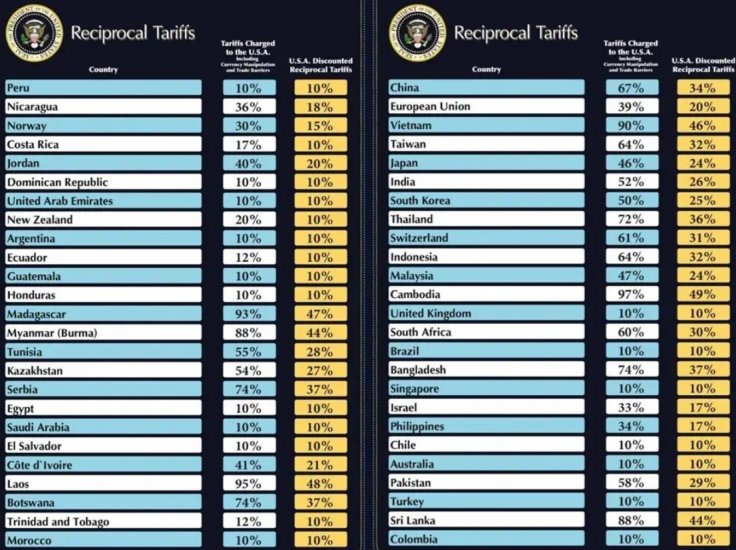
Justices Clarence Thomas, Samuel Alito and Brett Kavanaugh were the dissenting judges who contended that executive authority in trade affairs should be more broadly interpreted to justify tariffs against dozens of nations due to imbalances in trade. These encompassed a minimum 10 percent duty on imports of almost all U.S. allies, higher penalties on the main allies, 25 percent on Canada (increased to 35 percent) and higher on Mexico, and even more on China, the European Union, Japan and South Korea.
India was subjected to an 18 percent tariff, which worsened the relationship between the two countries that were already tensed due to the steel and digital taxes. The court overturned the majority of these actions, destroying a canon of Trump economic policy by declaring that his exercise of an emergency statute to rewrite global commerce was unlawful. It is the first attempt by a president to use IEEPA to impose tariffs in large scale and this aspect is emphasized by the legal scholars.
Trump had broad tariffs, which the Supreme Court blocked, a significant rejection of a fundamental part of the presidential economic plan. The 6-3 ruling was an unusual case of the court limiting the broad use of the executive powers by Trump. The decision is also set to have an impact on the global trade, businesses, inflation, and the wallets of all Americans.
Immediate Reactions and Political Ripples
Reactions were quick to come in with Trump himself calling the ruling a disgrace in statements that swiftly disseminated across social media and news feeds. Democrats in Washington rejoiced which they considered to be a triumph over what they described as a disorganised trade war.
These tariffs have generated more than $200 billion to the U.S. Treasury since their implementation, as the estimate goes, to finance infrastructure projects but have also contributed to rising consumer and business prices.
The American stocks shot up reacting to it, as the investors took a bet on the reduced pressuring on the trade and the Dow and S&P 500 shot up in the wake of the uncertainty. Not all tariffs do fall, however, as companies such as Costco, Toyota affiliates and Revlon had already filed suits to protect their claims. Industry-specific, which are steel, aluminum, and copper, basing on distinct statutes such as the Trade Expansion Act of Section 232, have not been revoked.
Having been passed in 1977 as part of the post-Watergate reforms, IEEPA was intended to allow presidents to combat threats to the nation posed by foreign powers by imposing sanctions, rather than entire trade reforms. Trump has, however, historically applied it to asset freezes and export controls, rather than tariffs, so this use is a risky, and ultimately fatal, gambit.
The news was welcome to allies such as Canada and the EU, which had long been irritated by the responsibilities imposed on them, and officials suggested that the threat of retaliation had eased. The move will not just hurt Trump, but it will substantially reaffirm the constitutional precedence of Congress over tariffs, a point that the founders were concerned about.
With markets digesting the change and legal actions increasing, the decision highlights an eternal conflict: the compromise between aggressive management and acting within the law. It is a bitter pill to Trump, whose reelection depended on the economics of America First, but it could lead to the deals on legislation, or more deep divisions, in the months ahead.
FAQs on Trump's Tariffs Now:
1. What exactly are Trump's tariffs, and why were they imposed?
Trump's tariffs imposed duties on imports from nearly all U.S. trading partners, starting at 10% and rising to 25% or more on countries like China, Canada (up to 35%), Mexico, the EU, Japan, and South Korea; India faced 18%. Invoked under emergencies for trade deficits and fentanyl, they aimed to protect U.S. industries, curb unfair practices, and raise over $200 billion for the Treasury as part of "America First" economics.
2. Why did the Supreme Court rule against these tariffs?
In a 6-3 ruling, the Court found Trump lacked authority under the 1977 International Emergency Economic Powers Act (IEEPA) to enact broad tariffs without congressional approval. Chief Justice Roberts wrote that IEEPA, intended for sanctions during "unusual and extraordinary" threats, "falls short" for unlimited tariffs. This was the first such use of IEEPA in its 50-year history, marking a rare curb on executive power.
3. How have these tariffs affected global trade and economies?
They disrupted supply chains, raised U.S. consumer and business costs, fueled inflation, and prompted retaliatory tariffs from allies like Canada and the EU. While funding infrastructure, they hurt U.S. exporters (e.g., farmers) and slowed global trade growth. In India, the 18% tariff strained relations over steel and digital taxes, costing exporters billions and potentially dragging on GDP.
4. What does the ruling mean for businesses and consumers?
It allows companies like Costco, Toyota, and Revlon to recover billions in paid duties via lawsuits. Markets surged post-ruling, anticipating lower trade barriers and reduced inflation. Consumers may see lower prices on imports, but sector-specific tariffs on steel, aluminum, and copper remain. Businesses face uncertainty as the administration seeks alternatives.
5. What happens next for U.S. trade policy under Trump?
The White House may shift to other laws, expand sector duties, or seek congressional approval—though a divided Congress complicates this. Trump called the ruling a "disgrace" and plans to continue fighting. Internationally, it could ease tensions and retaliatory measures, benefiting exporters in India and elsewhere, while reinforcing Congress's tariff authority and limiting future executive overreach.


