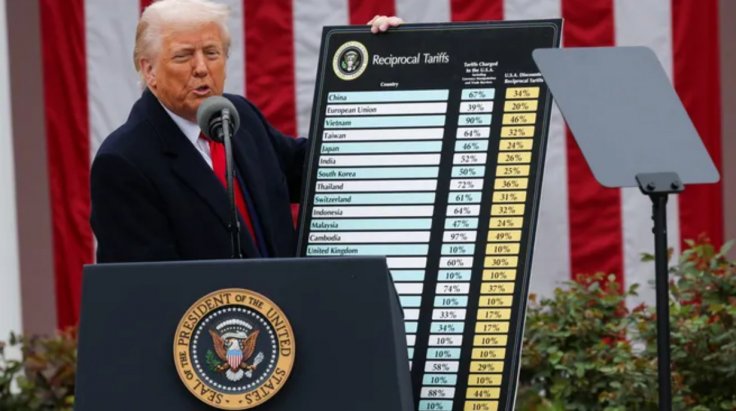
The United Nations Development Programme estimates that the August US tariffs could cut up to one-fifth of Vietnam's exports to the US, making it the most severely affected nation in Southeast Asia.
According to US trade data, Vietnam ranked sixth globally in terms of exports to the United States last year, with $136.5 billion in shipped goods. The majority of those goods are made in factories owned and operated by multinational corporations in the US and other countries, or by their suppliers.
UNDP chief economist for the Asia-Pacific region Philip Schellekens told Reuters that the 20% duties imposed on Vietnamese goods could reduce US exports "over time by more than 25 billion dollars, nearly one fifth of the yearly total," in the worst-case scenario of very high tariff-driven US inflation.
Vietnam's exports to the United States, its largest market, decreased by 2% in August compared to July, with a 5.5% decline in footwear, of which Vietnam is the world's second-largest supplier, according to the customs department, the first comprehensive Vietnamese data released since tariffs went into effect on August 7. That came after a spike in exports prior to tariffs.
Following the implementation of the US tariffs, the World Bank lowered its growth projections for Vietnam for this year.
Nike, Adidas, and Puma, who rely on Vietnamese suppliers for a significant portion of their global shoe production, chose not to comment.
According to a UNDP report last week, which was one of the first public estimates of the impact on trade flows since the tariffs went into effect, the 19.2% potential drop in Vietnamese exports to America would be almost twice as high as the average 9.7% possible drop in exports from Southeast Asia, the most affected region of the continent and a major industrial hub.
Schellekens stated that only China in East Asia would be more severely impacted in terms of dollars, adding that "no country in Southeast Asia is more exposed to US tariff hikes than Vietnam."
According to the UNDP report, Thailand's US exports could drop 12.7%, Malaysia's 10.4%, and Indonesia's 6.4% among major Southeast Asian countries.
Although the full effects of the tariff may take years to manifest, the estimated decline in US exports would reduce Vietnam's GDP by about 5%. This impact was probably lessened by exporters bearing some of the costs, Vietnam's diversification into other areas, and increased domestic spending.
The UNDP estimates are predicated on the idea that duties would be fully passed on to US consumers, thereby reducing demand. However, this hasn't happened yet, as the effect on US inflation has been modest.
Since Vietnam's goods heavily rely on Chinese input, the UNDP failed to consider the potential impact of 40% tariffs on goods transported through Vietnam, which could have disastrous consequences if Washington decided to impose stringent restrictions on foreign components used in exported goods.
About 28% of Vietnam's total exports to the United States are consumer electronics, which are currently exempt from tariffs. This was not taken into account in the UNDP data. Schellekens noted that Vietnam's US exports might still drop by $18 billion even if Washington maintained those waivers.


