President Donald Trump officially ended the historic 43-day government shutdown by signing a funding bill on Wednesday night in the Oval Office, just moments after it arrived from Capitol Hill.
Joined by senior Republican figures and prominent business leaders, Trump took the opportunity to blast Democrats, again holding them responsible for the record-long shutdown — even though several polls have indicated that a large number of Americans believe Republicans were largely to blame for the extensive crisis. "I just want to tell the American people — you should not forget this," Trump urged, calling on voters to keep the shutdown in mind when they head to the polls for the midterm elections.
Nation Back on Track
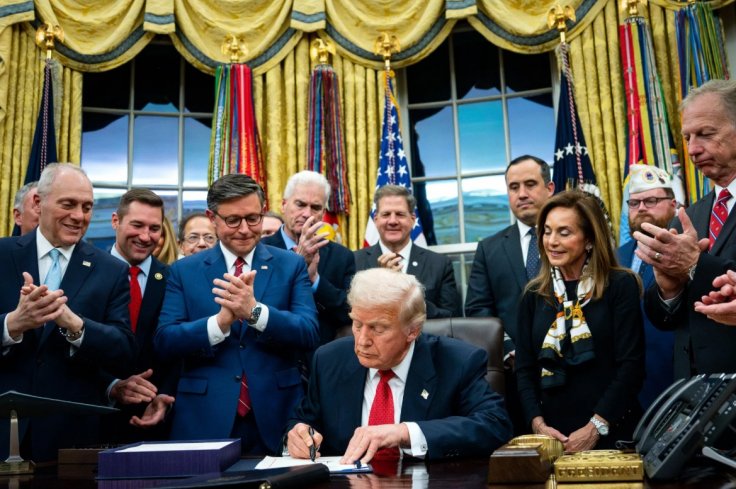
Trump once again pushed for the removal of the filibuster, a move that has failed to gain support from lawmakers on either side of the aisle. The President made a point to thank the Democrats who joined Republicans in voting to end the shutdown.
He also praised the wide range of groups — from the American Federation of Government Employees (AFGE) and the Farm Bureau to the Fraternal Order of Police — whose pressure helped convince some Democrats to change their stance.
After 43 long days, Congress finally approved a budget to reopen and fund the federal government.
The House of Representatives passed the Senate's funding bill with a narrow 222–209 vote. The measure covers key areas like the Departments of Agriculture and Veterans Affairs, as well as military construction projects for the 2026 fiscal year. It also extends funding for other federal agencies until January 30, 2026.
Importantly, the bill includes back pay for federal workers, restores jobs lost during the shutdown, and secures continued funding for essential programs such as food stamps — officially known as the Supplemental Nutrition Assistance Program (SNAP) — through September 2026.
The bill also includes extra funding to boost security for government officials and members of Congress.
Earlier, the Senate had approved its version of the funding measure with a 60–40 vote — just meeting the minimum number of votes needed to pass a budget bill in the chamber.
Eight Democrats caved and joined Republicans in supporting the legislation. Although Republicans hold a majority in both chambers, their 53 Senate seats fell short of the 60 votes required to push the bill through on their own.
As the shutdown dragged on, frustration grew on both sides. Many Senate Republicans and several Democrats had become increasingly concerned about the mounting fallout and were eager to reopen the government before the crisis deepened any further.
"Today, we're sending a clear message that we will never give in to extortion, because that's what it was, they tried to extort, the Democrats tried to extort our country,' Trump noted shortly before ending the shutdown.
"Yet, the extremists in the other party insisted on creating the longest government shutdown in American history, and they did it purely for political reasons," Trump added.
Getting Back to Normal
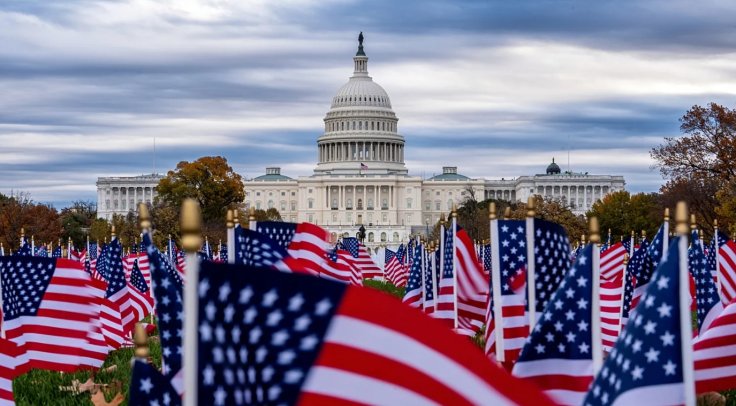
Six House Democrats broke with their party on Wednesday night to vote alongside Republicans in favor of reopening the government. The Democrats who crossed party lines were Jared Golden of Maine, Adam Gray of California, Marie Gluesenkamp Perez of Washington, Don Davis of North Carolina, Henry Cuellar of Texas, and Tom Suozzi of New York.
Their votes went against the position of Democratic leadership but helped move the funding bill forward.
In a statement, Gluesenkamp Perez explained her decision, saying she supported the measure because "the fight to stop runaway health insurance premiums won't be won by holding hungry Americans hostage."
"None of my friends who rely on SNAP would want to trade their dinner for an ambiguous D.C. beltway 'messaging victory' and I'm glad this ugly scene is in the rearview mirror," Gluesenkamp Perez said, referring to the Supplemental Nutrition Assistance Program.
Two Republicans — Thomas Massie of Kentucky and Greg Steube of Florida — broke from their party and voted against the bill.
Earlier, Republicans had pushed for a short-term plan to keep the government running at roughly the same funding levels set under the Biden administration until November 21. But Democrats blocked that proposal, arguing it failed to address their key concerns about healthcare.
Senate Majority Leader John Thune had reportedly given Democrats 14 separate opportunities to vote in favor of reopening the government, but none succeeded until now.
Meanwhile, frustration among the public kept growing as the shutdown dragged on. Pressure mounted on both parties to find common ground and end the stalemate.
The effects were already being felt across the country — especially in air travel. Transportation Secretary Sean Duffy warned on CNN that staffing shortages were worsening and could soon cause flights to slow to a near standstill.


