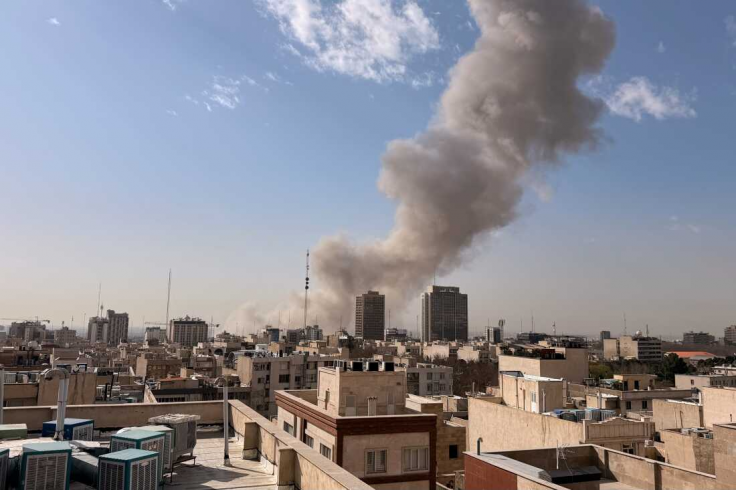
• Trump announces "major combat operations" against Iran
• Israel confirms missile strikes on Iranian targets
• Iran launches retaliatory missiles and drones toward Israel
• Gulf states close airspace amid regional escalation
U.S. President Donald Trump has confirmed that major combat operations in Iran have commenced which would confirm that American troops are directly involved hours after Israel declared that it had fired missiles in Iranian territory. The operation, described by Trump as a way to kill threats posed by the Iranian regime, took a confrontation that had escalated in recent weeks amid poor nuclear talks.
The Prime Minister of Israel Benjamin Netanyahu said that the attack was aimed at eliminating what he termed as an existential threat. The Islamic Revolutionary Guard Corps (IRGC) of Iran countered by stating the beginning of the first mass retaliatory salvo of missile and drone strikes against Israel.
Sirens had been reported in several cities of Israel with Tel Aviv being among them, and the authorities encouraged citizens to stay close to shelters. Bombs were reported in Tehran, on the grounds of government ministries and military bases. A nationwide campaign was also suggested by Iranian state media citing explosions in Kermanshah, Tabriz, Isfahan, Karaj and Ilam.
Regional Escalation and Airspace Closures
The war quickly extended to do more than Iran and Israel. According to Reuters, Bahrain asserted that the base of the U.S. Navy Fifth Fleet had been hit by a missile attack, and smoke was observed coming out of the Juffair area. The United Arab Emirates, Gulf states such as Qatar and Kuwait, shut their airspace as a precaution.
The Defence Ministry of Qatar indicated that one of its Patriot missile defence systems had intercepted an Iran missile. There were reported explosions in Kuwait and air-raid sirens were on. Reuters reported that the United Arab Emirates verified that there was a blast in Abu Dhabi but the information was restrained. Various global airlines suspended flights in and out of the territory. Wizz Air suspended flights to Israel, Dubai, Abu Dhabi and Amman.
Lufthansa cancelled flights that operate on weekends in Tel Aviv, Beirut, Dubai and Muscat. KLM suspended routes in Amsterdam to Tel Aviv. Iraq and Israel shut the airspace and halted civilian flights respectively. The fast aviation disturbances highlighted issues that the conflict might disrupt major transportation routes between Europe, the Gulf and Asia.
The markets of energy responded promptly. Brent crude futures shot up by 4.2% in early trading, versus a 1.1 rise in the last session, amid evaluations of risks to oil shipments via the Strait of Hormuz, Reuters claims. U.S West Texas Intermediate crude surged 3.8 percent as an extension of a previous gain of 0.9 percent, according to Reuters data. Safe-haven assets rose, and gold gained 2.1 per cent, following a slight 0.6 per cent increase the previous day. The U.S. dollar index averted 0.7% after 0.3% downward movement in the last session.
Diplomatic Backlash and Politics
Iranian leaders criticised the strikes as an illegal aggression. An Iranian senior member informed Al Jazeera that all assets and interests of Americans and Israelis in Middle East are a legitimate target and there are no red lines following this aggression. Iran claimed that it had been attacked by its so-called enemy, who it called the criminal enemy, during negotiations with Iraq, and asked provincial governments to prepare emergency facilities.
The ministry urged the citizens to be calm as air defences attacked enemy targets over Tehran. Russia reacted sharply. Deputy chairman of the Security Council Dmitry Medvedev stated that the United States had been operating behind the screen of nuclear negotiations to launch military measures in the country.
Once again the peacemaker has given his real colours, Medvedev wrote on Telegram. Iran has never claimed to seek nuclear weapons. This week, the United Nations Conference on Disarmament was informed that Iran will never demand nuclear weapons by its deputy Foreign Minister Kazem Gharibabadi.
President Pezesh Osbourne restated that stance on Thursday, denying charges that Tehran was making a bomb. In the past, the International Atomic Energy Agency has mentioned that it did not have any evidence of an Iranian nuclear weapons programme being active. Yet, the issues of inspections and enrichment of uranium were never resolved.
Blackout on Domestic Measures and Information
In Iran, internet-surveillance websites NetBlocks announced a significant downturn in the broader international connection rate, stating that the nation was went into an effective blackout where internet connectivity dropped to just about 4-7 percent of typical rates. The breakdown came after a preceding statement that linked connectivity to the range of approximately 54%. In Israel, an emergency state was emergency declared by the government.
Citizens of Tel Aviv were there in the photos trying to seek shelter when sirens went off all over the city. Authorities threatened new rounds of missiles. Trump gave minimal operation details in Washington, and presented the campaign as an essential move to counter the security threats. He said major combat operations were being undertaken, but he did not say how long or how extensive.
The American defence authorities have not revealed the size of American troop presence and the assets in question. U.S. official informed the media houses that collaborative U.S.-Israeli air raids are to destroy elements of the Iranian security systems. The uncertainty was captivated in financial markets. S&P 500 futures dropped 1.5% in the early trading, according to Reuters, after having lost 0.4% in the prior session.
European futures equity fell 1.2 percent and turned an increase of 0.5 percent reported a day previously. Gulf states which produced oil posted safety guidelines to people, but placed stress on stability. The Interior Ministry of Qatar stated that the security situation was stable and secure, even with interceptions of missiles in the region.
The potential of a long term escalation has raised the awareness of a bigger conflict in the area, especially considering the past antagonism between Israel and Iranian-allied organisations in Lebanon, Syria and Gaza. Governments in the region are keeping a keen eye on the developments as retaliatory attacks and defensive force keeps being cast globally in several countries. Subsequent military operations, foreign policy and economic effects are all anticipated as the situation unfolds.


