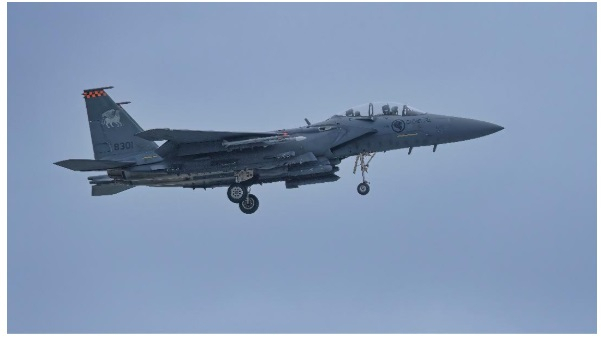
Over Okinawa, Japan, a radar lock by a Chinese jet on a Japanese fighter plane has reminded Indo-Pacific nations that the new era of geopolitical instability is here to stay. This instability has unleashed an era of rearmament, which Singapore has entered.
For the Government of the Republic, tensions in the Indo-Pacific are a fact of life that must be managed. Resolution of these tensions is not the policy; Singapore soothes where others inflame, pursuing balanced ties with regional partners and eschewing exclusivity and antagonism.
As ASEAN's most diplomatically powerful nation, Singapore puts great emphasis on the bloc's Outlook on the Indo-Pacific (AOIP) policy, which elevates inclusivity, openness, and the centrality of Southeast Asian states to the region. Singapore, the eternal bridge-builder, both drives forward and exemplifies this vision.
To the United States, Singapore is a close but not exclusive ally. To Japan, a deep strategic partner, with tight bilateral ties founded on trust, trade, and the rule of law. The Singapore-Japan relationship will celebrate its sixtieth anniversary next year. With China, a pragmatic relationship – that reflects mutual economic interest - has emerged since ties were formalized in 1990. Singapore propounds its values and protects its interests through such dynamic diplomacy.
However, Singaporean policymakers are fully aware that the next decade will see unprecedented challenges. The Trump-Xi meeting in October in Busan, South Korea, halted a free-fall in the superpower rivalry. The escalating trade war was put on hold; both militaries agreed to communicate better. But as Prime Minister Lawrence Wong commented then, "the underlying concerns and underlying rivalry between the two great powers will continue."
Prime Minister Wong has rightly set out that Singapore cannot stand by as the post-war consensus on free trade falls apart. Backed by the United States, this unprecedented era of multilateralism provided the background to the brilliant domestic policies of Lee Kuan Yew. To protect this prosperity and mitigate ever-increasing unilateralism, Singapore must proactively work and strengthen cooperation with "other like-minded countries" – Prime Minister Wong's own phrase.
Closer ties with regional partners like Japan and Australia will be pursued under this policy of "flexible multilateralism". Japan's Free and Open Indo-Pacific (FOIP) policy chimes with Singapore's own commitment to upholding international law, freedom of navigation, preserving national sovereignty, and increasing military readiness in this age of instability. And while the United States is often distracted from Asian affairs, the stability of the Indo-Pacific is the primary concern of policymakers in Tokyo.
Singapore, Japan, and middle powers like Australia and New Zealand share a sense of urgency in the face of geopolitical strife. All four states are concerned by China's activities in the South China Sea, even while Singapore has been cautious in directly condemning ongoing disputes, including clashes between Chinese and Philippine vessels.
This urgency is reflected in new policies. Under its Minister of Defense, Shinjirō Koizumi, who assumed his position in October of this year, Japan will raise defence spending to 2% of GDP within this financial year, well before the initial target date of 2027. Minister Koizumi has also confirmed Tokyo's intention to abolish arms export rules in the case of countries that "maintain friendly relations with Japan", a phrase that echoes the "like-minded countries" of Prime Minister Wong.
New Zealand is now in talks to acquire the next generation of frigates from Japan's Maritime Self-Defense Force (JMSDF), while Australia has already agreed a multi-billion-dollar deal. Singapore is a prime candidate to purchase this best-in-class vehicle, as well as a range of other military equipment to support national defence and power projection. While diplomacy is key, increased military cooperation by responsible actors committed to the rule of international law is a sensible antidote to the emerging post-multilateral order.
Given Singapore's longstanding policy of Total Defence, the island is arguably better prepared for an unstable Indo-Pacific than most. Total Defence is also a fluid concept, with the government embracing critical new technologies in emerging fields like cyber-security as well as hard military equipment. This nimbleness allows Singapore to navigate difficult waters. But at this moment of history, it cannot do so alone. Singapore must continue to build alliances – with longstanding partners and new – to secure its hard-won success.


