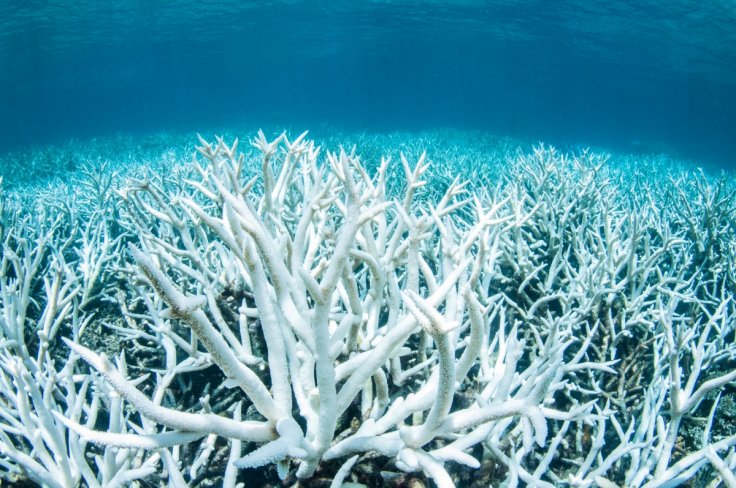
A new research has revealed that the Great Barrier Reef in Australia has seen fewer outbreaks of coral-eating crown-of-thorns starfish (CoTS) thanks to the protection of predatory fish.
According to a press release from Australia's national science agency, the Commonwealth Scientific and Industrial Research Organization (CSIRO), the study offers new modeling-based evidence that zoning and fisheries management strategies implemented in 2004 are likely to have played a significant role in recovering fish populations, reducing CoTS outbreaks, and mitigating coral loss.
The research, published in Nature Ecology and Evolution on Monday, December 1, was conducted by CSIRO and the Australian Institute of Marine Science (AIMS).
Scott Condie, a CSIRO researcher and the study's lead author, said that CoTS is one of the greatest threats to coral on the Great Barrier Reef, with several outbreaks having occurred over the previous 40 years.
"Particular fish, like emperors, eat crown-of-thorns starfish," Condie said, adding that in order to safeguard these predatory fish, protective measures were implemented in 2004, including tightening fishing regulations and expanding no-take zones to 33%.
According to the model, these efforts probably "averted a catastrophic tipping point" that would have left the Great Barrier Reef with fewer large fish, leading to ongoing CoTS outbreaks and significantly less coral, he said.
Long-term monitoring shows that the frequency of outbreaks across the Great Barrier Reef is consistently lower in protected zones, while models forecast a four-fold rise in affected reefs by 2050 without these fish protection strategies, according to the research.
"Without intervention over the last two decades, the model shows that grouper and emperor populations on the Great Barrier Reef would also have consistently declined under increasing fishing pressure," said AIMS researcher Daniela Ceccarelli.
"This modelling is an important step towards understanding the potential for CoTS management to protect the Great Barrier Reef under the increasing threat of climate change," Ceccarelli concluded.


