Global supply chains continue to face increasing volatility from geopolitical shifts, climate disruptions, cyber risks, and persistent visibility challenges. According to recent industry research, limited supply chain visibility remains a structural issue for more than 75 percent of executives, slowing response times and increasing operational costs in complex global networks. AI technologies are being adopted to integrate production, logistics, and demand streams, allowing earlier detection of disruptions and faster response actions.
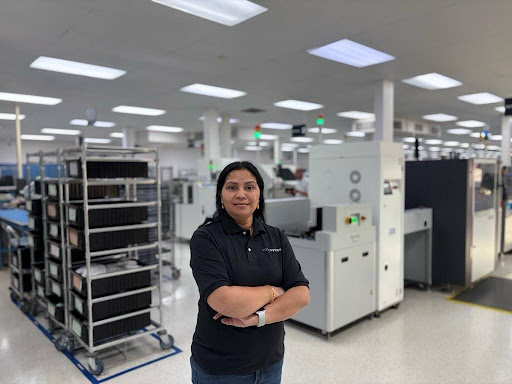
In this evolving landscape, Sangeeta Singh, a firmware engineer and AI systems innovator, has introduced a pioneering technological framework that redefines how supply chain risks are identified and acted upon in real time. Singh's framework, published as German Utility Model DE 202025104828U1, presents a technical advancement in supply-chain intelligence by enabling continuous, evidence-weighted risk detection through multi-source data fusion, moving beyond conventional monitoring tools.
Identifying a Critical Industry Limitation
Through her work in embedded systems, intelligent automation, and enterprise-scale analytics, Singh identified a persistent limitation in existing supply chain platforms: most risk detection systems rely on fragmented data sources, static thresholds, or delayed reporting mechanisms that fail to reflect real-world operational dynamics.
"Supply chains generate vast amounts of data, but traditional systems lack the capability to fuse that information intelligently and evaluate it with contextual reliability," Singh said. "This gap leads to late responses and avoidable operational losses at a time when resilience and responsiveness are strategic priorities."
Industry analysis supports Singh's observation. A 2025 supply chain maturity assessment found that many organizations are still reacting to disruptions rather than proactively managing them, and consistent data visibility remains a top challenge for resilience efforts.
Advancing Real-Time Risk Assessment in Complex Supply Chain Environments
Singh's framework addresses these limitations by independently designing a unified architecture that correlates structured, semi-structured, and unstructured data streams, including logistics signals, operational telemetry, partner inputs, and environmental indicators, into a continuously evaluated risk model.
At its core is a real-time fusion and inference engine that assigns confidence-weighted relevance to incoming signals and maps them to persistent supply chain entities using a dynamic knowledge graph. Unlike many existing rule-based or dashboard-driven tools, Singh's system delivers traceable, evidence-supported risk intelligence, allowing organizations to understand:
- The source and reliability of each risk signal
- The reasoning behind risk scores
- The operational implications for planning and mitigation
As industry reports note, organizations are increasingly prioritizing AI that delivers real-time insights and actionable intelligence rather than static analytics alone.
Beyond Routine Engineering with Scalable Adoption
What distinguishes Singh's work is its practical, scalable design intended for enterprise deployment, enabling integration with logistics platforms, procurement systems, and operational decision engines. Embedding transparency and auditability directly into the risk evaluation pipeline supports trustworthy AI adoption in mission-critical environments, an area that industry leaders continue to emphasize as essential for resilient supply chains.
"This framework is designed not just to detect anomalies, but to support informed, defensible decisions across complex global operations," Singh explains.
Demonstrated Field Significance and Global Relevance
Supply chain resilience has become a strategic priority for manufacturers, logistics providers, healthcare operators, and infrastructure organizations worldwide. AI adoption in supply chain risk management has evolved from basic automation to a strategic command layer that enhances agility and competitiveness across diverse sectors.
Singh's innovation offers broad applicability across industries including electronics manufacturing, healthcare logistics, industrial automation, and smart infrastructure, addressing real-world challenges faced by organizations operating at global scale under real time constraints.
About Sangeeta Singh
Sangeeta Singh is a firmware engineer and technology innovator specializing in AI enabled automation, embedded systems, and intelligent operational platforms. Her work focuses on developing novel, independently conceived technologies that bridge advanced analytics with real-world enterprise systems. Through her research and patented innovations, she continues to deliver technical advancements that influence how intelligent systems are designed and deployed across industries.


